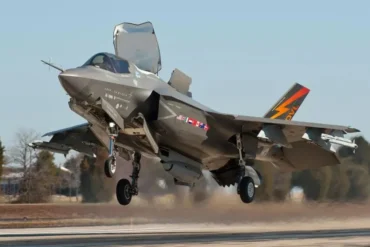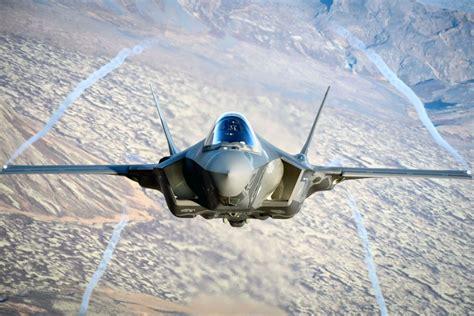
The F-35 Lightning II was conceived as the ultimate expression of fifth-generation air combat—a stealth-enabled, sensor-fused, network-centric aircraft capable of dominating not just the skies, but the electromagnetic spectrum itself. Yet for all its promise, one of its most critical pillars—electronic warfare (EW)—has remained frustratingly under-realized. Now, a nearly $1 billion retrofit program spanning six years aims to correct that gap, reshaping not only the aircraft’s combat potential but the future of allied airpower.
At the heart of this transformation lies a simple reality: in modern warfare, winning the electromagnetic spectrum is as decisive as winning the airspace. Radar, communications, targeting systems, and missile guidance all depend on it. The F-35 was designed to excel in this invisible battlefield, but technical bottlenecks—particularly in processing power and cooling—have limited its ability to fully execute its role as a digital predator.
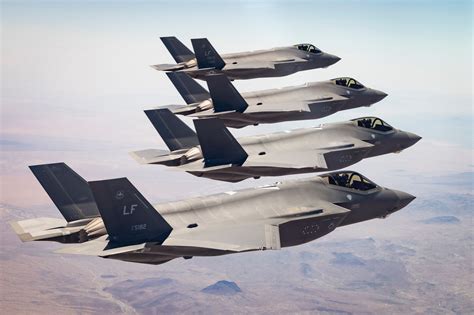
The newly awarded $991 million contract, led by the Naval Air Systems Command, targets 432 aircraft across U.S. services and allied fleets. This is not a minor tweak or incremental patch—it is a systemic upgrade designed to unlock capabilities that have remained dormant since the jet’s debut.
Why Electronic Warfare Defines the F-35’s True Power
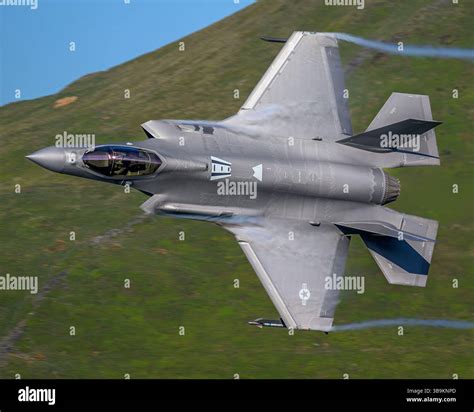
Unlike legacy fighters, where electronic warfare systems function largely as defensive countermeasures, the F-35 was built to weaponize the electromagnetic spectrum. Its AN/ASQ-239 system integrates radar warning, jamming, and signal intelligence into a unified architecture, allowing the aircraft not just to evade threats but to actively degrade enemy systems.
In theory, this transforms the F-35 into a force multiplier. A single aircraft can suppress enemy air defenses, blind radar networks, and disrupt missile guidance—all while remaining nearly invisible. This capability is especially critical against near-peer adversaries equipped with multi-band, frequency-agile radar systems designed specifically to counter stealth aircraft.
However, theory and reality have diverged. Current F-35 variants lack the computational bandwidth to run advanced jamming algorithms alongside sensor fusion processes. The aircraft can detect threats, but its ability to manipulate and dominate those threats in real time has been limited.
This upgrade changes that equation by delivering the hardware backbone required for next-generation electronic attack capabilities.
The Retrofit: Hardware That Unlocks Software Potential
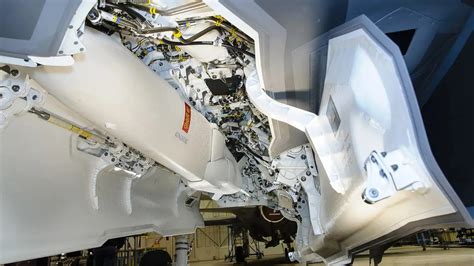
The retrofit program focuses on delivering material modification kits that include upgraded avionics hardware, enhanced wiring systems, and critical infrastructure to support the long-awaited Block 4 modernization package. These kits are not optional enhancements—they are essential enablers.
The central issue has always been capacity. Advanced EW requires enormous computational throughput, rapid signal processing, and significant cooling to prevent system overload. Without these, even the most sophisticated software remains unusable.
The upgrade addresses three key limitations:
- Processing Power: Enabling real-time execution of complex EW algorithms
- Thermal Management: Supporting sustained high-performance operations
- System Integration: Allowing simultaneous sensor fusion and electronic attack
By solving these constraints, the retrofit effectively activates capabilities that were already envisioned but never realized. It turns the F-35 from a platform with potential into one with operationally meaningful electronic lethality.
Block 4: The Capability Leap That Keeps Slipping
The Block 4 upgrade has long been positioned as the defining evolution of the F-35 program. It promises expanded weapons compatibility, enhanced sensor performance, and—most critically—full-spectrum electronic warfare capabilities. Yet delays tied to the Technology Refresh 3 (TR-3) package have pushed its operational timeline well into the next decade.
Testing reports have been blunt. Software builds delivered in recent cycles added no meaningful combat capability, leaving aircraft stuck in a quasi-operational state. Pilots can train, but they cannot fully exploit the aircraft’s advanced systems in combat scenarios.
This has had cascading consequences. Procurement has slowed, confidence among allies has wavered, and the aircraft’s combat credibility has been questioned. The retrofit program is, in many ways, an attempt to stabilize the program’s trajectory by bypassing bottlenecks and delivering tangible improvements directly to the fleet.
Global Impact: A Fleet-Wide Transformation
The scale of this upgrade is striking. The 432 aircraft slated for modification include:
- U.S. Air Force, Navy, and Marine Corps jets
- Foreign Military Sales (FMS) aircraft
- Non-U.S. partner nation fleets
This ensures that the F-35’s defining advantage—interoperability—remains intact. In coalition warfare, disparities in capability can create operational friction. By standardizing the EW upgrade across fleets, the program reinforces the F-35’s role as a shared combat platform.
For allied nations, the stakes are particularly high. Many have retired older aircraft in anticipation of the F-35’s capabilities. Delays and limitations have forced some to extend legacy fleets or reconsider procurement plans altogether.
The retrofit offers a path forward, restoring confidence that the aircraft will eventually deliver on its promise of networked, high-end warfare dominance.
Concurrency: The Costly Gamble Behind the Crisis
To understand why such a massive retrofit is necessary, one must examine the controversial acquisition strategy known as concurrency. This approach—building aircraft while still finalizing their design—was intended to accelerate deployment and reduce timelines.
Instead, it created a cycle of build, discover flaws, and retrofit at scale.
The F-35 program exemplifies this dynamic. Aircraft were produced in large numbers before key systems were fully validated, resulting in a fleet that requires continuous and costly upgrades. The nearly $1 billion EW retrofit is just one example in a سلسلة of overlapping modernization efforts.
Financially, the implications are staggering:
- $442 billion estimated procurement cost
- $1.58 trillion projected lifetime sustainment
- Rising per-unit costs exceeding $100 million per jet
Each new upgrade solves one problem while often exposing another—whether in power generation, cooling, or engine performance. The result is a program defined as much by its complexity and cost escalation as by its technological ambition.
Operational Consequences: Delays That Ripple Across Alliances
The limitations of the F-35 are not confined to spreadsheets or test reports—they have real-world operational consequences. Allied air forces that committed fully to the platform now face capability gaps.
Countries like Denmark and Belgium, for instance, have delayed the transfer of legacy aircraft to Ukraine due to reliance on F-35s that are not yet fully combat-ready. Training pipelines have been disrupted, and interim solutions—such as recalling older aircraft—have become necessary.
Even among major partners, uncertainty has crept in. Nations including Canada, the United Kingdom, and Switzerland have reassessed procurement strategies, weighing whether the aircraft’s evolving capabilities justify its escalating costs.
The only notable exception has been Israel, which has integrated custom modifications to bypass some limitations. Yet even there, the full spectrum of promised EW capabilities remains out of reach.
The Engine Problem: Powering the Future Fight
One of the less visible but equally critical challenges lies in the F-35’s propulsion system. Advanced electronic warfare demands not just computing power but also electrical generation and thermal capacity—both tied closely to engine performance.
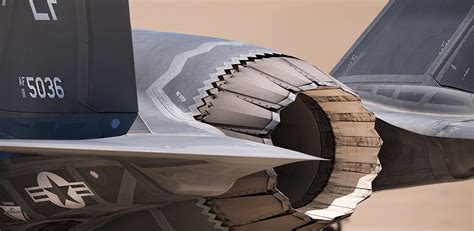
The ongoing effort to upgrade the Pratt & Whitney F135 engine core has become a bottleneck. Without sufficient power and cooling, even upgraded avionics cannot operate at full capacity. This creates a dependency chain where delays in one subsystem cascade into others.
The result is a paradox: the F-35 possesses some of the most advanced technologies ever developed, yet struggles to fully utilize them simultaneously.
Triage at Scale: Why the Pentagon Chose to Act Now
From a purely financial perspective, spending nearly a billion dollars to retrofit existing aircraft might seem inefficient. But from an operational standpoint, the decision reflects a more urgent reality: capability gaps cannot wait for perfect solutions.
The backlog of undelivered or incomplete aircraft, combined with the limitations of those already in service, created a scenario where immediate action was necessary. The retrofit program effectively acts as a triage measure, prioritizing combat readiness over budget efficiency.
By upgrading aircraft already in the field, the Pentagon avoids the delays associated with new production and ensures that pilots have access to meaningful capabilities in high-threat environments.
This is particularly relevant in regions such as the Taiwan Strait and Eastern Europe, where advanced air defense systems demand the kind of electronic warfare performance the F-35 was designed to provide.
Reclaiming the F-35’s Strategic Edge
Ultimately, this upgrade is about more than fixing technical shortcomings—it is about reclaiming the F-35’s strategic identity. The aircraft was never meant to be just another stealth fighter; it was designed as a networked combat node, capable of shaping the battlefield across multiple domains.
With enhanced electronic warfare capabilities, the F-35 can:
- Detect threats earlier than ever before
- Disrupt enemy systems at extended ranges
- Enable coordinated operations across air, land, and sea
These capabilities are not incremental—they represent a shift toward information-centric warfare, where dominance is achieved not just through firepower but through control of data and signals.
A Costly Fix—Or a Necessary Evolution?
There’s no elegant way to frame it: spending nearly $1 billion to retrofit existing aircraft highlights deep inefficiencies in the program’s development model. Yet dismissing the upgrade as wasteful misses a crucial point.
Without it, the F-35 risks becoming a half-realized platform, unable to compete in the very environments it was designed for. With it, the aircraft moves closer to fulfilling its role as the cornerstone of 21st-century airpower.
The tension between cost and capability will continue to define the program. But in the unforgiving calculus of modern warfare, capability gaps are far more dangerous than budget overruns.
The Road to 2032: A Program at a Crossroads
With completion scheduled for March 2032, the retrofit program represents a long-term commitment to stabilizing and enhancing the F-35 fleet. By that time, the global inventory will be even larger, and the aircraft’s role even more central to allied defense strategies.
The success of this effort will determine whether the F-35 evolves into the dominant combat system it was meant to be or remains a cautionary tale of overreach and complexity.
What is clear is that the stakes extend far beyond a single aircraft. They encompass the future of coalition warfare, technological integration, and the balance of power in contested regions.
And if the upgrade delivers as intended, the F-35 may finally achieve what it promised from the start—not just stealth, not just speed, but true dominance of the invisible battlespace where modern wars are won or lost.