A New Era of Asymmetric Warfare in the Middle East
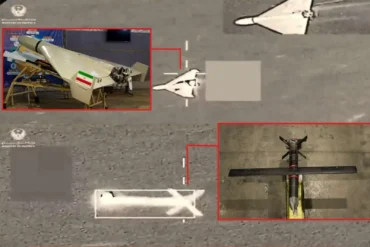
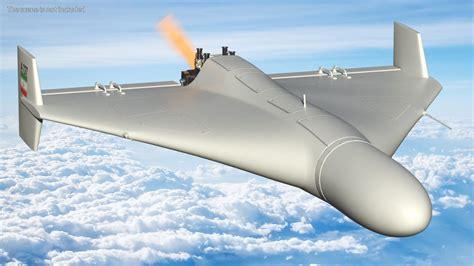
The Shahed 136, Iran’s most widely known loitering munition, has fundamentally altered the balance of power across the Middle East. Its combination of affordability, destructive power, range, and psychological impact makes it one of the most terrifying weapons to emerge from Iran’s expanding drone program. Unlike traditional drones, the Shahed 136 is designed as a kamikaze weapon, intended to detonate upon impact with its target. But what sets this drone apart is not merely its lethality, but its ability to overwhelm modern air defenses, tilt economic asymmetry, and spread terror through both direct destruction and psychological influence.
Built to Terrify: The Mechanics of Psychological Warfare
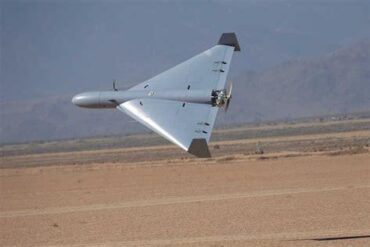
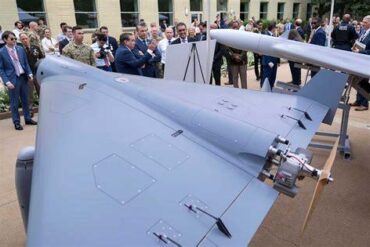
The Shahed 136’s delta-wing design, light composite structure, and small radar signature make it difficult to detect using conventional radar systems. Propelled by a modest piston engine, the drone initially operates with surprising stealth. However, as it closes in on its target, it emits a signature mechanical roar — dubbed the “scream of death” during the Ukraine conflict. This unique sound does not only announce impending destruction, but also incites panic, confusion, and fear, particularly during nighttime raids when human sensory awareness is most vulnerable. Iran has mastered this form of psychological warfare, often launching dozens of these drones in synchronized waves designed to paralyze decision-making among defending forces.
Precision and Persistence: Strategic Capabilities of the Shahed 136
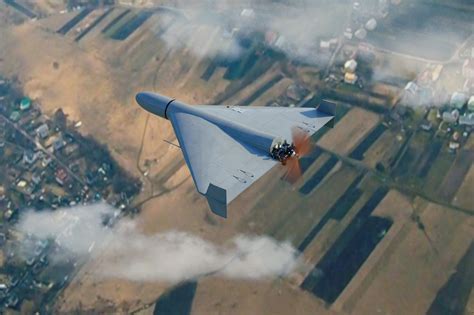
At an estimated range of up to 2,500 kilometers, the Shahed 136 allows Iran to strike targets far beyond its borders, including Riyadh and Tel Aviv, without risking troop deployments. The drone is capable of loitering over target zones for extended periods, scanning for high-value vulnerabilities. Guided by GPS and onboard inertial navigation systems, the Shahed can complete its mission even when exposed to jamming attempts. Recent upgrades have introduced artificial intelligence and anti-jamming algorithms, further improving its autonomy and resilience in electronic warfare conditions. If the GPS is compromised, the drone continues along its programmed flight path, ensuring mission continuity even in hostile airspace.
The War-Tested Drone: Lessons from Ukraine
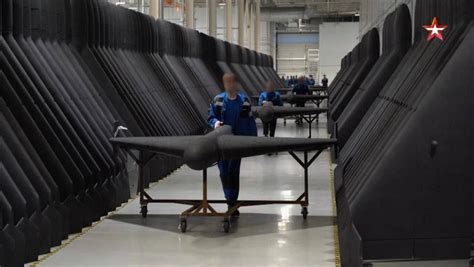
The Ukraine conflict served as a battlefield laboratory for the Shahed 136. Russia’s deployment of Iranian-made Shahed drones revealed their devastating efficiency against power grids, fuel depots, and infrastructure nodes. These attacks routinely overwhelmed Ukraine’s defense systems, leading to rolling blackouts and massive economic losses. Western observers likened the drone to a poor man’s cruise missile — inexpensive but capable of high-precision destruction. The cost-to-damage ratio was particularly alarming: while each Shahed is estimated to cost between $20,000 and $50,000, defending nations often had to expend missiles worth hundreds of thousands of dollars just to shoot one down — if they succeeded at all.
Swarm Tactics and Multi-Threat Envelopment
A defining feature of the Shahed’s battlefield application is its use in saturation attacks. Iran — or its allies — often pairs Shahed drones with ballistic or cruise missiles to stretch enemy defenses thin. In such multi-vector assaults, drones swarm airspace, triggering early intercepts, while missiles target hardened command centers or strategic hubs. This multi-domain confusion renders many traditional air defense systems ineffective, forcing adversaries to split resources and accept partial tactical losses. In military terms, this represents a textbook case of asymmetric warfare — using affordable, scalable tools to exhaust and degrade far superior defense assets.
Mobility, Obscurity, and Survivability
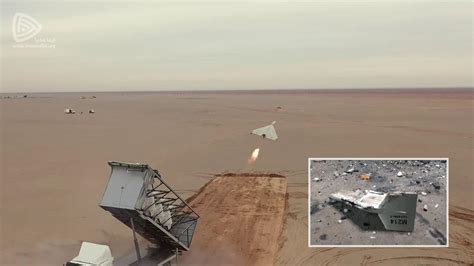
The Shahed 136 can be launched from a variety of platforms, including flatbed trucks, mobile launchers, and improvised rural bases. This mobility not only obscures their launch origin, but also enables Iran and its allies to stage rapid-fire deployments from unpredictable locations. With no need for sophisticated airbases, the drone’s survivability increases dramatically. Furthermore, this launch flexibility frustrates enemy efforts to target infrastructure, allowing Iran to retain strike capabilities even under duress.
Simple Engineering, Devastating Results
From an engineering perspective, the Shahed 136 is a masterclass in functional minimalism. Its modular structure allows for cheap and rapid manufacturing using readily available parts. Iran’s defense industry, refined through decades of sanctions and isolation, has prioritized self-reliance and replicability. Engineers incorporated lessons from the Iran-Iraq War, optimizing the drone to meet the needs of modern combat while remaining low-cost and easy to repair. The warhead is highly adaptable: some variants are optimized for anti-personnel, others for anti-vehicle or infrastructure demolition. This modularity transforms the drone from a single-purpose tool into a multi-mission platform.
Night Vision, Imaging, and Target Tracking
Newer Shahed models feature imaging systems and night vision capabilities, enabling precise strikes under poor visibility. These enhancements significantly increase the drone’s operational versatility, allowing it to operate in environments previously considered inaccessible. Engineers are also experimenting with object tracking systems, aiming to improve the drone’s capacity to engage moving targets. Such advancements push the Shahed closer to the capabilities of next-generation autonomous weapons, while still costing a fraction of the price.
Proxy Proliferation and Strategic Ambiguity
Iran’s export of the Shahed drone to proxy forces such as Hezbollah, the Houthis, and various Shia militias in Iraq, has extended the drone’s reach beyond national borders. These actors have used Shaheds to target both military and civilian infrastructure across the Middle East. This strategic ambiguity complicates international responses. Enemies often cannot ascertain whether an attack was state-directed or proxy-executed, allowing Iran to wield deniability as a geopolitical tool. The psychological burden this creates — the inability to know where the next strike will come from or who is truly behind it — amplifies the drone’s deterrence value.
The Economic Edge: Cost-Effective Destruction
In modern warfare, cost asymmetry is often more decisive than raw firepower. The Shahed 136 is a prime example of how economic efficiency can challenge technological superiority. Western air defense systems such as the Patriot or NASAMS cost millions per unit, often deployed to intercept $20,000 drones. This unsustainable equation tilts the advantage to the attacker. Even when successfully intercepted, Shaheds still force the enemy to burn through expensive munitions. As long as Iran can continue producing these drones in large numbers, the cost-attrition dynamic remains in its favor.
Symbolism, Fear, and Media Domination
The Shahed 136 has transcended its mechanical function and entered the realm of symbolic warfare. It features prominently in state media, military documentaries, and animated simulations, often portrayed as the tip of Iran’s retaliatory spear. Its visibility in such media campaigns reinforces its reputation as a precision strike platform, not just among adversaries, but among domestic audiences and regional allies. The drone has become a psychological avatar of Iranian deterrence, influencing perception as much as strategy.
The Road Ahead: AI and Fully Autonomous Swarms
Iran continues to refine the Shahed series, with planned advancements including greater range, enhanced autonomy, and more destructive warheads. The integration of next-gen artificial intelligence promises drones capable of independent targeting and swarm coordination. These fully autonomous units could launch coordinated, simultaneous strikes across multiple targets without human intervention. Should Iran succeed in deploying such technology, the face of Middle Eastern warfare could be irrevocably altered, ushering in an era where low-cost, high-volume drone strikes dominate the skies.
The Shahed 136 represents more than a drone; it signifies a paradigm shift in how wars are fought, deterrents are established, and superpowers are challenged. Through its terrifying efficiency, psychological warfare, and economic logic, the Shahed has become a symbol of asymmetric dominance — and it is far from reaching its full potential.