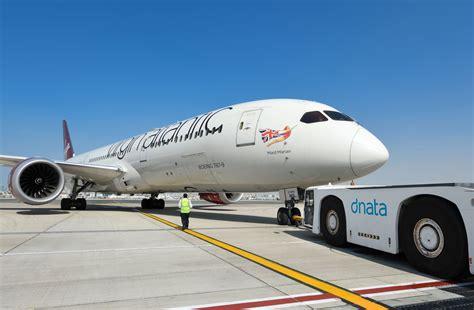
The escalating conflict across the Middle East has triggered another wave of aviation disruption, forcing Virgin Atlantic to suspend its London Heathrow–Dubai route after one of its long-haul flights spent nearly 16 hours airborne without reaching its destination. The dramatic mid-air reversal highlights how rapidly changing airspace restrictions are reshaping global airline operations and exposing travelers to unpredictable journeys.
The airline confirmed it will pause all services between London Heathrow Airport (LHR) and Dubai International Airport (DXB) for the remainder of the Northern Hemisphere winter season, with cancellations expected to remain in effect until the end of March. Virgin Atlantic stated that the safety of passengers, crew members, and aircraft remains its highest priority as geopolitical tensions continue to disrupt aviation routes across the Gulf region.
While airlines regularly adjust routes during regional instability, the decision followed a particularly unusual flight event. A Virgin Atlantic Airbus A350 bound for Dubai was forced to abandon its journey after new airspace closures triggered by a drone attack in the region left the aircraft unable to land safely at its destination.
Escalating Middle East Conflict Disrupts Global Aviation
Rising hostilities involving Israel, the United States, and Iran have created a volatile security environment across the Middle East. Drone strikes targeting infrastructure and political sites have forced multiple countries to intermittently close sections of their airspace, creating a nightmare scenario for long-haul carriers operating through the region.
Airlines depend on predictable airspace access to maintain scheduled operations. When corridors suddenly close, aircraft may have limited options for rerouting because of fuel requirements, geopolitical restrictions, and operational safety rules.
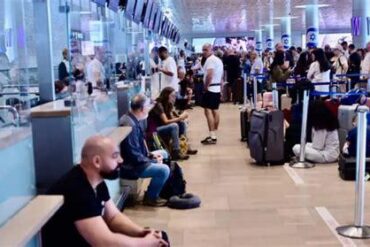
Major Middle Eastern carriers have already felt the impact. Emirates, Qatar Airways, and Etihad Airways, which rely heavily on Gulf hub connections, have had to pause or reroute flights as regional security conditions deteriorate. These disruptions have stranded thousands of travelers across the region and complicated global airline schedules.
For Virgin Atlantic, the instability reached a tipping point after a London-Dubai flight was forced to divert deep into Europe rather than complete the final segment of its journey.
The 16-Hour Journey That Never Reached Dubai
The incident unfolded on March 6, when Virgin Atlantic flight VS400 departed London Heathrow on what should have been a routine seven-hour overnight service to Dubai.
The aircraft, an Airbus A350-1000 registered G-VLIB, pushed back from the gate slightly behind schedule at 10:22 p.m. local time, about 12 minutes after its planned departure. After takeoff, the jet climbed to a cruising altitude of 39,000 feet and proceeded east toward the Middle East.
For several hours, the flight progressed normally across Europe and toward the Gulf.
Then the situation changed.
Approximately six hours into the flight, reports emerged of a drone attack in Dubai, prompting authorities to temporarily close sections of the city’s airspace. With landing clearance suddenly uncertain, the aircraft found itself in operational limbo.
Continuing toward Dubai risked encountering restricted airspace, while returning directly to London required additional fuel planning. The flight crew made the decision to turn the aircraft around and head back toward Europe.
Diversion to Budapest for Refueling
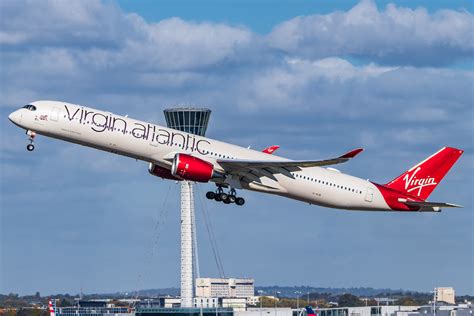
Because the aircraft had already traveled deep into its flight path, the crew determined that a direct return to London was not immediately feasible without refueling. The A350 diverted to Budapest Ferenc Liszt International Airport in Hungary.
The aircraft touched down in the Hungarian capital at 11:00 a.m. local time, completing a long and unexpected detour for passengers expecting to arrive in Dubai.
After roughly 90 minutes on the ground, the aircraft departed Budapest and resumed its journey back to the United Kingdom. The flight ultimately landed at London Heathrow around 2:00 p.m., ending an unusual journey that lasted approximately 16 hours from departure to final arrival—all without ever reaching its intended destination.
Such diversions are rare but illustrate the complex risk management required in modern aviation, especially when flights pass through geopolitically sensitive airspace.
Aircraft Behind the Incident: “Lady Emmeline”
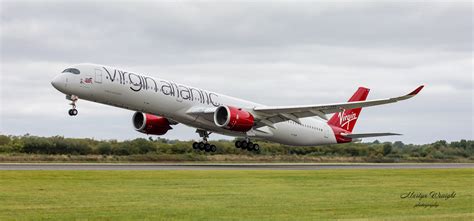
The aircraft involved in the diversion, G-VLIB, is a relatively new addition to the Virgin Atlantic fleet. The Airbus A350-1000 entered service with the airline in April 2022, following its first test flight earlier that year under Airbus registration F-WZFU.
Like other A350-1000 aircraft in the fleet, the jet is designed for long-haul efficiency and passenger comfort. Its advanced composite airframe and powerful Rolls-Royce Trent XWB-97 engines allow the aircraft to fly ultra-long routes with lower fuel consumption compared to older wide-body aircraft.
The aircraft also carries a distinctive name within Virgin Atlantic’s tradition of naming aircraft after notable figures. G-VLIB is called “Lady Emmeline,” honoring Emmeline Pankhurst, the British suffragette leader who played a key role in the women’s rights movement.
Inside, the aircraft features a three-class configuration designed for long-haul comfort:
- 16 Upper Class business seats
- 56 Premium Economy seats
- 325 Economy seats
The A350-1000 has become one of Virgin Atlantic’s flagship aircraft types, operating on some of the airline’s most prominent international routes.
Suspension of Dubai and Riyadh Routes
Following the diversion incident and ongoing regional instability, Virgin Atlantic moved quickly to suspend operations to Dubai. The airline confirmed that one final round-trip flight scheduled for March 9 would operate before the route is paused for the rest of the winter season.
In addition to Dubai, the airline has also temporarily halted flights to Riyadh, Saudi Arabia. The Riyadh service was relatively new, having launched only a year earlier in March as part of Virgin Atlantic’s strategy to expand into the Middle East.
The airline stated it will continue monitoring the security situation and provide updates if conditions improve enough to resume service earlier than expected.
Airspace Instability and the Future of Long-Haul Routes
The Virgin Atlantic diversion illustrates how fragile global aviation networks can become when geopolitical tensions rise. Long-haul routes connecting Europe with Asia and the Middle East often rely on narrow corridors of controlled airspace, and disruptions in one region can ripple across airline schedules worldwide.
Airlines must constantly balance operational efficiency, passenger demand, fuel economics, and safety regulations when making decisions about whether to continue or suspend routes.
When airspace conditions become unpredictable—as seen with sudden drone attacks or military activity—airlines frequently choose suspension over risk. The cost of canceling flights may be significant, but the consequences of operating in unstable airspace are far greater.
For passengers, the situation underscores a growing reality of modern air travel: even the most routine long-haul journeys can quickly become complex when geopolitics enters the flight path.
As tensions continue across the Middle East, carriers like Virgin Atlantic—and the global aviation industry as a whole—are likely to face continued route adjustments, diversions, and temporary suspensions until stability returns to one of the world’s most critical aviation corridors.