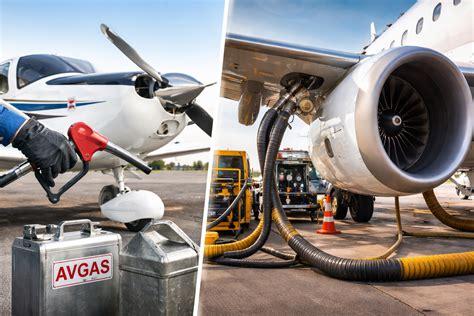
Jet fuel and aviation gasoline may both keep aircraft airborne, but they are designed around fundamentally different engine technologies. The distinction is not simply about the fuel itself; it involves combustion, temperature, altitude, energy requirements, storage, and the type of aircraft being powered.
Commercial airliners, military fighters, turboprops, and many helicopters generally rely on kerosene-based jet fuel, while smaller piston-powered aircraft typically use aviation gasoline, or avgas. Putting the wrong fuel into an aircraft is therefore far more serious than choosing the wrong gasoline grade at a roadside fuel station.
A useful starting point is the familiar distinction between diesel and gasoline. Jet fuel is broadly analogous to diesel, while avgas is closer to gasoline. The analogy is imperfect, but it helps explain why the two fuels behave differently and why their engines use completely different combustion systems.
What Is Jet Fuel Used For?
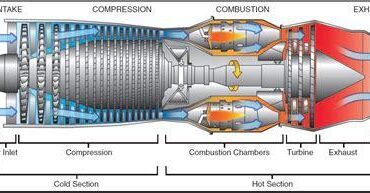
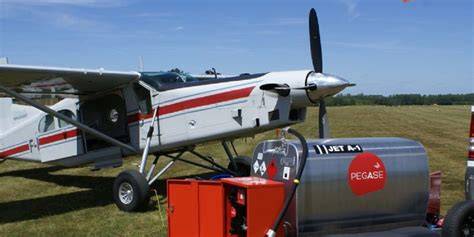
Jet fuel is a kerosene-based fuel designed primarily for turbine engines. Commercial aircraft such as the Boeing 777, military aircraft such as the F-35, and numerous turboprop aircraft depend on turbine-based propulsion systems that continuously burn fuel inside the engine.
One of jet fuel’s most important characteristics is its ability to remain usable at extremely low temperatures. At cruising altitudes approaching 40,000 feet, outside temperatures can become extraordinarily cold. Jet A-1, one of the most widely used aviation fuels, has a freezing point of approximately -52.6°F (-47°C). That low freezing point is essential when an aircraft spends hours flying through frigid upper-atmosphere conditions.
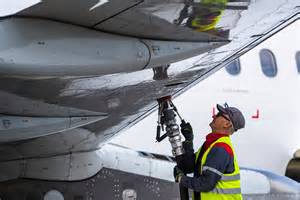
Jet fuel must also provide substantial energy density, allowing large aircraft to carry enough fuel for long-distance flights without making the fuel tanks excessively large. At the same time, the fuel needs appropriate volatility, combustion characteristics, thermal stability, and handling properties. These requirements become particularly important when aircraft are refueled rapidly at major airports.
The same basic fuel family can serve very different aircraft. Military jet fuel supports demanding turbine engines, while commercial aviation relies on standardized grades designed around civil aviation requirements. Whether the aircraft is an F-35 fighter or a long-range Boeing widebody, its turbine engine is fundamentally dependent on jet fuel rather than avgas.
How Aviation Gasoline Works
Avgas serves a very different purpose. Aviation gasoline is primarily used by piston-engine aircraft, including many smaller general aviation airplanes. These engines operate using spark ignition, broadly resembling the combustion process used in conventional gasoline-powered automobile engines.
Inside a piston aircraft engine, fuel and air are compressed before an ignition system creates the spark needed to initiate combustion. Many aviation piston engines use two spark plugs per cylinder, providing redundancy as well as supporting reliable ignition during flight.
One defining characteristic of avgas is its high octane rating. Common aviation gasoline grades have historically been associated with 100-octane fuel, allowing high-compression piston engines to operate without destructive knocking under demanding conditions.
This is also why avgas should not simply be treated as ordinary automotive gasoline. Aviation engines, fuel specifications, operating conditions, and certification requirements are different. Furthermore, traditional aviation gasoline has historically contained tetraethyl lead, although the industry has been moving toward unleaded alternatives.
Jet Fuel vs Avgas: The Biggest Differences
The most important difference is therefore engine compatibility. Jet fuel is intended for turbine engines, where combustion occurs continuously within a high-pressure airflow. Avgas is formulated for piston engines that use spark ignition and intermittent combustion cycles.
Their temperature characteristics also differ. Jet A-1’s very low freezing point is critical for high-altitude turbine aircraft, while certain avgas formulations can have an even lower freezing point. ExxonMobil’s aviation gasoline, for example, is cited at approximately -72.4°F (-58°C).
Another major distinction is that jet fuel does not require an octane rating in the same way avgas does. Octane performance is particularly important for spark-ignition piston engines, whereas turbine engines operate according to a different combustion principle.
Ultimately, jet fuel and avgas are specialized fuels developed for specialized propulsion systems. Jet fuel supports continuous-combustion turbine engines, while avgas supports spark-ignition piston engines. Their similar purpose hides major differences in chemistry, performance requirements, and engine design, making fuel selection one of the most fundamental technical requirements in aviation.