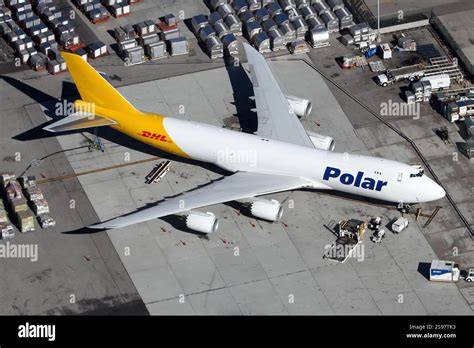
For more than five decades, the Boeing 747 has been one of the defining aircraft of global air freight. Its enormous fuselage, long range, high payload capability, and most famously its forward-opening nose door gave cargo operators a capability that few other aircraft could match. The 747 became far more than a large freighter: it became a specialized tool for moving everything from standardized containers to enormous industrial equipment across oceans. But the economics of four engines are becoming increasingly difficult to justify, and the production era of the classic jumbo jet is drawing to a close.
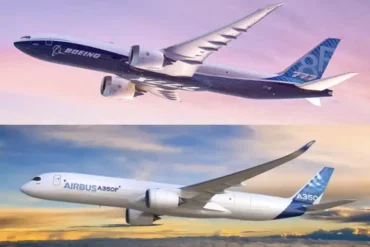
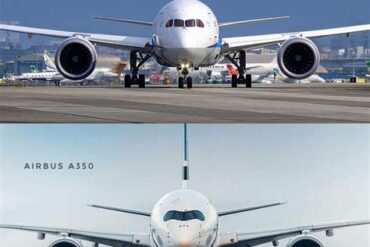
The next generation of large cargo aircraft is therefore taking shape around two twin-engine freighters: Boeing’s 777-8F and Airbus’ A350F. Both are designed to deliver the payload capability required by major freight networks while reducing fuel consumption and operating costs. Neither aircraft is a perfect technical replacement for the 747, however. Instead, they represent a change in how the air cargo industry thinks about capacity, efficiency, emissions, and specialized freight.
The shift will be particularly important because the Boeing 747-8F is unlikely to disappear at the same pace as older 747-400Fs. Its unique nose-loading capability gives it a role that cannot easily be reproduced by a conventional side-loading freighter. The result will not be a simple transition in which one aircraft replaces another. Instead, the future cargo fleet will increasingly be divided according to mission, with the 777-8F and A350F handling the majority of standardized freight while selected 747-8Fs remain valuable for specialized operations.
Boeing 777-8F Emerges As The Direct 747 Freighter Successor
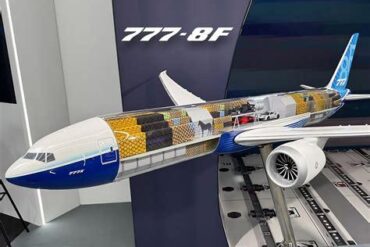
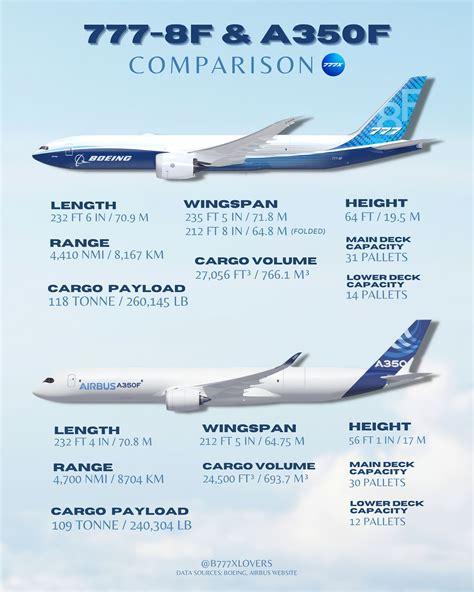
Of the two new aircraft, the Boeing 777-8F is arguably the more direct successor to the 747 in commercial cargo operations. Boeing already has decades of experience with the 777 freighter, and the new aircraft builds on that established platform rather than creating an entirely separate freighter family. It combines the 777X generation’s redesigned wing, new engines, updated systems, and improved structural efficiency with a cargo-focused configuration designed for long-haul freight networks.
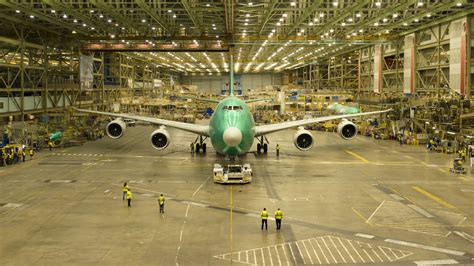
The first 777-8F airframe rolled out of Boeing’s Everett, Washington, facility on April 23, 2026, marking an important milestone for the program. The aircraft was built for Luxembourg-based Cargolux, an operator with extensive experience using large Boeing freighters. Its rollout demonstrated that the 777-8F was moving from an engineering program toward the physical aircraft that will eventually enter commercial service.
The program has also attracted an increasingly diverse group of customers. At the 2026 Farnborough International Airshow, MSC Air Cargo added five aircraft, pushing the 777-8F’s firm order backlog beyond 80 aircraft. Qatar Airways Cargo represents one of the largest commitments, with an order for 34 aircraft and options for another 16 in a deal valued at more than $20 billion. Lufthansa Cargo, ANA, China Airlines, Korean Air, and Silk Way West have also selected the aircraft.
The attraction is straightforward. The 777-8F is intended to provide the long-range payload capability expected from a large freighter without carrying the fuel and maintenance burden associated with four engines. For cargo airlines operating hundreds or thousands of flights annually, even relatively small improvements in fuel consumption can translate into substantial financial savings. The aircraft is therefore being positioned not simply as a new Boeing freighter, but as a central part of the industry’s move away from aging four-engine aircraft.
Boeing’s principal challenge is timing. The manufacturer has moved the expected first delivery toward 2028, with the freighter program affected by delays surrounding the wider 777X family. Boeing has also recorded a $2.6 billion pre-tax charge associated with the broader program, reflecting certification delays, production disruption, and increased costs. That means cargo operators must plan around an aircraft that promises major long-term benefits but has yet to establish itself in commercial service.
Airbus A350F Challenges Boeing In The Large Freighter Market
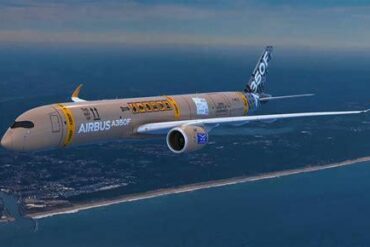
The other major aircraft positioned to replace older 747s is the Airbus A350F, a dedicated freighter derived from the A350 family. Airbus has taken a somewhat different approach from Boeing. Rather than evolving an existing freighter platform into a new generation, it has designed the A350F around the A350’s composite structure, modern aerodynamics, advanced systems, and existing engine technology.
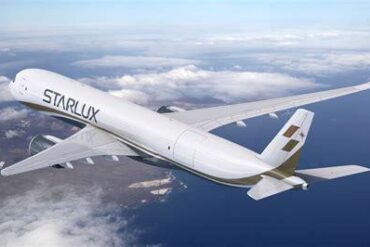
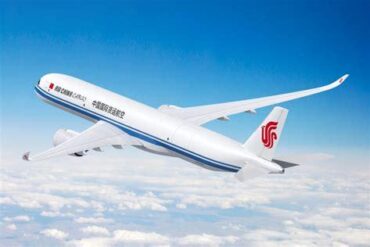
The aircraft has already attracted 107 firm orders from 14 customers, despite not yet entering flight testing. Its customer base includes Atlas Air, Air China Cargo, Etihad Airways, Singapore Airlines, Starlux Airlines, CMA CGM, Turkish Airlines, Cathay Pacific, and AviLease. In March 2026, Atlas Air ordered 20 A350Fs, becoming the type’s largest customer and providing an important vote of confidence from one of the world’s major cargo operators.
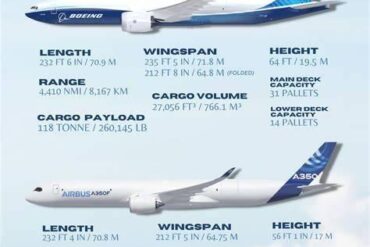
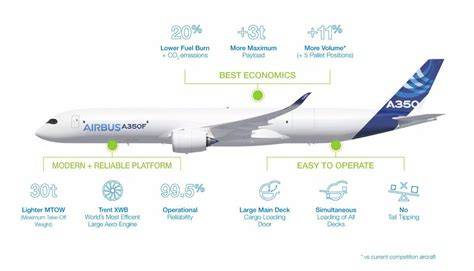
The A350F is designed to carry more than 242,508 pounds, or 110,000 kilograms, of payload, with a published range of approximately 4,700 nautical miles, or 8,704 kilometers. Those figures place it firmly in the heavy-freighter market while its composite fuselage and wings are intended to reduce structural weight. Airbus is also leveraging the commonality already established across the A350 family.
That commonality could become an important commercial advantage. Airlines and cargo operators already flying passenger A350s can potentially benefit from shared engine spares, tooling, maintenance knowledge, and other infrastructure. Airbus says the A350F has extensive airframe-tool and spare-parts commonality with the passenger aircraft. Crews with an existing A350 type rating should also face a more familiar transition than pilots moving into a completely different aircraft family.
Airbus has already completed the first A350F main-deck cargo door in Spain, but the program has experienced schedule pressure of its own. The manufacturer continues to target first delivery in the second half of 2027, although reports have suggested that the initial delivery could move into 2028. Airbus has also been working toward the aircraft’s first flight, subject to technical and weather conditions.
That schedule uncertainty matters because cargo operators are making fleet decisions in a rapidly changing regulatory and economic environment. The A350F has a strong order book, but it still needs to prove its production reliability, certification performance, payload capability, and real-world operating economics. Its success will ultimately depend on whether the savings generated over decades of operation justify the cost of acquiring a new-generation freighter.
Why Twin-Engine Freighters Are Replacing Four-Engine Jumbos
The fundamental reason behind the industry’s move away from the 747 freighter is economics. Four engines provide enormous thrust and historically enabled aircraft such as the 747 to carry exceptional loads over long distances. But modern turbofan engines have become powerful and efficient enough for twin-engine aircraft to perform many missions that once required four engines.
Every engine consumes fuel, requires maintenance, and contributes to operating complexity. A four-engine freighter consequently carries a structural and operational burden that a modern twin can avoid. On routes where the required payload, range, and airport infrastructure can be served by a twin-engine aircraft, the difference can become commercially significant.
This issue is particularly important in cargo aviation because freight operators cannot rely on passenger premium cabins or ancillary revenue to compensate for high operating costs. A freighter generates revenue primarily by moving cargo. If two aircraft can transport similar quantities of commercially useful freight but one burns considerably less fuel, the lower-cost aircraft can have a powerful advantage.
The 777-8F and A350F have therefore been designed around the principle that cargo capacity must be delivered more efficiently. New engines, aerodynamic improvements, lightweight materials, and updated systems all contribute to this objective. The A350F uses the Rolls-Royce Trent XWB-97, while the 777-8F benefits from the latest-generation propulsion and aerodynamic technology associated with the 777X family.
Environmental regulations add another layer of pressure. New international emissions requirements are making it increasingly difficult to produce older-generation aircraft that do not meet evolving carbon dioxide standards. Boeing’s 767 freighter production is scheduled to end in 2027, while the broader regulatory environment is encouraging operators to invest in aircraft with lower fuel consumption.
That does not mean the newest aircraft will automatically be cheaper on every route. Freight economics depend on many factors, including fuel prices, stage length, cargo density, payload, airport charges, crew costs, maintenance requirements, and whether an aircraft can secure profitable cargo on the return flight. A 747 may therefore remain economically attractive if its unique loading capability allows an operator to accept a shipment that a smaller or side-loading aircraft cannot handle efficiently.
The 747’s Nose Door Is Its Greatest Advantage
The most difficult feature of the 747 freighter to replace is surprisingly not its four engines or even its enormous cargo volume. It is the nose door.
The 747-400F and 747-8F can raise the entire forward section of the aircraft, allowing cargo to enter directly through the nose. This capability is exceptionally valuable when transporting equipment that cannot be easily rotated or tilted. Industrial machinery, generator components, drilling equipment, oversized manufacturing parts, and other project cargo can sometimes be loaded far more efficiently through the front than through a conventional side cargo door.
Neither the 777-8F nor the A350F has a nose door. Both rely on side-loading systems. Their cargo doors are extremely large, but the fundamental loading geometry remains different. An unusually long or heavy item may need to be angled, rotated, or carefully maneuvered before reaching its final position inside the aircraft.
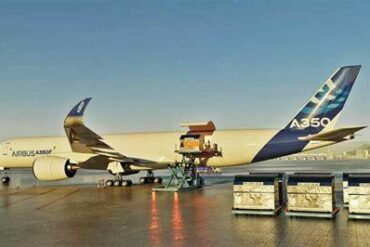
Airbus has attempted to reduce this disadvantage with one of the most impressive features of the A350F: its enormous main-deck cargo door. The opening measures 175 inches, or 444.5 centimeters, across, with a clear width of approximately 169.5 inches, or 430.53 centimeters. Airbus says the door is about 15% wider than the main-deck door on the 777F and is large enough to accommodate major aircraft engines without disassembly.
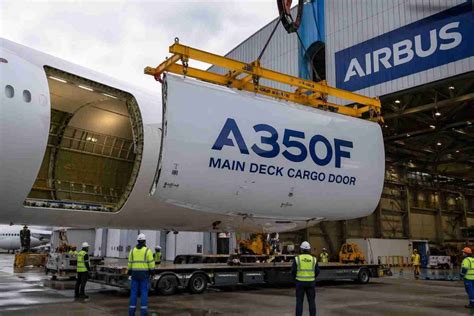
The engineering behind the door is also significant. Airbus has constructed it using composite materials and integrated it as a structural part of the aircraft rather than simply cutting a large opening into the fuselage. Its rear-fuselage location is intended to help maintain suitable center-of-gravity characteristics during loading, while its electrically actuated system is designed to simplify ground operations.
Yet a wider side door cannot completely reproduce the 747’s forward-loading capability. If an object fits through a side opening but must be tilted dramatically to enter the fuselage, its dimensions, weight distribution, and structural characteristics can become limiting factors. Floor loading and internal clearance can also determine whether the shipment is practical.
For standardized parcel freight, these differences may barely matter. Pallets, containers, express packages, and general cargo can be designed around standardized handling systems. Project cargo is different. A turbine component or industrial machine may have been designed for a factory or power plant rather than an aircraft cargo hold. Its dimensions cannot simply be changed to fit the aircraft.
That distinction explains why the 747-8F can remain valuable even as its routine operating economics become less attractive.
The Boeing 747-8F Will Not Disappear Overnight
The arrival of the 777-8F and A350F will accelerate the retirement of older 747-400Fs, but the newer 747-8F is in a different position. Approximately 107 747-8Fs have been delivered, with deliveries continuing as recently as 2023. Compared with the oldest 747 freighters, these aircraft still have substantial useful lives ahead of them.
Freighter aircraft also tend to have unusually long careers. Passenger airlines frequently retire aircraft because cabins become commercially outdated, seat products change, or newer aircraft provide a better passenger experience. Cargo aircraft do not face the same pressure. Their value depends much more heavily on structural condition, payload capability, loading systems, maintenance history, and the types of freight they can accept.
A well-maintained freighter can therefore remain productive long after its passenger equivalent would have disappeared from an airline’s fleet. This is one reason the 747-8F could remain in specialized service for decades even as its share of mainstream cargo traffic declines.
The secondary market will also create opportunities. Aircraft that become less attractive for scheduled network operations can potentially move into charter, heavy-lift, project logistics, or other specialized roles. The economics of those missions can justify operating an aircraft that would struggle to compete with a 777-8F or A350F on a conventional overnight parcel route.
The result is likely to be a gradual redistribution of work rather than a sudden retirement wave. Older 747-400Fs will increasingly leave service as maintenance and operating costs rise. New-generation twin-engine freighters will take over more standardized traffic. Meanwhile, 747-8Fs will increasingly be selected for cargo where their unique configuration provides a commercial advantage.
Cargo Airlines Will Build Fleets Around Different Missions
The most important change coming to global air freight is therefore not the disappearance of the 747 but the specialization of freighter fleets. The 777-8F and A350F are expected to dominate the next generation of mainstream large-freighter operations. Their efficiency makes them particularly attractive for parcel networks, general freight, express logistics, and long-haul routes where cargo can be loaded through conventional side doors.
The 747-8F will occupy a smaller but highly valuable niche. Its forward cargo door, large internal volume, and ability to load exceptionally difficult shipments will preserve its relevance in markets where cargo geometry matters as much as payload weight. That capability is difficult to measure using simple payload figures, but it can be extremely valuable to logistics companies serving industrial customers.
This division of labor also explains why calling the 777-8F or A350F a direct replacement for the Boeing 747 can be misleading. They are replacements for much of the 747’s commercial workload, but not necessarily for every capability the aircraft provides. The distinction is important because aviation technology rarely advances by reproducing every feature of an older aircraft. Instead, manufacturers optimize new aircraft around the missions that represent the largest and most profitable markets.
In that sense, the 747’s successor is really a pair of aircraft. Boeing’s 777-8F offers the most obvious continuation of the company’s long-haul freighter lineage, while Airbus’ A350F introduces a lightweight composite platform and a huge main-deck door designed to compete directly for the same customers. Both promise major improvements in efficiency without requiring operators to abandon the scale of aircraft needed for global cargo networks.
The End Of The Jumbo Era Will Be A Gradual Transformation
The Boeing 747 changed air freight by making enormous volumes of cargo movement possible on long-distance routes. Its distinctive shape became synonymous with international logistics, and its nose door created a specialized capability that remained valuable even after twin-engine aircraft became more efficient.
The future will look different. The Boeing 777-8F and Airbus A350F are poised to become the leading new-generation heavy freighters, offering cargo operators better fuel efficiency, modern engines, lower operating costs, and stronger alignment with increasingly demanding emissions standards. Their arrival will make it harder to justify aging four-engine aircraft on ordinary freight routes.
But the 747-8F will not simply vanish when those aircraft arrive. Instead, it will increasingly become a specialist aircraft, serving shipments whose dimensions or loading requirements make its nose door more valuable than the fuel savings offered by a newer twin.
The cargo industry is therefore moving toward a future in which efficiency and capability coexist rather than compete directly. Twin-engine freighters will carry the majority of standardized international freight, while a smaller fleet of 747-8Fs will continue handling the difficult jobs that conventional side-loading aircraft cannot perform as easily. The iconic jumbo jet may lose its position at the center of the global cargo market, but its most unusual feature will keep it flying long after the four-engine era has ended.