Modern aviation dazzles with glass cockpits, fly-by-wire systems, and highly automated flight management computers that can guide an aircraft from climb to landing with astonishing precision. Yet beneath this technological sophistication lies a deliberate paradox: pilots are still trained on aircraft that feel almost primitive by comparison. This is not nostalgia. It is strategy—one rooted in human psychology, safety engineering, and the immutable physics of flight.
The continued reliance on older aircraft systems in pilot training reflects a deeper truth about aviation: technology can assist, but it cannot replace human intuition, especially when systems fail. In an era where automation dominates, the industry is quietly doubling down on fundamentals to ensure that pilots remain more than just system managers—they remain aviators.
The Analog Foundation: Building Real Airmanship From the Ground Up
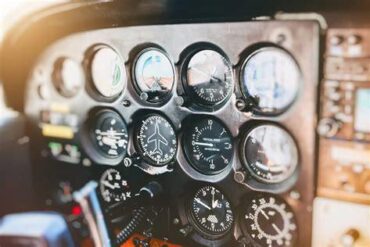
At the earliest stages of training, student pilots are often introduced to aircraft like the Cessna 172 or the Piper Archer. These machines lack the polished digital interfaces of modern jets. Instead, they present raw data through analog gauges—airspeed indicators, altimeters, vertical speed indicators—each demanding interpretation.
This environment forces the brain to actively construct a mental model of the aircraft’s position, speed, and energy state. Unlike digital displays that synthesize information into simplified visuals, analog systems require constant cross-checking. The pilot must think continuously, not passively observe.
This cognitive workload is intentional. It strengthens neural pathways associated with spatial awareness, decision-making, and motor coordination. Over time, this builds what experienced aviators often describe as “feel”—an intuitive sense of how an aircraft is behaving even before instruments confirm it.
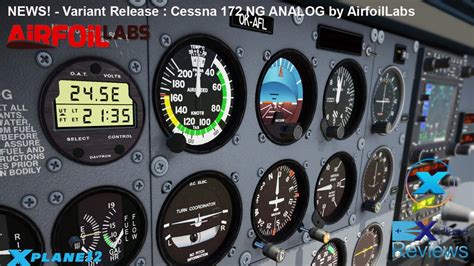
That “feel” becomes critical in abnormal situations. When automation fails or provides misleading information, the pilot who has trained in an analog environment retains the ability to reconstruct reality from first principles. Airspeed, pitch, power—these fundamentals never change, regardless of how advanced the aircraft becomes.
Automation Dependency and the Erosion of Core Skills
Automation has undoubtedly made aviation safer. However, it has also introduced a subtle but significant risk: dependency. When systems handle most tasks, human operators naturally disengage from active control.
This phenomenon manifests in several ways:
- Reduced hand-flying proficiency due to limited manual input
- Slower reaction times when automation disengages unexpectedly
- Overreliance on system outputs rather than independent verification
The aviation industry has observed this trend with increasing concern. Investigations into accidents such as Asiana Airlines Flight 214 crash revealed that even experienced crews can lose situational awareness when automation behaves unpredictably.
In such cases, pilots are not lacking knowledge—they are lacking recent practice in manual flying under pressure. Training on older systems directly addresses this gap by ensuring that fundamental skills remain sharp, not theoretical.
The Psychology of Flying: Cognitive Tunneling and the Startle Effect
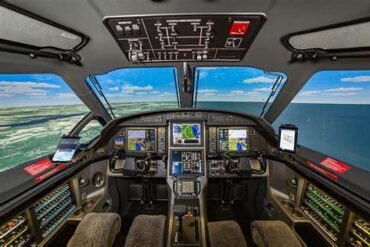
Human cognition plays a central role in why analog training remains indispensable. Modern cockpits, while efficient, can inadvertently encourage passive monitoring. This creates vulnerabilities rooted in how the brain processes information.
One of the most critical is cognitive tunneling—the tendency to fixate on a single piece of information while ignoring the broader context. In a glass cockpit, this might mean focusing on one display while missing conflicting cues elsewhere.
Closely related is the startle effect. When automation suddenly fails, the brain can experience a brief period of paralysis, typically lasting several seconds. During this time, reaction speed drops dramatically, and decision-making becomes impaired.
Older aircraft mitigate these risks by keeping pilots actively engaged at all times. There is no autopilot safety net in many training scenarios. The pilot must constantly adjust trim, monitor instruments, and respond to environmental changes. This continuous engagement conditions the brain to remain alert, reducing susceptibility to cognitive overload.
Tactile Feedback: The Missing Link in Digital Flight
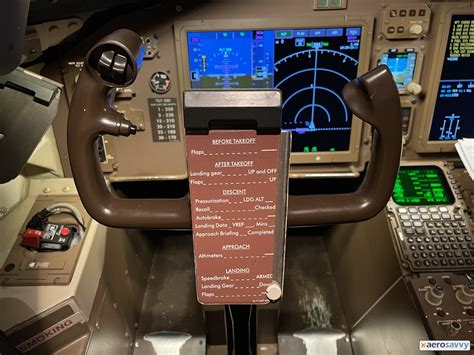
One of the most overlooked advantages of older aircraft is tactile feedback. In mechanical systems, the controls physically respond to aerodynamic forces. The yoke may stiffen as speed increases or vibrate as a stall approaches.
This feedback provides early warning signals that are felt, not just seen.
In contrast, many modern fly-by-wire aircraft rely on artificial feedback systems. While highly sophisticated, these systems cannot fully replicate the nuanced sensations of direct mechanical linkage. As a result, pilots trained exclusively on digital platforms may lack the instinctive cues that signal danger.
Training on analog aircraft ensures that pilots internalize these sensations. They learn to associate control pressure, vibration, and responsiveness with specific aerodynamic conditions. This sensory awareness becomes invaluable when visual or digital cues are unreliable.
Regulatory Pressure and Industry Response
Regulatory bodies have taken notice of the risks associated with automation dependency. Organizations such as the Federal Aviation Administration have emphasized the need to preserve manual flying skills in training programs.
Recent oversight initiatives highlight a growing concern: pilots are becoming highly proficient at managing systems but less adept at controlling aircraft manually. This imbalance poses a long-term safety risk, particularly in rare but critical failure scenarios.
In response, training institutions and airlines are reengineering their curricula. There is a renewed emphasis on:
- Manual flight proficiency
- Raw data interpretation
- Scenario-based training without automation assistance
This shift reflects a broader industry realization: technology should enhance human capability, not replace it.
Lessons From Military Aviation: A Return to Simplicity
Military aviation has provided some of the clearest evidence supporting the value of analog training. The United States Army recently reassessed its training approach after identifying a troubling trend.
New pilots trained on advanced platforms demonstrated strong system management skills but struggled with fundamental flight maneuvers. Emergency procedures requiring instinctive control—such as autorotations—revealed gaps in basic airmanship.
The solution was not more technology, but less. By reintroducing simpler aircraft into early training stages, the military aims to rebuild foundational skills before layering on complexity.
This approach underscores a key principle: mastery of advanced systems must be built on a solid understanding of basic flight dynamics.
Understanding the “Why” Behind Flight Data
One of the most compelling arguments for analog training lies in the distinction between knowing “what” and understanding “why.”
Modern cockpits excel at presenting information. They tell pilots what the aircraft is doing with remarkable clarity. But they often obscure the underlying reasons.
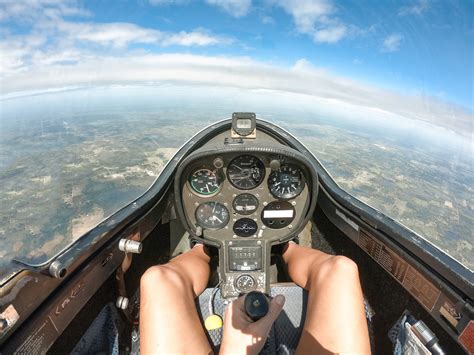
Analog systems, by contrast, force pilots to interpret data actively. They must understand how pitch affects airspeed, how power influences climb rate, and how environmental factors alter performance.
This deeper comprehension creates resilience. When something goes wrong, the pilot is not just reacting to numbers—they are diagnosing a system based on fundamental principles.
The Risks of a Glass-Only Training Approach
Advocates of modern training methods argue that pilots should learn in environments that mirror their future workplaces. There is merit to this perspective. Familiarity with digital systems can streamline the transition to commercial aviation.
However, a glass-only approach carries inherent risks. Without early exposure to manual flying, students may never develop the intuitive sense of aircraft behavior that analog training provides.
This gap becomes critical in abnormal situations. When digital systems fail or provide conflicting information, pilots must rely on their internal understanding of flight dynamics. Without that foundation, decision-making becomes slower and less reliable.
The issue is not technology itself, but the absence of balance. Effective training must integrate both analog and digital experiences to produce well-rounded aviators.
Negative Transfer: When Old Habits Meet New Systems
While analog training offers significant benefits, it is not without challenges. One of the most important is negative transfer—the application of learned behaviors in inappropriate contexts.
For example, a pilot accustomed to direct mechanical feedback may misinterpret the artificial feel of a fly-by-wire system. Similarly, aggressive control inputs that are effective in light aircraft may be unsuitable for larger, more sensitive jets.
This is particularly relevant in aircraft like the Boeing 777, where control inputs are mediated by complex software. Pilots must learn to adapt their instincts to the logic of the system while retaining their foundational skills.
Training programs address this by gradually introducing complexity. Students first master basic flight principles, then learn how those principles are modified by modern technology. This layered approach minimizes the risk of negative transfer while preserving the benefits of analog training.
Dual Competency: The Future of Pilot Training
The ultimate goal of modern pilot training is not to choose between analog and digital systems, but to achieve mastery of both. This concept, often referred to as dual competency, represents the ideal balance.
A dual-competent pilot can:
- Hand-fly an aircraft with precision in challenging conditions
- Manage complex automation systems effectively
- Transition seamlessly between manual and automated modes
- Maintain situational awareness regardless of system state
This versatility is essential in an industry where technology continues to evolve rapidly. Pilots must be prepared for scenarios that fall outside normal operations, where standard procedures may not apply.
Why Older Aircraft Systems Still Matter in 2026 and Beyond
Despite the rapid advancement of aviation technology, the core principles of flight remain unchanged. Lift, drag, thrust, and weight govern every aircraft, whether it is a simple trainer or a state-of-the-art airliner.
Older aircraft systems provide the most direct connection to these principles. They strip away abstraction and reveal the raw mechanics of flight. This clarity is invaluable during the formative stages of a pilot’s career.
Moreover, the persistence of analog training reflects a broader philosophy within aviation: redundancy. Just as aircraft systems are designed with backups, pilot training incorporates multiple layers of skill development. If one layer fails—such as automation—the others must remain intact.
The Pilot’s Evolving Role: From Operator to Problem-Solver
As automation continues to advance, the role of the pilot is shifting. In routine operations, systems handle much of the workload. The pilot’s value increasingly lies in managing exceptions—those rare moments when something goes wrong.
In these situations, the ability to think critically, act decisively, and rely on fundamental skills becomes paramount. Analog training prepares pilots for this role by cultivating independence and adaptability.
The pilot of the future is not just a system operator, but an expert problem-solver. They must understand both the technology they use and the physics that underpin it.
Conclusion: A Timeless Skillset in a Digital Sky
The continued use of older aircraft systems in pilot training is not a relic of the past—it is a strategic investment in the future. By grounding pilots in the fundamentals of flight, the aviation industry ensures that they remain capable, adaptable, and resilient.
Technology will continue to evolve. Cockpits will become more advanced, systems more integrated, and automation more sophisticated. But the human element will always be the final safeguard.
When screens go dark and systems fail, it is not the software that saves the aircraft—it is the pilot. And that pilot’s ability to respond effectively is forged, quite deliberately, in the simplicity of older machines.
In a world increasingly defined by digital precision, the enduring value of analog training is clear: it keeps aviation human, grounded, and ultimately, safe.