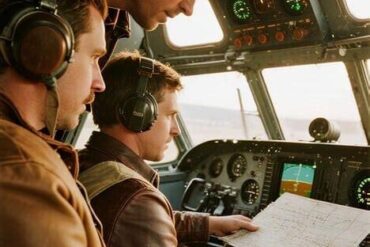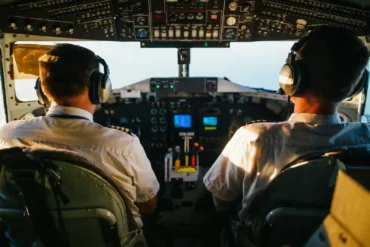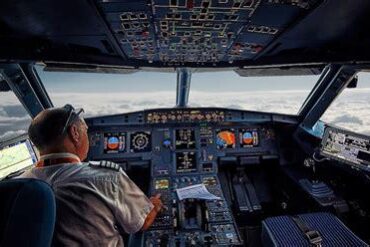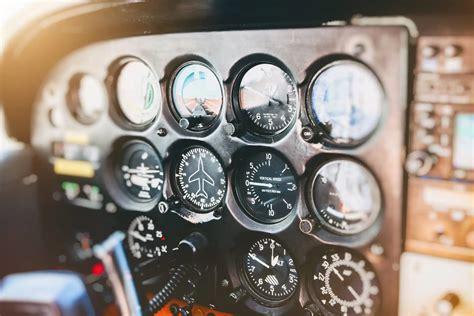
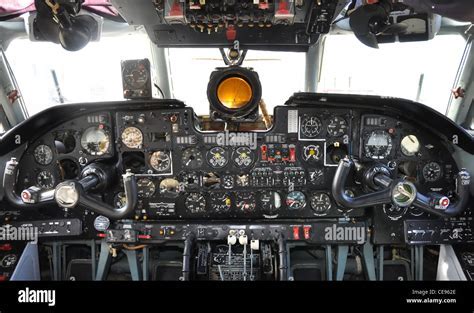
The cockpit of an aircraft is far more than a control hub — it is the brain of the flying machine, where countless data streams and mechanical elements converge under the command of a trained pilot. For newcomers, the sheer volume of buttons, switches, screens, and levers can appear chaotic. Yet, despite technological evolutions, most cockpits — especially in small aircraft — retain a foundational design philosophy rooted in functional logic and pilot ergonomics.
To truly grasp the basics of the cockpit of a plane, one must first understand that all flight movement — ascent, descent, turn, thrust — is governed by a relatively small number of core controls. The rest is instrumentation: guidance, communication, monitoring, and safety systems designed to keep the pilot informed and the aircraft operational.
The Ignition Control: Sparking Life into Flight
Before an airplane taxis, lifts, or turns, it must come alive — and that starts with the ignition control system. Much like a car’s key ignition, small aircraft have a selector switch that engages magnetos to produce the electrical spark necessary for combustion. Most ignition switches have five positions:
- OFF: Fully disengages the ignition circuit.
- RIGHT (R) and LEFT (L): Engages individual magnetos to isolate engine behavior during pre-flight checks.
- BOTH: Combines both magnetos for normal operation, ensuring redundancy.
- START: Activates the starter motor to crank the engine.
Some older planes still feature manual levers or mechanical starters, while modern models increasingly rely on push-button or switch-controlled electric starters. Pre-flight procedures involving magneto checks help pilots identify potential ignition faults early, reducing in-flight engine failure risks.
Yoke, Side Stick, and Center Stick: The Heart of Flight Control
At the core of piloting lies the primary flight control interface — the device that manipulates the aircraft’s attitude and orientation. This comes in several forms, most commonly the yoke, side stick, or center stick.
The yoke, often shaped like a “W,” “U,” or even a ram’s horn, is the most traditional control found in general aviation. It enables control over the ailerons (for roll) and the elevator (for pitch). Push forward to lower the nose, pull back to raise it, and twist side-to-side to bank left or right.
Some newer aircraft like the Cirrus SR series favor side sticks, located on either side of the cockpit. These offer a more compact and lightweight control solution, ideal for aircraft where digital displays occupy center real estate. Side sticks also allow fly-by-wire systems to reduce physical linkage and improve control precision.
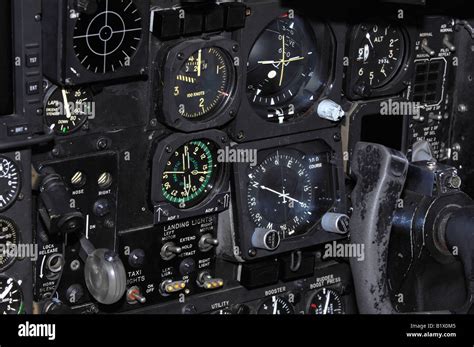
Center sticks or joysticks are often seen in vintage planes and fighter aircraft. Situated between the pilot’s legs, the stick offers sensitive and responsive control — ideal in aerobatic or high-performance environments.
Each of these input devices controls the aircraft’s attitude in 3D space. Regardless of form, the principle remains unchanged: controlling the yoke or stick controls the airplane’s roll, pitch, and indirectly, yaw.
The Engine Control Quadrant: Managing Power, Fuel, and Propulsion
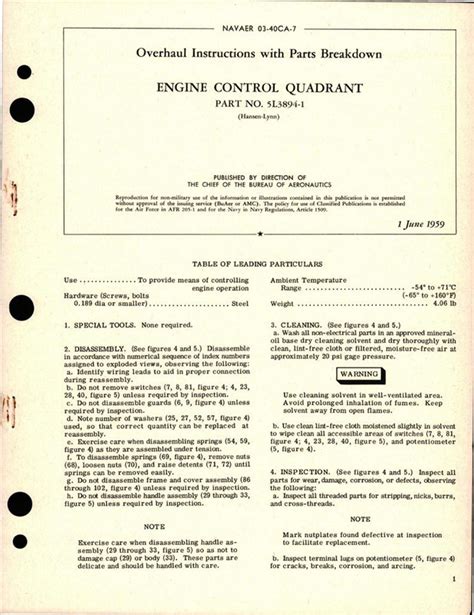
Every powered aircraft depends on precise management of engine performance, which is accomplished through the engine control quadrant. While this setup may vary, most small aircraft group the following three core levers:
- Throttle (Black): Regulates engine power by controlling airflow and fuel mixture volume.
- Propeller Control (Blue): Adjusts blade pitch and engine RPM to balance power and fuel efficiency.
- Mixture Control (Red): Fine-tunes the fuel-to-air ratio, crucial for adapting to changing altitudes and engine loads.
Together, these levers enable the pilot to orchestrate power output, efficiency, and engine health throughout the flight.
For instance, during takeoff, the mixture is set to rich, ensuring maximal fuel delivery. As the aircraft climbs, air density decreases, and the pilot adjusts to a leaner mixture to prevent engine flooding. Proper use of these controls not only enhances performance but significantly extends engine lifespan and fuel economy.
The Flap Handle: Controlling Lift and Drag on Demand
Though not directly tied to the main flight control surfaces, the flap handle plays an indispensable role in managing the aircraft’s lift characteristics, particularly during takeoff, descent, and landing. Flaps increase the curvature of the wing, enhancing lift at lower speeds — ideal for safe landings or short runway takeoffs.
Post-1970s aircraft typically feature an electronic flap switch on the instrument panel, often horizontal and marked with a symbolic flap icon. Earlier models rely on manual flap levers located beside the pilot’s seat. Regardless of implementation, the function remains the same: controlled deployment of wing flaps to alter aerodynamic performance.
Correct flap usage allows for slower approach speeds, steeper descent angles, and greater short-field performance — crucial capabilities in both bush flying and urban airfields.
Rudder Pedals: Steering on the Ground and in the Sky
Below the dashboard and often forgotten until needed are the rudder pedals — two foot-operated controls that govern the aircraft’s yaw movement. These pedals adjust the trailing edge of the vertical stabilizer’s rudder, allowing for left or right movement of the nose.
Their role is critical during crosswind takeoffs and landings, coordinated turns, and engine-out scenarios where directional control is vital. Pressing the top portion of the pedals in most light aircraft also engages the wheel brakes, providing ground maneuvering control absent in early airplanes.
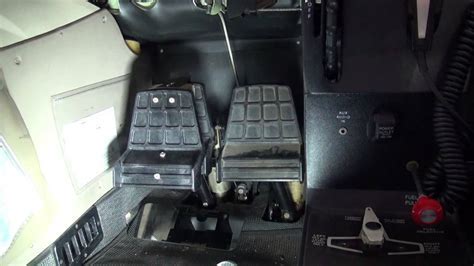
Historically, aircraft had no brakes — slowing was achieved by natural drag and turf resistance. Modern rudder systems are integrated and responsive, offering pilots a blend of aerodynamic and mechanical control.
Avionics and Instrument Panel: Where Analog Meets Digital
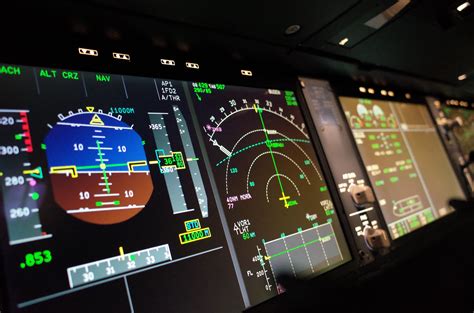
While core control elements remain largely mechanical or hydraulic in most small planes, the instrument panel has undergone a significant digital transformation. Analog gauges such as the altimeter, airspeed indicator, vertical speed indicator (VSI), attitude indicator, and heading indicator still exist, but many cockpits now feature glass displays powered by systems like Garmin G1000 or Dynon SkyView.
These all-in-one digital screens provide:
- Synthetic vision
- Real-time terrain mapping
- Engine monitoring
- Integrated GPS
- Traffic alerts and weather data
Despite the digital leap, pilots are still trained to interpret traditional gauges to ensure redundancy in case of screen or power failure. This blend of new and old makes the cockpit a hybrid navigation center, ready to handle modern flight with timeless principles.
Communication and Navigation Systems: Airborne Connectivity
Another critical part of the cockpit is the communication and navigation array, which connects the aircraft to Air Traffic Control (ATC), other aircraft, and navigation aids.
VHF radios, transponders, Automatic Dependent Surveillance-Broadcast (ADS-B) systems, and GPS receivers allow for position reporting, clearance reception, and traffic deconfliction. In IFR (Instrument Flight Rules) scenarios, precision navigation tools like VOR receivers and ILS (Instrument Landing Systems) guides enable operations in low visibility environments.
Conclusion: A Harmonized Machine Built for Precision
The cockpit of a plane is a symbiotic fusion of man, machine, and environment, orchestrated through a set of controls and instruments that — while complex at first glance — adhere to a disciplined and standardized design. From the tactile feedback of a yoke to the digital cues of a glass panel, each component plays a specific and irreplaceable role.
Mastery of the cockpit is not about memorizing every switch, but understanding the function and interrelation of its systems. Once a pilot is fluent in the logic of ignition, thrust, directional control, and avionics, the cockpit ceases to be intimidating — it becomes empowering.
In aviation, confidence comes from competence — and competence begins here, in the heart of every aircraft, where steel meets sky and training becomes trust.