Australia’s relationship with distance has always been existential. The continent sits far from almost everywhere that matters in global aviation, and airlines serving it have spent decades turning isolation into an engineering challenge. By 2026, that challenge has produced some of the longest scheduled commercial flights ever operated, with block times pushing beyond 25 hours. These are not endurance stunts. They are carefully optimized, commercially viable routes that reflect how aircraft technology, crew planning, and passenger expectations have evolved.
The key distinction lies in the term direct flight. Unlike a nonstop service, a direct flight keeps the same aircraft and flight number even if it pauses en route. Australia dominates this category. According to Cirium data, seven Australian-linked routes now exceed 21 hours of scheduled block time, all involving a single stop but remaining continuous services. These flights are long enough to compress entire circadian cycles, cross hemispheres, and redraw traditional route maps.
What makes 2026 especially notable is that these routes are no longer novelties. They are embedded in airline schedules, supported by purpose-built cabins, advanced fatigue management systems, and aircraft designed to cruise efficiently for almost an entire day. At the center of this transformation stands Qantas, backed by a small but strategically important cast of international competitors.
Qantas And The Anatomy Of A 25-Hour Flight
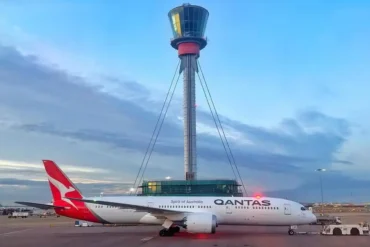
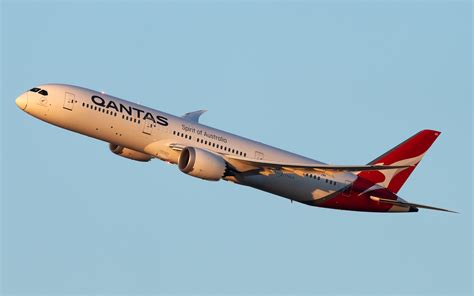
The longest of them all is QF33, linking Sydney and Paris via Perth with a maximum scheduled block time of 25 hours and 20 minutes. Operated by the Boeing 787-9 Dreamliner, this route represents a masterclass in ultra-long-haul planning. The Perth–Paris sector alone stretches over 7,700 nautical miles, placing it among the longest nonstop segments ever flown commercially. Fuel uplift, payload management, and seasonal wind patterns all play decisive roles in shaping the timetable.
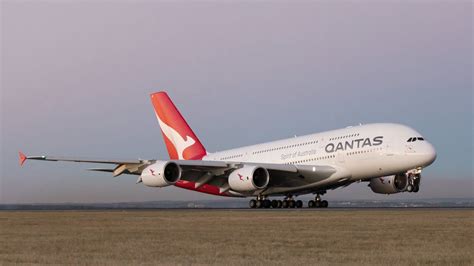
Close behind is QF1, the modern incarnation of the legendary Kangaroo Route between Sydney and London Heathrow via Singapore, blocked at exactly 25 hours. Unlike the Paris service, this route is flown by the Airbus A380, making it the only superjumbo entry on the list. The aircraft’s capacity allows Qantas to balance extreme duration with high-volume demand, particularly during peak European travel seasons.
Two additional Qantas services reinforce Sydney’s status as the nerve center of Australia’s longest flights. The Sydney–Rome via Perth route clocks in at 23 hours and 55 minutes, while the return leg of the New York–Sydney service via Auckland reaches 23 hours. Both rely on the 787-9, chosen for its blend of range, fuel efficiency, and lower cabin altitude, a subtle but meaningful comfort factor on flights approaching a full day in the air.
International Challengers On Australia’s Longest Routes
The longest direct flight touching Australia not operated by a local carrier belongs to Air Canada. Flight AC33, running from Toronto to Sydney via Vancouver, carries a scheduled block time of 22 hours and 55 minutes. Operated daily by the Boeing 777-200LR, this service underscores the continued relevance of the long-range twinjet. Despite being an older design, the aircraft remains uniquely capable of hauling meaningful payloads across the vast Pacific while maintaining operational flexibility.
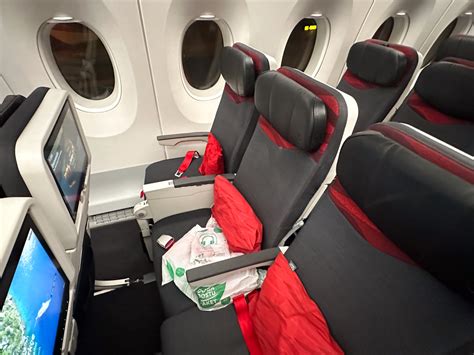
Turkish Airlines completes the list with two ambitious routes connecting Istanbul to Sydney via Kuala Lumpur and Istanbul to Melbourne via Singapore. Blocked at 21 hours 30 minutes and 21 hours 20 minutes respectively, both flights are operated by the Airbus A350-900. These services are strategically important, extending Istanbul’s reach deep into the Southern Hemisphere while positioning the airline as a serious player in ultra-long-haul connectivity.
Why Direct Flights Now Outlast Nonstop Records
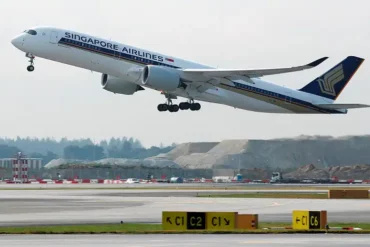
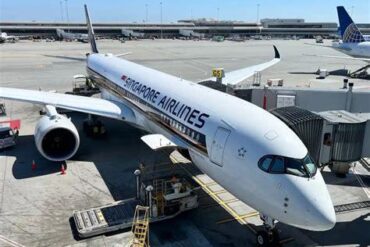
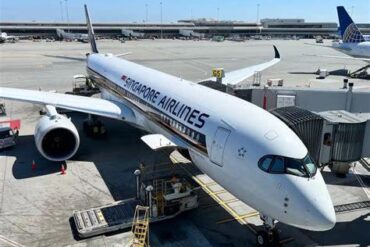
The longest nonstop flights in the world still hover around 19 hours, most famously Singapore Airlines’ service between Singapore and New York. Direct flights, however, have quietly surpassed them. The reason is pragmatic rather than technological. A single stop allows airlines to refuel, swap crews, and reset regulatory clocks while preserving a seamless experience for passengers who never change aircraft.
This structure enables block times approaching 26 hours, a threshold once considered impractical. With Singapore Airlines discontinuing its marathon Singapore–Houston via Manchester route, the only longer scheduled direct service today is Aircalin’s Nouméa–Paris via Bangkok, an outlier driven by unique geopolitical and network considerations.
Project Sunrise And The Next Leap Forward
The current record holders are impressive, but they are also transitional. Qantas is preparing to rewrite the rulebook with Project Sunrise, centered on the Airbus A350-1000ULR. Deliveries are expected to begin in late 2026, with 12 aircraft on order. These jets are engineered specifically for missions exceeding 22 hours nonstop, eliminating the need for intermediate stops entirely.
When deployed, they will enable nonstop flights from Sydney to London and New York, routes that currently require stopovers despite already ranking among the world’s longest direct services. Ironically, these future nonstop flights may be shorter in total block time than today’s one-stop marathon routes, yet they will represent a more profound shift by collapsing global distances into a single continuous journey.

Australia’s longest flights are not just about endurance. They are living case studies in how aviation adapts to geography, economics, and human limits. By 2026, spending nearly 25 hours on a single flight is no longer a curiosity. It is simply how Australia connects to the rest of the planet, one remarkably long arc at a time.