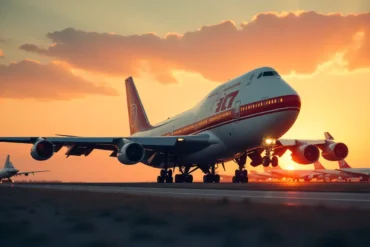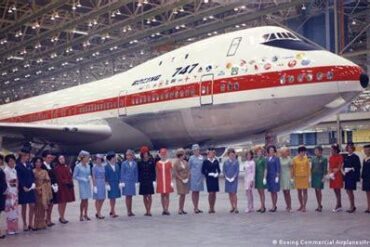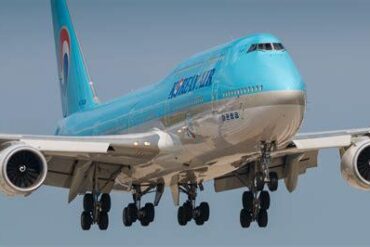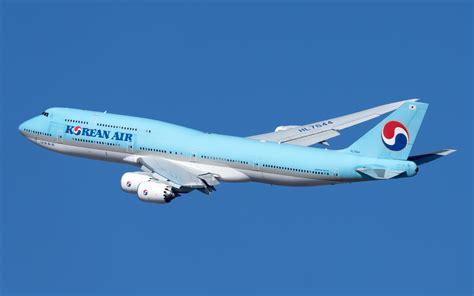
The Boeing 747, often hailed as the “Queen of the Skies,” continues to dominate some of the world’s longest air routes despite a growing shift toward more fuel-efficient aircraft. Three major global carriers—Air China, Korean Air, and Lufthansa—remain committed to using the 747, particularly the advanced 747-8i variant, on extensive transpacific and transatlantic journeys to the United States. These flights are not only a testament to the aircraft’s enduring capabilities but also serve as nostalgic reminders of aviation’s golden era.
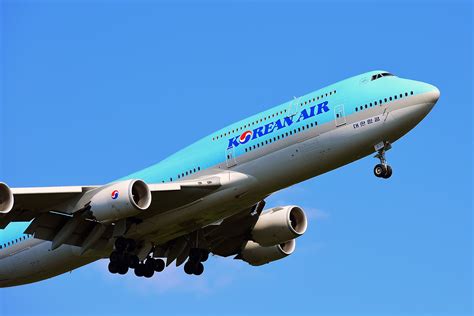
Air China’s Ultra-Long 747 Journey: Washington Dulles to Beijing Capital
Leading the list of the longest 747-operated flights into the United States is Air China’s monumental service between Washington Dulles (IAD) and Beijing Capital International Airport (PEK). This route clocks in with a maximum block time of 16 hours and 55 minutes, making it the lengthiest scheduled 747 flight involving a U.S. destination. The journey, which currently runs twice a week, tests the endurance of both passengers and crew.
One of the key reasons for this extended duration is Air China’s avoidance of Russian airspace, a measure that has become standard in the current geopolitical climate. The resulting detour significantly extends flight time, making this 747-8i-operated service one of the longest non-stop passenger flights in the world.
The Boeing 747-8i used on this route features 365 seats, including luxurious first-class suites, and is often preferred for its capacity and range. Even after the COVID-19 pandemic forced a reduction in flight frequency, Air China maintained this high-capacity aircraft on the route, emphasizing its strategic importance.
Korean Air’s Seasonal Powerhouse: The Transpacific 747 Network
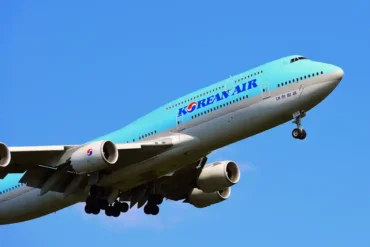
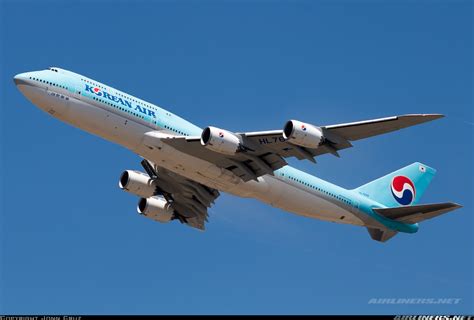
Korean Air continues to showcase the versatility and endurance of the Boeing 747-8i on its transpacific network, especially to New York JFK and Atlanta Hartsfield-Jackson International Airport.
The crown jewel of its 747 operations is the route from Seoul Incheon (ICN) to New York JFK, with a flight time of 15 hours and 40 minutes. This service is slated for a seasonal aircraft switch beginning October 26, 2025, when the 747-8i will replace both the Airbus A380 and Boeing 777-300ER for the winter schedule. This route is not just a nod to nostalgia; it’s a calculated move based on demand, load factors, and strategic fleet deployment.
Another noteworthy service is Korean Air’s Atlanta to Seoul Incheon route, which runs daily with a block time of 15 hours and 10 minutes. However, this aircraft will be phased out from the route after August 31, 2025, in favor of more modern jets. Korean Air’s ability to pivot its 747 operations by season underscores its flexible fleet strategy and commitment to maintaining a prestigious onboard product on U.S.-bound flights.
Lufthansa’s Transatlantic Reliability: A Diverse U.S. 747 Portfolio
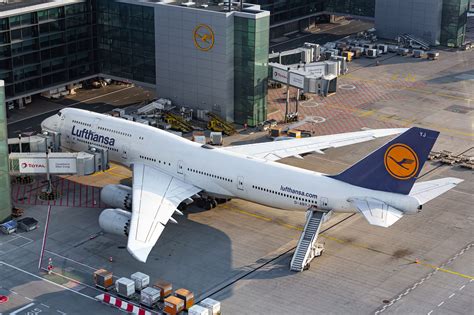
Lufthansa may not operate the single longest 747 flight to the U.S., but it runs the most diversified set of 747-8i routes across the Atlantic, making it a vital part of its intercontinental strategy. Operating from its hub at Frankfurt Airport (FRA), Lufthansa maintains regular 747-8i services to several major American cities, each providing a smooth, high-capacity option for transatlantic travelers.
- Frankfurt to Los Angeles (LAX): 11 hours 40 minutes
- Frankfurt to San Francisco (SFO): 11 hours 30 minutes
- Frankfurt to Houston Intercontinental (IAH): 10 hours 35 minutes
- Frankfurt to Miami (MIA): 10 hours 25 minutes
- Frankfurt to Chicago O’Hare (ORD): 9 hours 20 minutes
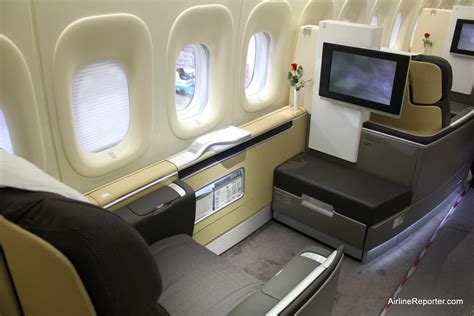
The 747-8i remains a flagship aircraft for Lufthansa, known for its upper deck business class, quiet cabin experience, and stable transatlantic performance. These flights have earned Lufthansa a reputation for consistency and luxury, particularly among long-haul premium customers.
Why the Boeing 747 Still Matters in 2025
With the surge of newer aircraft like the Boeing 787 Dreamliner and Airbus A350, one might expect the 747 to have vanished from long-haul routes. Yet, it continues to play a pivotal role in connecting major global hubs to U.S. gateways. Several factors contribute to the aircraft’s enduring presence:
- High Capacity: With over 350 seats on average, the 747 is ideal for routes with consistently high demand.
- Exceptional Range: The aircraft can complete ultra-long-haul missions without refueling, even with detours.
- Prestige & Passenger Experience: Airlines continue to use the 747 to signal premium service, especially with offerings like first-class suites and spacious upper-deck business cabins.
- Operational Legacy: For carriers with a long-standing 747 fleet and infrastructure, continued operation makes logistical sense until full fleet modernization is completed.
The Decline of the Queen: A Gradual Farewell
Despite its strengths, the Boeing 747’s days are clearly numbered. Rising fuel costs, increased emissions scrutiny, and fleet rationalization are gradually pushing airlines to retire these four-engine giants. Even loyal operators like Korean Air have transitioned portions of their long-haul routes to more fuel-efficient models.
However, these final years have given the aircraft a renaissance of appreciation. Aviation enthusiasts and seasoned travelers alike flock to book trips on the 747-8i, knowing that opportunities to fly this icon are dwindling. Carriers still operating the aircraft are leveraging this sentiment, using the Queen of the Skies as a marketing asset and experience differentiator.
Korean Air’s Seasonal Fleet Strategy: A Case Study in Flexibility
Korean Air’s use of the 747-8i reflects more than nostalgia—it’s a masterclass in fleet deployment agility. The airline strategically adjusts its widebody assignments based on:
- Passenger load forecasts
- Seasonal demand shifts
- Cargo capacity requirements
- Aircraft availability from maintenance cycles
By placing the 747-8i back on the New York JFK route for the winter 2025 season, Korean Air ensures optimal resource allocation and passenger experience. While other airlines scramble to retire aging widebodies, Korean Air’s selective utilization keeps the 747 economically viable and culturally significant.
Final Thoughts: The Enduring Majesty of the 747
The Boeing 747’s legacy is one of engineering triumph, luxury in the skies, and global reach. As Air China, Korean Air, and Lufthansa continue to deploy these majestic aircraft on some of the longest and most prestigious routes to the United States, they not only serve market demand but also pay tribute to an aircraft that redefined international air travel.
For passengers, flying the 747 is more than a journey—it’s an experience steeped in history, comfort, and marvel. And for now, despite growing industry changes, the Queen of the Skies continues to command attention, respect, and admiration above the clouds.