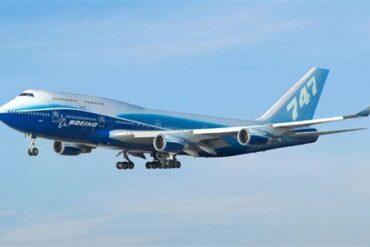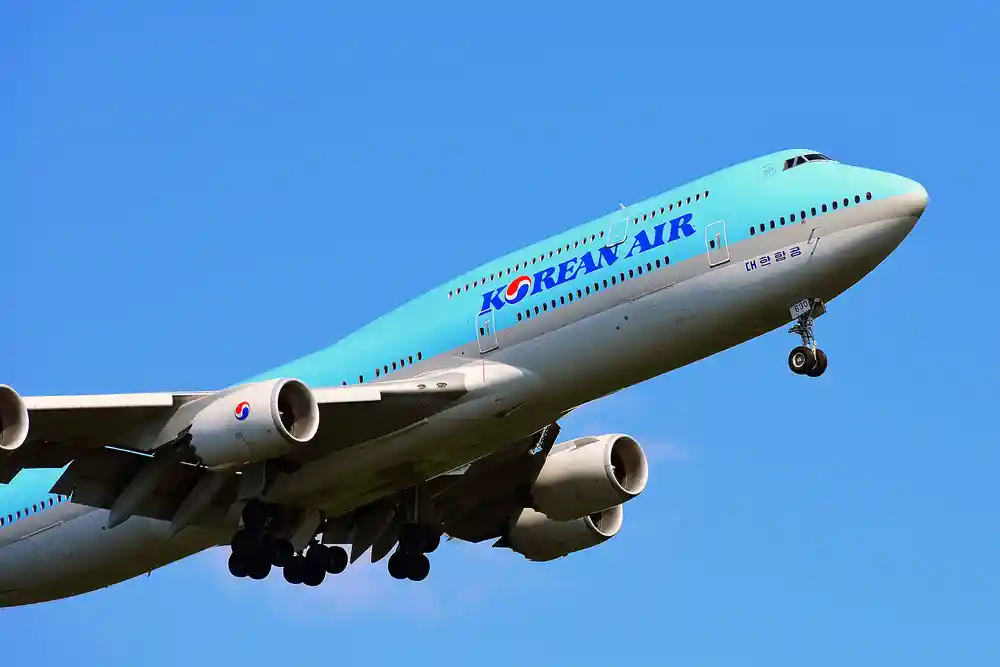
For decades, the Boeing 747 has symbolized long-haul aviation and intercontinental ambition. While most carriers have phased out the iconic “Queen of the Skies,” a few international airlines still operate the aircraft on scheduled passenger services to and from the United States. From Washington D.C. to Beijing and New York to Seoul, the 747 continues to push the limits of endurance, range, and relevance.
Today, only three airlines—Lufthansa, Korean Air, and Air China—still operate the 747 on U.S. routes. With the newer and more efficient Boeing 747-8i replacing its predecessors, these flights now represent some of the longest continuous passenger operations involving a four-engine aircraft. These routes not only span immense distances but often contend with airspace restrictions, especially the avoidance of Russian airspace, which has extended block times considerably.
Air China’s D.C. to Beijing Route: The Reigning Champion
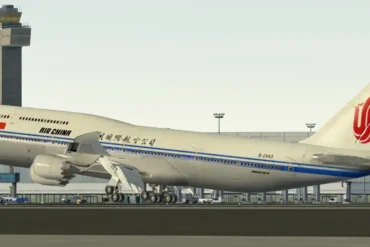
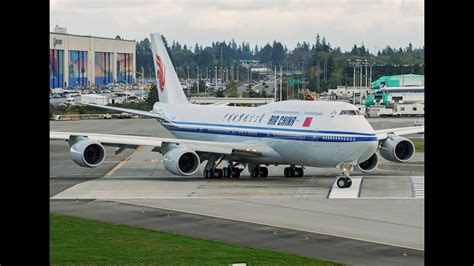
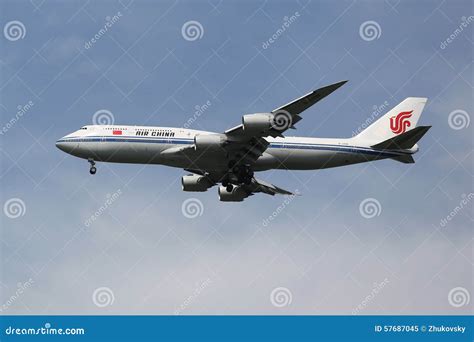
The longest Boeing 747 passenger flight operating to or from the United States is Air China’s return leg from Washington Dulles (IAD) to Beijing Capital International Airport (PEK). With a block time of up to 16 hours and 55 minutes, this route epitomizes endurance flying. Flights typically depart IAD just before midnight, with passengers landing in Beijing at 03:55 local time, two calendar days later—a grueling journey intensified by time zone shifts and circadian disruption.
This extraordinary duration is largely due to detours around restricted Russian airspace, forcing aircraft to take lengthier paths over the Arctic and Pacific. The 365-seat Boeing 747-8i, reintroduced in March 2025, replaced the 777-300ER and currently operates twice weekly. The aircraft offers first-class seating, which enhances appeal on such ultra-long-haul sectors. Notably, until early 2025, the route involved a technical stop in Los Angeles, which has since been eliminated with the return of nonstop service.
Air China’s JFK-Beijing: A Close Second
Trailing just behind is another Air China service: New York JFK to Beijing Capital, with a maximum block time of 16 hours and 45 minutes. Operating five times weekly, this route also relies on the long-range capabilities of the 747-8i. Though not quite as time-consuming as the Washington leg, it still ranks among the longest continuous 747 services globally, partly due to similar airspace limitations.
These extended durations highlight the endurance and capability of the 747-8i, which continues to prove its worth as a reliable ultra-long-haul platform in a market increasingly dominated by twin-engine aircraft like the Boeing 777 and Airbus A350.
Korean Air’s New York to Seoul Flights: Transpacific Legacy
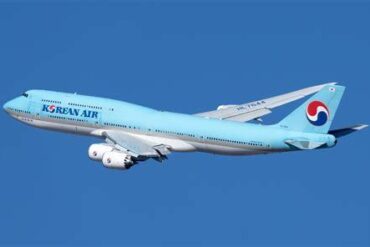
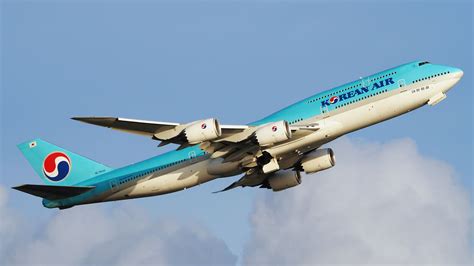
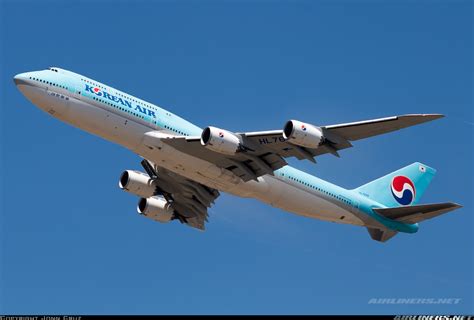
Korean Air’s double-daily JFK to Seoul Incheon route ranks third with a block time of 15 hours and 40 minutes. Starting October 26, the 747-8i will replace both the Airbus A380 and Boeing 777-300ER as part of Korean Air’s winter schedule shift, which adheres to IATA seasonal slot adjustments.
This route links the financial capitals of the U.S. and South Korea, with Seoul’s Incheon Airport ranking as the sixth busiest widebody hub worldwide. Korean Air, which frequently rotates aircraft types depending on demand and availability, has consistently prioritized JFK for 747 service. The aircraft’s premium configuration—ideal for business and high-end leisure travelers—makes it a preferred choice for this segment.
Atlanta to Seoul: Farewell to the Queen
Another transpacific mammoth, the Atlanta to Seoul Incheon route, records a block time of 15 hours and 10 minutes, ranking fourth. However, this service is on the cusp of transition. The 747-8i will be replaced by the 777-300ER starting September 1, 2025.
This route has been operated by Korean Air since 1994 and is a byproduct of the SkyTeam alliance with Delta Air Lines, whose headquarters are based in Atlanta. Over the decades, a diverse fleet has served the ATL–ICN corridor, including the 747-400, 787-9, A380, and multiple 777 variants. The 747-8i was reintroduced in October 2022 and has run near-daily until the current phaseout plan.
LAX to Seoul: The Queen Departs on October 25
The fifth-longest 747 passenger flight to the U.S. is also a Korean Air service—Los Angeles to Seoul Incheon—with a block time of 13 hours and 10 minutes. The route currently sees 10 weekly flights on the 747-8i, but this too is scheduled to end on October 25. With Los Angeles as a major transpacific gateway, Korean Air’s decision to withdraw the aircraft marks the end of an era.
Its withdrawal reflects an evolving fleet strategy, replacing quads with more fuel-efficient twins, especially as fuel costs and emissions regulations continue to impact route economics.
Lufthansa’s Transatlantic Workhorses
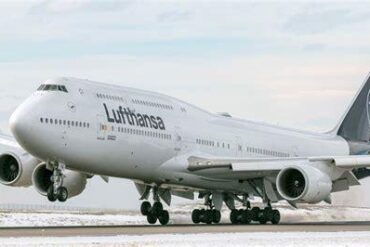
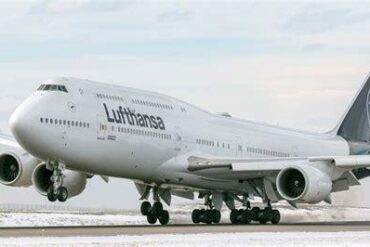
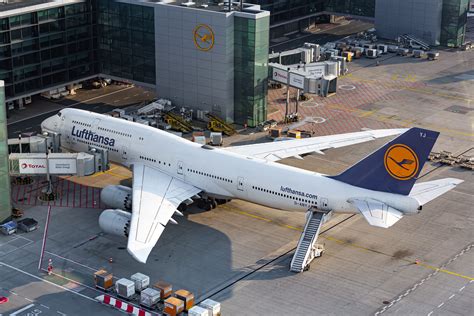
While most remaining 747 operators fly across the Pacific, Lufthansa dominates transatlantic 747 operations, accounting for over 70% of U.S. 747 flights in mid-2025. The airline currently operates the 747-8i daily on the following high-capacity routes:
- Frankfurt to Los Angeles (11h 40m)
- Frankfurt to San Francisco (11h 30m)
- Frankfurt to Houston Intercontinental (10h 35m)
- Frankfurt to Miami (10h 25m)
- Frankfurt to Chicago O’Hare (9h 20m)
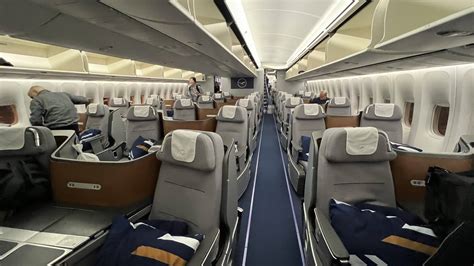
Each of these flights highlights Lufthansa’s continued faith in the 747 as a flagship aircraft on U.S. routes. The 747-8i offers premium onboard experiences including first class, private suites, and the signature upper-deck business cabin.
Notably, some routes like Houston will see the 747 phased out by October 25, aligning with the IATA winter timetable. Others—particularly to LAX and SFO—remain strongholds due to steady demand and Lufthansa’s position as a Star Alliance anchor.
Why These Flights Still Matter
Despite the shift toward twin-engine jets, these 747 flights retain operational, symbolic, and economic relevance. For airlines like Air China, Korean Air, and Lufthansa, the 747-8i bridges capacity needs with prestige, offering airlines a tool to differentiate high-yield markets.
The aircraft’s range and capacity remain competitive. The 747-8i, the final passenger variant of the 747 line, boasts significant structural and aerodynamic upgrades over the 747-400, including a new wing design, GEnx-2B67 engines, and composite materials, offering greater fuel efficiency and lower emissions.
Moreover, the 747’s historical significance and enduring fan base grant it a certain cachet, particularly among aviation enthusiasts and premium travelers. Whether flying over the Arctic Circle or crossing the Atlantic, these routes serve as a tribute to a bygone era—one that remains airborne just a little longer.
Final Thoughts: The Queen’s Last Reign
The era of the Boeing 747 in regular U.S. passenger service is nearing its final chapter. However, the aircraft still rules on select long-haul routes where capacity, prestige, and range are paramount. From the 16h 55m epic between Washington and Beijing to Lufthansa’s steadfast Frankfurt connections, the Queen of the Skies continues to command attention.
As these remaining flights wind down—either seasonally or permanently—they serve as flying monuments to the aircraft that once defined international travel. Travelers who wish to experience the 747’s iconic upper deck, first-class suites, or four-engine thunder would do well to book soon.