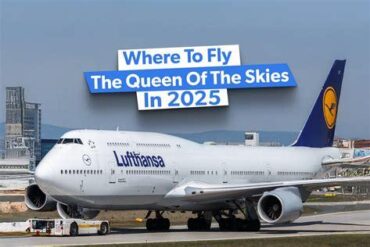
The Boeing 747, affectionately known as the Queen of the Skies, continues to command admiration for its grandeur and engineering brilliance. But beneath the romance lies a harsh financial reality: operating this behemoth in 2025 is a financial endeavor only a few airlines can justify. With rising fuel costs, high crew salaries, intensive maintenance, and soaring capital expenditures, the economics of keeping a Boeing 747 airborne today are far more complex than ever before.
The aircraft’s operational cost varies significantly depending on the variant. The 747-400, once the backbone of long-haul fleets, and the newer 747-8, represent different cost equations. The older 747-400 is cheaper in terms of capital depreciation but lags behind in fuel efficiency. Conversely, the 747-8 boasts modern engines and enhanced systems but comes with a much steeper acquisition and capital amortization cost.
Fuel Burn and Jet Fuel Prices in 2025
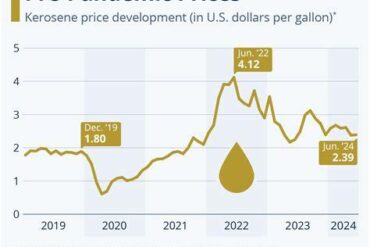
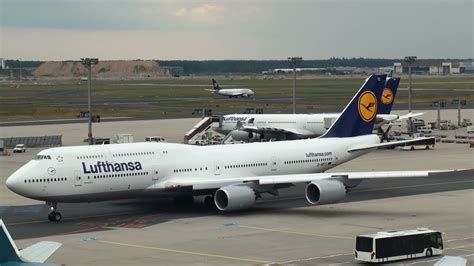
Fuel remains the largest single operational expense for any widebody aircraft, and for the Boeing 747, this cost is eye-watering. The 747-400 consumes approximately 3,240 gallons (or 14,400 liters) of fuel per hour. At a global average fuel price of $1.926 per gallon in 2025, that equates to an hourly fuel cost of $6,240.24. The 747-8, utilizing more efficient GEnx-2B engines, consumes slightly less—around 3,143 gallons per hour, totaling approximately $6,053.42.
While marginally better, the 747-8’s efficiency gain is countered by its higher structural weight. Though more fuel-efficient than its predecessor, it’s still no match for newer twinjets like the Boeing 787 or Airbus A350, which consume significantly less fuel per seat.
Crew Salaries and Staffing Costs
Operating a 747 requires a large and experienced crew. At a minimum, each flight needs two pilots, but for flights longer than eight hours, regulations often require three or four pilots. Additionally, U.S. FAA regulations stipulate at least 12 flight attendants per 747 flight due to its multiple doors and passenger capacity.
Based on top-tier union contracts, a 747 captain earns up to $478.75/hour, while a first officer earns $327.03/hour. Assuming two captains and two first officers for ultra-long-haul flights, pilot staffing alone could cost upwards of $5,640.46 per flight.
Flight attendants earn between $35.82 and $82.24/hour, depending on experience and region. With 12 attendants on board, staffing costs soar to approximately $6,908.16 per flight. These numbers may vary globally, but U.S. rates—among the highest in the world—provide a useful upper-bound reference.
Maintenance: The Million-Dollar Checkups
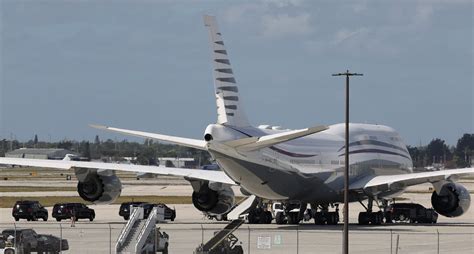
Maintenance is another critical and costly component. Boeing 747s are subjected to rigorous checks at intervals. The most comprehensive, known as the D check, can cost an airline upwards of $6 million. Performed every 6 to 10 years, this procedure takes weeks and involves complete disassembly and inspection.
Aside from D checks, routine A, B, and C checks, tire replacements, engine overhauls, and avionics updates rack up thousands of dollars per flight hour. On average, airlines spend an estimated $1,018.18/hour maintaining a Boeing 747.
Capital Costs and Aircraft Depreciation
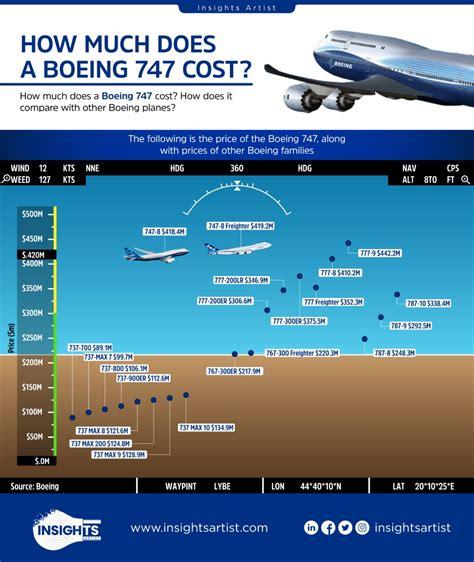
New aircraft are expensive. The Boeing 747-400 had a list price of over $260 million, but airlines typically secure discounts of 50% or more. The 747-8, more recent and advanced, commanded a list price of around $418 million. Realistically, operators would have paid around $130 million for a 747-400 and $209 million for a 747-8.
These costs translate into significant hourly capital expenditures. Using depreciation estimates over a 165,000-hour service life:
- 747-400 capital cost per hour: $787.88
- 747-8 capital cost per hour: $1,266.67
Financing or leasing introduces other hidden costs, often kept confidential. Leasing can offer cash flow advantages but usually increases total expenditure over the aircraft’s lifespan.
Catering, Landing Fees, and Hidden Charges
A full-service long-haul 747 flight can easily cost tens of thousands in catering alone. High-capacity flights often demand multiple hot meals, snacks, beverages, and specialized premium-class catering, especially on airlines like Lufthansa or Korean Air.
Airport landing and navigation fees are also non-trivial. These vary by airport but can be $10,000 or more at major international hubs. Add to this insurance premiums, overflight fees, and ground handling, and the total operating cost per hour grows rapidly.
Case Study: 7-Hour Flight Operating Cost Breakdown
Let’s simulate a 7-hour intercontinental flight by a 747-400 and a 747-8, assuming full staffing and top-end cost estimates:
- Fuel: $43,681.68 (747-400), $42,373.93 (747-8)
- Pilot Salaries: $5,640.46 (both types)
- Cabin Crew: $6,908.16 (both types)
- Capital Cost: $5,515.16 (747-400), $8,866.69 (747-8)
- Maintenance: $1,018.18 (both types)
Total Operating Cost:
- 747-400: $62,763.64
- 747-8: $64,807.42
These numbers exclude extra overhead like airport fees, insurance, and catering, pushing the realistic total well above $70,000 per flight, or $10,000–$20,000 per hour, depending on configuration and mission profile.
Seat Economics: Bigger Isn’t Always Better
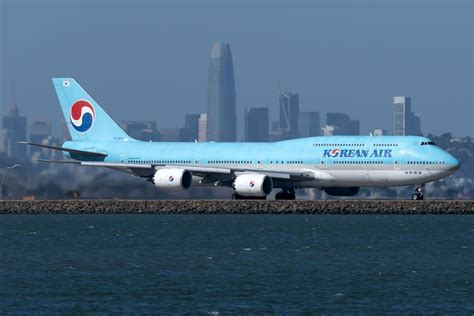
One of the paradoxes of the 747 is that despite its massive size, it doesn’t necessarily offer better per-seat economics. The 747-8 has 364 seats in Lufthansa’s configuration, while the 747-400 often fits 371. Theoretically, the larger aircraft should offer better efficiency per seat, but that only holds if the plane is consistently filled—something harder to achieve in today’s fragmented market.
By comparison, modern aircraft like the Boeing 787 or Airbus A350 carry 250–350 passengers with significantly lower fuel burn and operating costs. As long as a twinjet can fulfill route demands, it will always be the more cost-effective option.
Why Airlines Are Retiring the 747
As operational costs mount and passenger demand fragments, airlines are increasingly moving toward twin-engine widebodies. Aircraft like the 777-300ER, 787 Dreamliner, and A350-900/1000 offer more flexibility, lower operating costs, and fewer regulatory constraints (thanks to ETOPS certification).
Only a handful of airlines—Lufthansa, Korean Air, and Air China—still fly the 747 in passenger service. The cargo variant, the 747-8F, fares better due to its unmatched cargo capacity, but even here, newer aircraft like the 777F and A350F are nipping at its heels.
The Final Descent of an Icon
Despite its place in history, the 747’s reign is ending. Designed for a different era—one where scale mattered more than flexibility—the aircraft now finds itself too large, too expensive, and too inefficient for today’s hyper-competitive airline industry.
What once symbolized the pinnacle of aviation ambition is now a financial burden for all but a few carriers. Unless operating on niche routes with exceptionally high demand or configured as a luxury flagship, the 747 cannot compete with newer aircraft.
Still, its legacy remains untarnished. The Queen of the Skies opened new routes, changed international travel, and introduced millions to the thrill of flying. As it bows out of commercial service, its image will live on—not in balance sheets, but in hearts, films, and aviation lore.