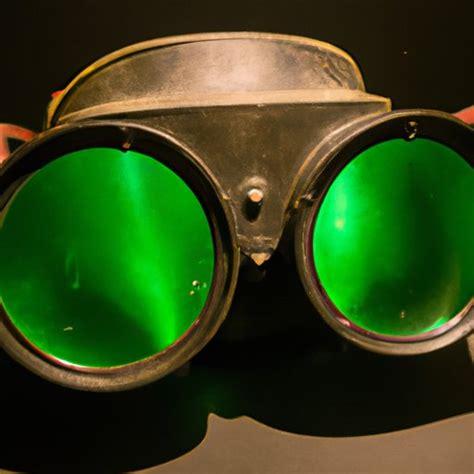
Night vision goggles (NVGs) are among the most transformative innovations in modern warfare, allowing soldiers to navigate and engage in combat under the cloak of darkness. The journey of night vision technology spans nearly a century, from primitive prototypes to the highly advanced, multi-spectral imaging devices used today. Understanding this evolution requires delving into its complex history, from its secretive origins in World War II to its pivotal role in modern conflicts.
The Origins of Night Vision Technology in the 1930s
Night vision’s story begins in pre-World War II Europe, where the concept of seeing beyond natural light limitations was first explored. In 1936, the German electrical company AEG began experimenting with infrared illumination and image conversion devices. Their first successful prototype was completed in 1939, but it was not in the form of wearable goggles. Instead, the system consisted of a massive infrared searchlight paired with an optical viewer mounted on tanks, enabling vehicle operators to maneuver in darkness. This bulky apparatus symbolized the infancy of night vision technology—effective but highly impractical for widespread field use.
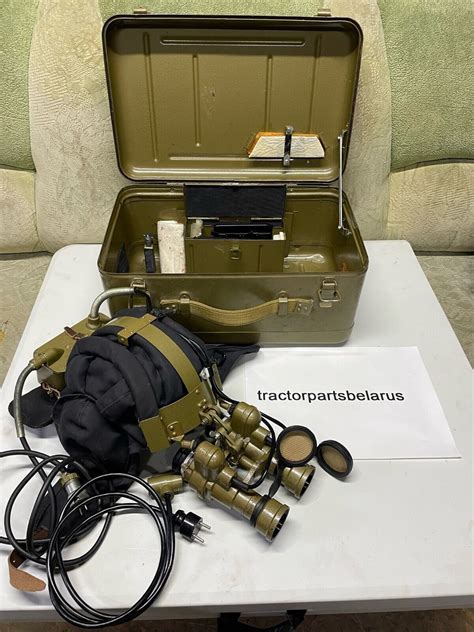
The Soviet Union pursued similar efforts in the late 1930s, developing early night vision prototypes for infantry and tank crews. The Soviets fielded one of the earliest mobile NVG systems in 1939, but the design was cumbersome. Soldiers wore a large, disk-shaped electro-optical converter on their chests, along with a substantial battery pack on their backs. This primitive solution offered limited battlefield utility but laid the foundation for future refinements.
World War II: The First Combat Use of Night Vision
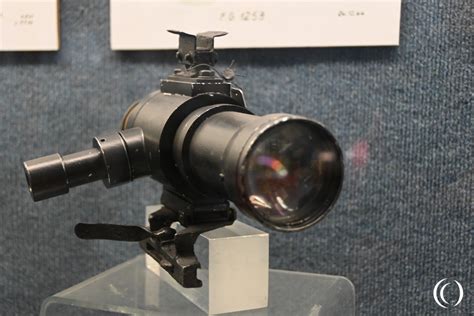
The true combat debut of night vision technology came during World War II. German forces equipped tanks with infrared night vision systems, and by 1944, they had miniaturized this concept with the ZG 1229 “Vampir”, an attachment for the MP44/StG 44 assault rifle. The Vampir system allowed infantrymen to engage targets at night using a small infrared spotlight and scope, though only a limited number of these devices were deployed.
On the Soviet side, tank crews benefited from infrared periscope glasses and powerful IR searchlights mounted on armored vehicles. These early applications were groundbreaking but revealed a critical limitation: infrared night vision required active illumination from powerful, visible-to-infrared light sources, which risked exposing the user to enemy detection.
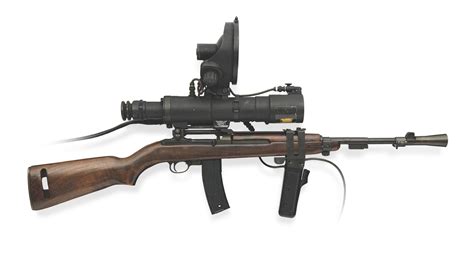
Meanwhile, the United States military pursued its own night vision program, leading to the development of the “sniperscope.” Introduced in 1945, this weapon-mounted device included an image converter tube paired with a bulky infrared spotlight and an external power source. Only about 300 sniperscopes were deployed in the Pacific Theater during the final months of the war. While rudimentary, these devices demonstrated the immense tactical advantage of being able to see in the dark.
Post-War Development: Generation Zero to Generation One
The night vision devices of World War II were what engineers later classified as “Generation Zero.” These systems relied on active infrared illumination and could only amplify light about 1,000 times. They were revolutionary but far from efficient, with heavy components and limited range. Still, they provided invaluable lessons for future research.
By the 1950s, the U.S. military had developed passive night vision devices that used ambient light amplification, removing the need for large infrared searchlights. This marked the dawn of Generation One technology. These devices became significantly lighter, more reliable, and practical for field operations. U.S. forces deployed these improved systems during the Korean War, although they were still primarily limited to vehicle use and specialized weapons applications.
Vietnam War: The First Widespread Use of Night Vision Goggles
The Vietnam War marked a turning point in the deployment of night vision technology. By the 1960s, Generation Two devices had emerged, using improved image intensifier tubes with microchannel plates, vastly enhancing light amplification capabilities. For the first time, soldiers could conduct foot patrols using compact night vision scopes and goggles.
These devices proved to be a game-changer in Vietnam’s dense jungles. U.S. forces utilized night vision scopes for ambushes, reconnaissance missions, and defensive operations, gaining a decisive edge in nighttime engagements. This era also saw the introduction of vehicle-mounted systems for enhanced convoy protection and navigation in low-light environments. Despite their bulk and limited field of view, these goggles revolutionized battlefield tactics and underscored the necessity of owning the night.

Generational Leap: From Generation Two to Generation Three
The post-Vietnam era saw rapid advancements in image intensification technology. By the late 1970s and early 1980s, Generation Three night vision devices were introduced. These incorporated gallium arsenide photocathodes and ion-barrier film-coated microchannel plates, dramatically boosting sensitivity and durability. This meant light amplification capabilities skyrocketed to 50,000 times or more, compared to just 1,000 times in Generation Zero devices.
Generation Three NVGs became standard-issue gear for U.S. Special Operations Forces and later for broader Army and Marine Corps units. They allowed longer operational use, clearer imaging, and enhanced performance under starlight conditions. This generational leap cemented night vision as an indispensable component of modern military operations.
Modern Night Vision: The Enhanced Night Vision Goggle (ENVG-B)
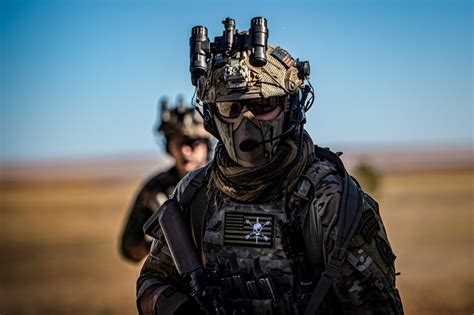
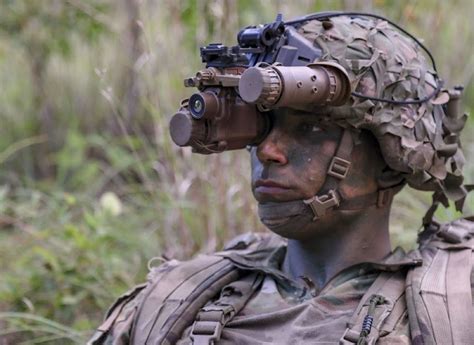
Today’s night vision technology is lightyears ahead of its early predecessors. The Enhanced Night Vision Goggle-Binocular (ENVG-B), currently used by the U.S. Army, combines image intensification with thermal imaging, providing a fusion view that allows soldiers to detect and identify targets even in near-total darkness. These advanced NVGs feature wireless connectivity to weapon-mounted cameras, enabling soldiers to aim and fire without directly looking through their sights.
In addition to binocular viewing, the ENVG-B offers improved depth perception, greater field of view, and augmented reality overlays, transforming night combat into an information-rich experience. This integration of digital networking and thermal fusion has redefined what night operations can achieve, pushing military dominance even further into the realm of 24/7 battlefield superiority.
Night Vision vs. Thermal Imaging: Understanding the Difference
While often conflated, night vision and thermal imaging are distinct technologies. Night vision amplifies ambient light, making it effective under low-light conditions but less useful in total darkness. Thermal imaging, on the other hand, detects heat signatures, creating an image based on temperature variations. Modern military-grade systems often combine both technologies, giving soldiers unparalleled visibility in any environment.
Conclusion: From Primitive Prototypes to Battlefield Domination
The evolution of night vision goggles is a testament to decades of relentless innovation and military necessity. What began as bulky, experimental devices in the 1930s has transformed into highly sophisticated systems that empower soldiers to operate with unmatched confidence in darkness. From the German ZG 1229 Vampir of World War II to the U.S. Army’s ENVG-B, each milestone reflects a step toward mastering night warfare.
Today, night vision technology is not only a symbol of military might but also an essential tool for law enforcement, search and rescue, and even civilian applications. As research continues, the future of night vision promises even greater integration with AI, augmented reality, and next-generation sensor fusion, ensuring that the tactical advantage of seeing in the dark remains firmly in human hands.