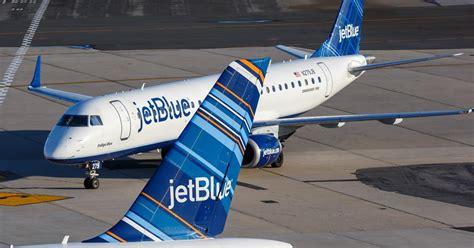
JetBlue Airways is quietly examining one of the most consequential strategic options in its history: the possibility of selling itself to a larger U.S. airline. The New York–based carrier has reportedly begun working with financial advisers to explore what a potential acquisition could look like, while also assessing how regulators in Washington might respond to such a move. The discussion comes at a time when the American aviation industry is already highly consolidated, meaning any new merger would face intense scrutiny from antitrust authorities and political leaders.
The concept remains in its earliest exploratory phase. No formal negotiations have begun, and JetBlue has not publicly confirmed receiving takeover offers from any competitors. Still, the airline is evaluating scenario-based models involving several major carriers, including United Airlines, Alaska Airlines, and Southwest Airlines. Each potential partner would bring different strategic advantages, but each scenario also carries complex regulatory and competitive implications.
At the same time, JetBlue continues to push forward with its internal turnaround plan known as JetForward, a multi-year strategy designed to restore profitability and strengthen the airline’s financial foundation. Company leadership has repeatedly emphasized that operational improvements and cost discipline remain the top priority, even as advisers explore alternative long-term strategies.
Regulatory Hurdles and Washington’s Likely Response
Any attempt to sell JetBlue to another major U.S. airline would immediately trigger one of the most rigorous antitrust reviews in modern aviation history. The U.S. airline industry has already undergone decades of consolidation, shrinking from dozens of national carriers to just a handful of dominant networks. Regulators have become increasingly cautious about approving deals that could reduce competition or increase fares.
The political environment adds another layer of complexity. While the current administration has shown openness to certain forms of consolidation, powerful political factions and consumer advocacy groups remain skeptical of large airline mergers. Critics argue that further consolidation could lead to fewer choices for travelers, especially in high-demand markets such as New York, Florida, and California.
For JetBlue, regulatory reaction is not just a secondary consideration—it is central to the strategy evaluation process. Any potential buyer must weigh the likelihood of approval from the U.S. Department of Justice, the Department of Transportation, and Congress. Even if an administration signals openness to consolidation, opposition from lawmakers could delay or derail the process.
United Airlines Emerges as a Potential Strategic Fit
Among the possible suitors, United Airlines is widely viewed as the most logical candidate. The Chicago-based carrier already maintains a growing relationship with JetBlue through the recently announced Blue Sky partnership, which allows travelers to book flights across both networks and earn or redeem frequent-flyer miles on either airline.
The collaboration also includes reciprocal customer perks such as coordinated boarding privileges and seating benefits, creating a seamless travel experience between the two brands. In addition, the agreement granted United access to seven daily round-trip slots at New York’s John F. Kennedy International Airport, one of the most competitive aviation markets in the United States.
A deeper partnership—or even a full acquisition—could significantly strengthen United’s presence in key East Coast markets. JetBlue has long been a powerful competitor in cities such as New York, Boston, and Fort Lauderdale, as well as on high-traffic routes between the northeastern United States and Florida.
However, United’s leadership is currently focused on maintaining financial discipline and improving its credit profile. CEO Scott Kirby has previously signaled interest in acquiring assets from struggling airlines, but any large-scale takeover would require careful financial and regulatory calculations.
Market Reaction Signals Investor Interest
News of JetBlue’s strategic evaluation quickly captured the attention of investors. Following reports of potential merger scenarios, JetBlue’s stock price jumped approximately 12 percent, reflecting market speculation that consolidation could unlock shareholder value.
The reaction highlights a broader belief among some analysts that JetBlue’s assets—including its brand recognition, customer loyalty, and valuable airport slots—could be significantly more valuable within a larger airline network. A merger could unlock efficiencies in fleet management, route optimization, and loyalty program integration.
Still, investors remain cautious. The airline industry has witnessed several proposed mergers collapse under regulatory pressure in recent years, demonstrating how uncertain the approval process can be.
JetBlue’s Fleet and Expanding International Ambitions
Founded 27 years ago under the original name NewAir, JetBlue has grown into one of the most recognizable low-cost carriers in the United States. Today, the airline operates from major hubs in Boston, Fort Lauderdale, New York–JFK, Orlando, Los Angeles, and San Juan, serving roughly 114 destinations across North America, the Caribbean, and Europe.
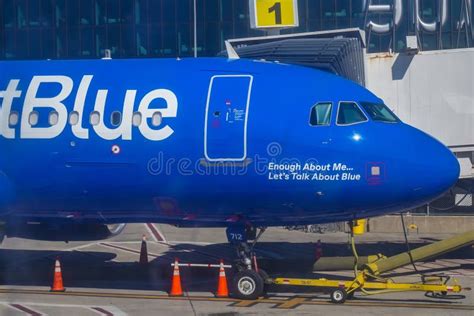
JetBlue’s fleet consists entirely of narrow-body aircraft, a strategy that supports efficient operations on both short-haul domestic routes and longer international flights. According to fleet data sources, the airline currently operates more than 270 aircraft, including multiple Airbus models.
The fleet includes:
- Airbus A320-200 – 124 aircraft
- Airbus A321-200 – 63 aircraft
- Airbus A321neo variants – 31 aircraft combined
- Airbus A220-300 – 56 aircraft
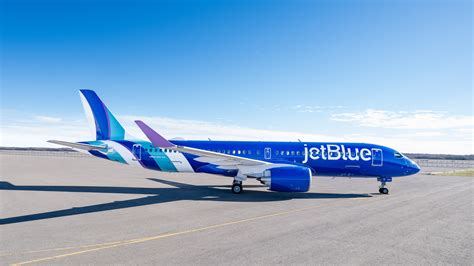
Passengers flying with JetBlue are familiar with the airline’s signature onboard experience, which includes complimentary snacks, free Wi-Fi on many flights, and beverages such as Dunkin’ coffee and Pepsi products. On premium routes, the airline offers its Mint business-class product, featuring lie-flat seats and upgraded dining service.
Looking ahead, JetBlue is preparing for the arrival of the Airbus A321XLR, a long-range aircraft that could significantly expand its trans-Atlantic ambitions. With the extended range of the XLR, JetBlue could potentially launch flights from the U.S. East Coast to destinations as far as Greece or Turkey, further strengthening its international presence.
A Defining Moment for JetBlue’s Future
For now, the possibility of JetBlue selling itself remains hypothetical. The airline continues focusing on operational improvements and its JetForward strategy while quietly analyzing strategic alternatives behind the scenes.
Yet the mere exploration of a sale signals that the U.S. airline industry may be entering another period of transformation. Whether through partnerships, asset acquisitions, or full mergers, the decisions made in the coming years could reshape the competitive landscape of American aviation—and determine where JetBlue ultimately fits within it.