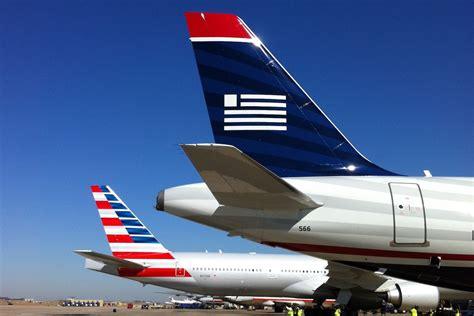
The conversation around U.S. airline consolidation has returned with unusual clarity and momentum. In a recent CNBC appearance, Transportation Secretary Sean Duffy delivered a message that cut through years of regulatory ambiguity: there is, in his view, “room” for more airline mergers in the United States. It was not an endorsement of unchecked consolidation, but it was a decisive tonal shift—one that immediately caught the attention of executives, investors, and policymakers across the aviation sector.
For an industry that has spent the better part of a decade navigating a restrictive antitrust climate, the significance lies not just in what was said, but in how plainly it was expressed. The idea that mergers could once again be seriously entertained rather than reflexively challenged signals a recalibration in Washington’s approach to airline competition.
A Regulatory Shift That Changes the Playing Field
Duffy’s remarks stand in contrast to the more aggressive antitrust stance seen in recent years, where high-profile merger attempts—most notably the blocked JetBlue-Spirit deal—were met with firm resistance. Under that earlier posture, consolidation was often viewed primarily through the lens of consumer harm, with regulators wary of reduced competition, higher fares, and diminished service options.
Now, the tone has evolved into something more nuanced. Rather than rejecting mergers outright, the Department of Transportation appears prepared to evaluate proposals case by case, weighing both risks and potential strategic benefits. That distinction matters. It transforms mergers from a near impossibility into a conditional opportunity, dependent on how well airlines can structure deals to address competition concerns.
The shift also introduces a renewed sense of strategic urgency within the industry. Airlines that had previously shelved merger ambitions may now revisit them with fresh calculations, particularly as economic pressures mount and competitive dynamics intensify.
Timing That Aligns With Industry Pressure
The timing of Duffy’s comments is far from coincidental. Several carriers are already exploring strategic options, creating a backdrop where regulatory openness could quickly translate into real transactions.
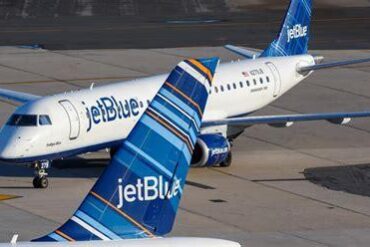
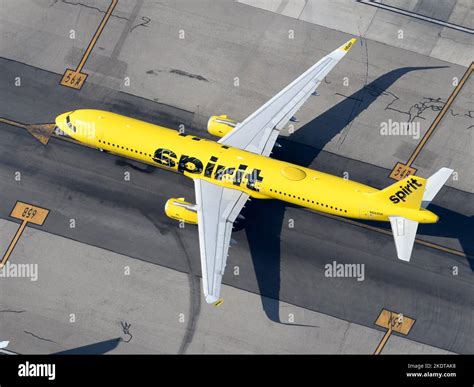
JetBlue Airways, for instance, has reportedly engaged advisers to assess the feasibility of a potential sale or merger. This move underscores the airline’s need to recalibrate after its failed acquisition attempt and ongoing competitive pressures in key markets. Meanwhile, Spirit Airlines is undergoing restructuring, with leadership openly acknowledging the possibility of future industry deals once financial stability is restored.
These developments point to a broader trend: segments of the U.S. airline market—particularly among mid-tier and low-cost carriers—are under strain. Rising fuel costs, operational challenges, and shifting demand patterns have created conditions where consolidation is not just strategic, but in some cases necessary for survival.
The re-emergence of merger discussions, therefore, is less about opportunistic expansion and more about structural adaptation to a tougher operating environment.
The Boeing Backdrop and a Broader Economic Signal
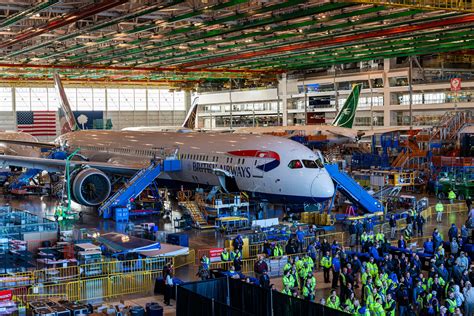
Duffy’s comments came during a visit to Boeing’s facility in Charleston, South Carolina, where he highlighted the manufacturer’s ongoing recovery and industrial importance. By framing Boeing as a “comeback story” and emphasizing its role as a major U.S. exporter, the discussion subtly connected airline consolidation to national economic strength.
This context is critical. It suggests that airline mergers may increasingly be evaluated not only on domestic competition metrics, but also on their ability to enhance the global competitiveness of U.S. carriers. In other words, size alone is no longer viewed as inherently problematic; under certain conditions, it may be considered strategically advantageous.
“America First” Meets Aviation Strategy
Another layer to the policy shift lies in its alignment with a broader “America First” economic philosophy. Duffy indicated that large-scale deals could be viewed through the lens of global positioning, asking whether a combined airline might better compete with major international rivals.
This perspective reframes consolidation as a potential tool for strengthening the U.S. aviation sector on the world stage. Larger airlines could, in theory, leverage expanded networks, greater capital resources, and operational efficiencies to compete more effectively against state-backed or heavily subsidized foreign carriers.
However, the appeal of scale does not erase domestic concerns. Any merger proposal would still need to demonstrate that it does not undermine competition in key regional markets or create monopolistic conditions at major hubs.
Conditional Approval, Not a Free Pass
Despite the more receptive tone, Duffy was careful to emphasize that no deal would receive automatic approval. Regulatory scrutiny remains firmly in place, with potential requirements for asset divestitures if a merger threatens to concentrate too much market power.
This could include the sale of airport slots, gates, or route rights—particularly in congested markets such as the Northeast corridor or South Florida, where airline competition is already tightly contested. The goal would be to preserve competitive balance while still allowing the broader transaction to proceed.
Moreover, any merger would still require sign-off from multiple authorities, including the Department of Justice and ultimately the President. The process remains complex, but no longer feels prohibitively hostile.
JetBlue, Spirit, and Frontier: The Most Likely Candidates
Within the current landscape, three names consistently emerge in merger discussions: JetBlue, Spirit, and Frontier Airlines. Each represents a different strategic profile, yet all face pressures that make consolidation an attractive option.
JetBlue stands out as the most visible candidate, though not necessarily the easiest to integrate. Its strong presence in high-demand regions like New York and Florida introduces significant antitrust considerations, particularly if paired with a larger network carrier such as United Airlines.
Spirit, by contrast, may be the most straightforward acquisition target. Its restructuring process is expected to yield a leaner organization, potentially making it more attractive to buyers seeking to expand their footprint in the ultra-low-cost segment.
Frontier occupies a middle ground, sharing similar cost sensitivities and exposure to fuel price volatility. In a scenario where economic pressures persist, a merger among lower-cost carriers could emerge as the most logical path forward, allowing them to pool resources and stabilize operations.
A Market Ready to Listen Again
The clearest takeaway from Duffy’s remarks is not that a wave of mergers is imminent, but that the conversation has reopened. After years of regulatory resistance, airlines once again have reason to believe that well-structured deals—those that address competition concerns while delivering strategic value—can gain serious consideration.
This shift introduces both opportunity and uncertainty. For airline executives, it creates a narrow window to craft proposals that balance growth with regulatory compliance. For consumers, it raises familiar questions about fares, service quality, and choice.
What has changed is the starting point. Instead of asking whether mergers are possible at all, the industry is now asking which combinations make sense—and how they can be made acceptable.
That distinction alone is enough to reshape the trajectory of U.S. aviation in the years ahead.