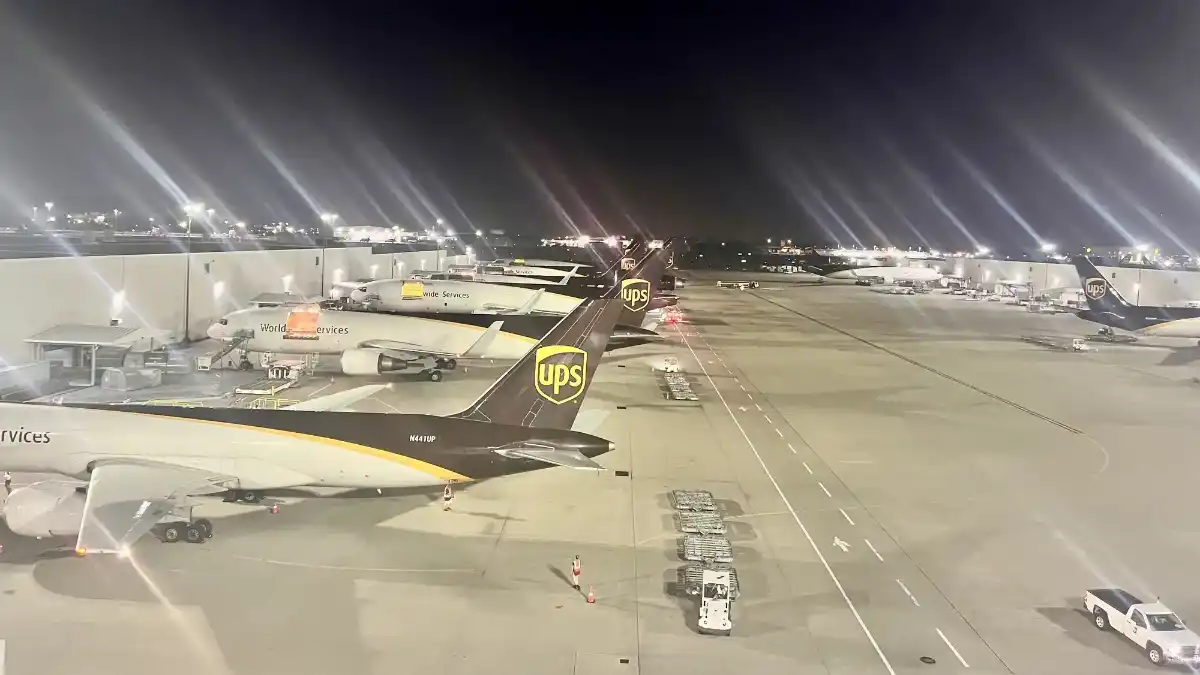
At the core of UPS’s global air logistics empire stands an architectural and operational marvel: Worldport, the world’s largest automated package handling facility. Located in Louisville, Kentucky, this complex doesn’t just symbolize efficiency—it defines it. It is here, every night, that the sky over Kentucky fills with cargo aircraft in synchronized choreography, delivering, sorting, and dispatching millions of packages with precision.
Spanning a staggering 5.2 million square feet and encircled by a 7.2-mile perimeter, UPS Worldport dwarfs most modern logistics centers. In fact, its scale is such that it surpasses iconic structures like the Mall of America, and makes Louisville Muhammad Ali International Airport’s commercial terminal seem almost quaint by comparison.
A Fully Automated Distribution Ecosystem
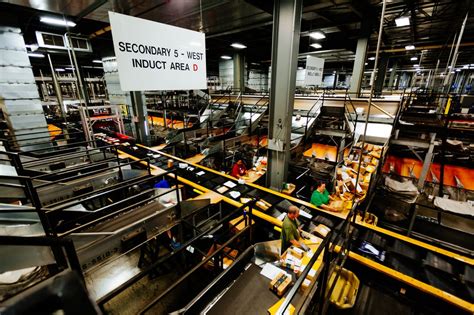
Inside the facility, packages are rarely touched by human hands. The UPS Worldport system is 100% automated except for two critical moments: when packages are unloaded from arriving aircraft and when they are placed into outbound containers. Everything in between—from routing to sorting to tracking—is governed by a sophisticated technological network of scanners, conveyors, and AI-driven sort logic.
At the heart of this automation are:
- 546 camera tunnels that scan barcodes for precise routing.
- 155 miles of conveyor belts that carry parcels to their destinations.
- A dizzying 33,496 conveyor segments that allow for maximum efficiency.
- A sorting speed of 115 packages per second—which scales to over 4 million packages daily during December.
Packages are grouped into three primary categories: smalls, regular parcels, and incompatibles (bulky or irregular items). Each category is routed via its own network:
- Smalls: Handled by 17,220 tilt trays moving along 19 loops, they resemble a high-speed amusement ride more than a traditional logistics system.
- Regular Parcels: Move along the main conveyors that span the equivalent of a trans-urban highway.
- Incompatibles: Large, irregular packages like automotive parts are transported via sled systems on a 2.7-mile track, mimicking the graceful glide of alpine coasters.
Speed, Precision, and a 13-Minute Sorting Turnaround
What sets Worldport apart is the 13-minute average sort time per package. Once a parcel enters the facility, it is scanned, sorted, and routed with stunning speed. Whether bound for Tokyo, Toronto, or Tulsa, the right package finds the right plane through real-time data synchronization with UPS’s Global Operations Center. This capability is key during peak operations, particularly during the holiday surge when daily volume doubles.
Worldport’s automated systems represent UPS’s investment in scalable, future-proof logistics infrastructure—one that is increasingly being mirrored in ground hubs across the U.S.
Aircraft Operations: A Well-Orchestrated Ballet
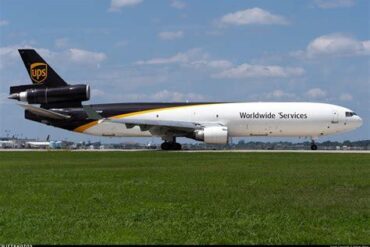
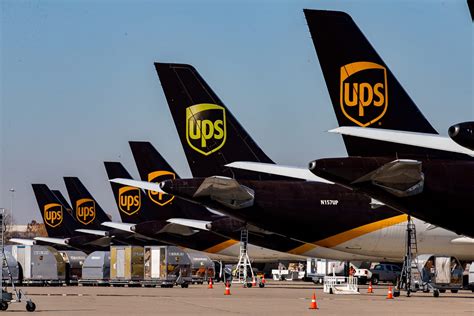
Outside the labyrinthine interior lies a different kind of performance—an aviation ballet. Every evening, aircraft from all over the world begin their descent into Louisville at one-minute intervals. Approximately 300 flights arrive and depart each day, requiring ultra-precise coordination.
UPS manages this with 70 self-parking aircraft docks, which function similarly to gates at a passenger terminal but with critical differences. These docks are engineered for speed: planes taxi in and park directly at the sorting wings, allowing cargo to be unloaded and entered into the sort system within minutes.
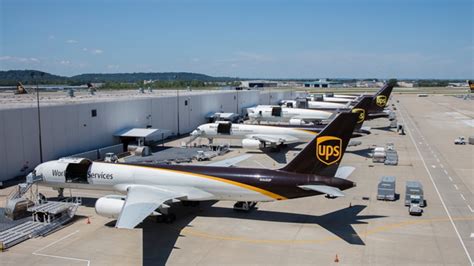
Each self-park system is brilliantly low-tech yet supremely effective. A large convex mirror mounted above the dock shows the yellow taxi line and the aircraft’s nose gear to the pilot. Labels beneath the mirror, written upside down and in reverse, ensure pilots can read them correctly for accurate alignment. Stop lines marked for each aircraft type make parking foolproof—regardless of weather or lighting conditions.
This elegant system eliminates the need for marshallers at these docks and has proven more reliable in most operational scenarios. However, the rest of the 125 total aircraft parking positions still rely on a human team of marshallers, wing walkers, and emergency spotters to guide aircraft safely—especially in tight ramp spaces or when deviations are required.
Global Hub, Local Impact
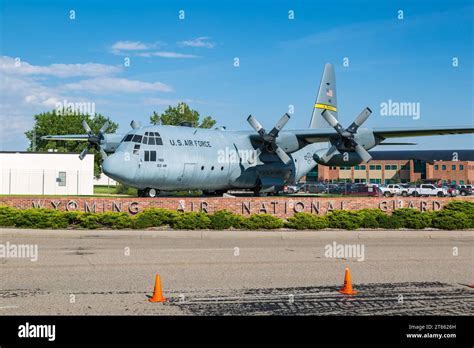
While Worldport is owned and operated by UPS, it resides within the public Louisville Muhammad Ali International Airport (KSDF), which also handles over 3.3 million passengers annually and serves as a joint civil-military facility. The airport is home to Southwest, Delta, and other commercial carriers as well as the 123rd Airlift Wing of the Kentucky Air National Guard.
UPS’s choice of Louisville as its global hub was strategic—centrally located in the U.S., the city is within a two-hour flight of 75% of the American population. This proximity enables next-day delivery capabilities across the nation, reinforcing UPS’s dominance in time-sensitive logistics.
Worldport’s presence has had a transformative effect on the local economy. Thousands of jobs—ranging from warehouse handlers and aviation mechanics to pilots and IT engineers—support the 24/7 operations. During peak seasons, employment surges, offering temporary and permanent roles to residents and students alike.
Noise, Night Flights, and Urban Trade-Offs
For locals, however, Worldport’s operations come with a sonic price. Aircraft begin arriving late at night—typically between midnight and 3 AM—flying directly over central Louisville. This air traffic density, combined with the regularity of night arrivals, has sparked ongoing conversations about noise abatement and urban planning.
UPS and air traffic controllers have implemented Noise Abatement Departure Procedures and south-bound arrival routes to minimize impact on residential areas when weather permits. Still, for new residents, the roar of aircraft can be jarring. Over time, many adjust, likening it to living near railroad tracks—an omnipresent hum that gradually fades into the background.
Technology Transfer and Global Replication
UPS is not content to let Worldport remain its only crown jewel. The sorting and scanning technologies developed here are now being implemented in regional and ground-based hubs across the country. The precision, speed, and reliability of the Worldport systems have become the template for future automation across the UPS network.
This scaling strategy allows UPS to maintain consistency in service quality, streamline international logistics, and stay ahead of rivals like FedEx and DHL in both domestic last-mile delivery and global freight forwarding.
Final Thoughts: A Logistics Masterpiece in Motion
UPS Worldport is not just a facility—it is a living, breathing infrastructure marvel that redefines what global logistics looks like in the 21st century. From its intelligent automation to its elegantly simple docking mirrors, every aspect is fine-tuned for efficiency, scalability, and reliability.
Its impact extends beyond packages and planes. It transforms communities, sets benchmarks for industrial engineering, and establishes Louisville as the undisputed epicenter of global package distribution.
FAQ
What is UPS Worldport?
UPS Worldport is the company’s global air hub located in Louisville, Kentucky. It is the largest automated package handling facility in the world, responsible for sorting up to 416,000 packages per hour and coordinating up to 300 flights per day.
Can regular passengers visit or tour UPS Worldport?
UPS does not offer public tours of Worldport for security and operational reasons. However, limited tours may be available for educational institutions or media by appointment through UPS’s public relations office.
Is Worldport only used by UPS aircraft?
While UPS is the exclusive operator of Worldport, the Louisville Muhammad Ali International Airport (KSDF) is a public-use airport. Commercial and military aircraft also use the airfield, but the Worldport sorting facility is UPS-exclusive.