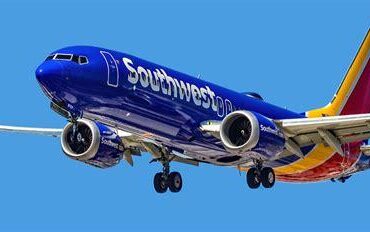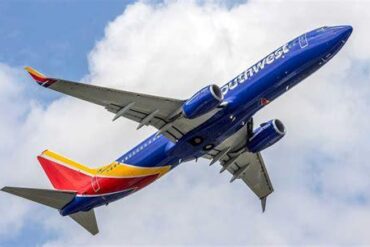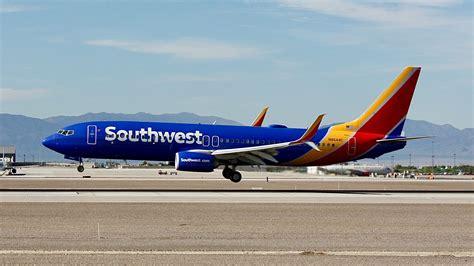
Southwest’s transformation is no longer subtle. What began as a low-cost disruptor has steadily evolved into something far more complex—an airline now chasing higher-yield passengers while still anchored to a legacy of simplicity. Yet one glaring absence remains: a true premium cabin. And at the center of that challenge sits a deceptively familiar aircraft—the Boeing 737—operated in a uniquely constrained way by Southwest Airlines.
The paradox is striking. The 737 is widely used by full-service carriers offering domestic first class, yet Southwest struggles to replicate the same product. The issue isn’t demand, nor is it strategic hesitation alone. It’s structural, operational, and deeply embedded in decades of fleet design decisions optimized for a completely different business model.
To understand why Southwest’s first class ambitions face such steep resistance, one must look beyond seat configurations and into the DNA of the airline itself—where every inch of cabin space, every galley compromise, and every service limitation tells a story of efficiency over luxury.
By the time Southwest seriously considers installing a premium cabin, it is no longer designing a product—it is rewriting its identity.
The Economics Driving Southwest Toward First Class
The modern airline industry is no longer driven purely by ticket sales. Today, premium cabins and loyalty ecosystems generate a disproportionate share of profits. Airlines like Delta Air Lines, United Airlines, and American Airlines have mastered the art of monetizing first class—not just through fares, but through credit cards, upgrades, and aspirational loyalty programs.
Southwest, by contrast, has historically relied on volume over margin. Its all-economy configuration allowed it to maximize seat count, reduce costs per passenger, and simplify operations. That formula worked brilliantly for decades. But the market has shifted.
Premium demand has surged, particularly on domestic routes where travelers are increasingly willing to pay for comfort, priority services, and exclusivity. Even ultra-low-cost carriers are entering the space, recognizing that a small number of premium seats can generate outsized returns.
Southwest’s introduction of extra legroom seating signals awareness—but it is not enough. These seats are essentially optimized economy, not a differentiated product. Without a true first class offering, Southwest risks leaving significant revenue untapped while competitors deepen customer loyalty through premium experiences.
And yet, adding first class is not as simple as removing a few rows and installing larger seats. For Southwest, it triggers a cascade of structural challenges.
Why the Boeing 737 Cabin Layout Becomes a Constraint
On paper, the Boeing 737 is perfectly capable of supporting first class. Other airlines routinely configure the aircraft with dedicated premium cabins at the front. But Southwest’s version of the 737 is fundamentally different—not in airframe, but in interior philosophy.
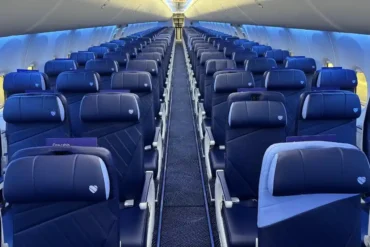
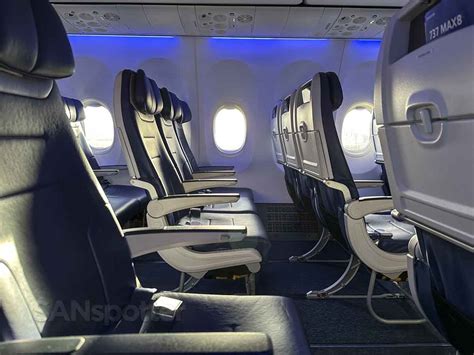
The airline’s cabins are densely packed, with seating layouts designed to maximize capacity. A typical Southwest 737-800 or 737 MAX 8 carries around 175 passengers—all in economy. By comparison, legacy carriers sacrifice seat count to accommodate 12 to 20 first class seats, along with more spacious layouts.
This density is not accidental. It is the result of decades of optimization aimed at reducing cost per available seat mile (CASM). Every additional seat spreads fixed costs more efficiently, allowing Southwest to maintain competitive fares while remaining profitable.
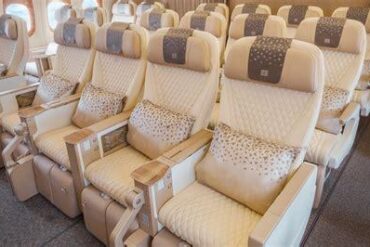
Introducing first class disrupts this balance immediately. Premium seats occupy significantly more space—often equivalent to two or even three economy seats. Installing them would force Southwest to remove dozens of seats across the aircraft, increasing unit costs and fundamentally altering its pricing structure.
But the seating itself is only the beginning of the problem.
The Hidden Problem: Galleys, Not Seats
If seats were the only issue, Southwest could simply redesign its cabin and accept a lower capacity. The real obstacle lies in something far less visible: the galley infrastructure.
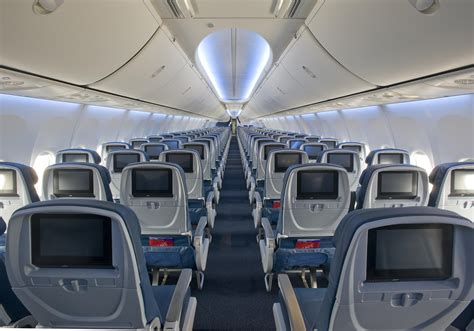
Unlike legacy carriers, Southwest does not equip its 737s with full-size forward galleys. Instead, it uses smaller galley configurations designed for a simplified service model—primarily beverages and light snacks. This design saves space and weight, enabling more seats.
However, a true first class experience demands far more. Passengers expect hot meals, multiple service rounds, and premium catering, all of which require:
- Larger ovens
- Additional storage for meals and beverages
- More space for service carts
- Expanded crew workflow areas
Southwest’s current galley setup simply cannot support this level of service.
Retrofitting aircraft with full-size galleys is not a minor modification. It involves removing seats, restructuring cabin layouts, and potentially altering weight distribution. On smaller variants like the 737-700, the challenge becomes even more pronounced due to limited available space.
In effect, Southwest would need to redesign not just the seating plan, but the entire service architecture of the aircraft.
Service Expectations vs. Operational Reality
First class is not just about larger seats—it is about experience consistency. Passengers paying a premium expect a product that feels meaningfully different from economy.
This includes:
- Hot, plated meals rather than packaged snacks
- Dedicated cabin crew attention
- Priority boarding and baggage handling
- Enhanced onboard ambiance
Southwest’s current operational model is built around speed and simplicity. Quick turnarounds are a cornerstone of its efficiency, allowing aircraft to spend more time in the air generating revenue.
Introducing a complex first class service risks slowing this system down. Catering logistics become more complicated, boarding processes may change, and cleaning times could increase. Each of these factors erodes the efficiency gains that have defined Southwest’s success.
There is also a brand expectation gap. Southwest passengers are accustomed to a casual, egalitarian experience. Introducing a premium tier creates a visible hierarchy that may clash with the airline’s long-standing identity.
The Lie-Flat Question: Ambition Meets Reality
When discussions turn to premium cabins, the idea of lie-flat seats inevitably emerges. These seats represent the pinnacle of domestic comfort, particularly on transcontinental routes.
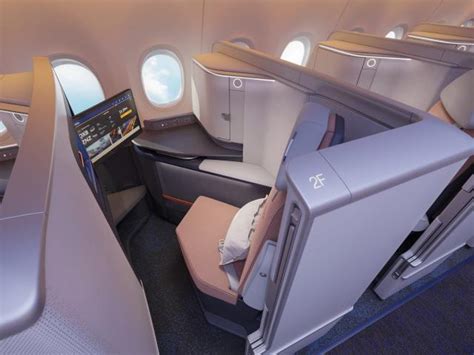
Technically, the Boeing 737 can accommodate narrowbody lie-flat seats. But doing so on Southwest’s aircraft would be an extreme shift.
Lie-flat seats are:
- Large and heavy, reducing payload capacity
- Space-intensive, often replacing three or more economy seats each
- Dependent on premium-heavy routes for profitability
In the United States, only a handful of routes—such as New York to Los Angeles or Boston to San Francisco—consistently justify lie-flat service. These routes are dominated by airlines with strong corporate contracts and established premium demand.
Southwest has historically avoided these markets, focusing instead on point-to-point networks and secondary airports. Entering the lie-flat segment would require not just new seats, but a fundamental network strategy shift.
Even CEO Bob Jordan has stopped short of confirming such plans, signaling that while the idea is not impossible, it remains distant.
A European-Style Compromise: The Middle Ground
Faced with these constraints, Southwest may look toward a more flexible solution—one that avoids heavy structural changes while still offering a premium experience.
In Europe, many airlines use a blocked middle seat model for business class. The seats themselves are identical to economy, but the experience is enhanced through:
- Extra legroom
- Empty adjacent seats
- Improved service and catering
This approach allows airlines to dynamically adjust cabin size based on demand, without permanently sacrificing capacity.
A similar concept already exists in the U.S. through products like “Upfront Plus,” where passengers pay for additional space without a fully separate cabin.
For Southwest, this model offers several advantages:
- Minimal structural changes to aircraft
- Lower implementation costs
- Flexibility in capacity management
However, it also comes with a perception challenge. Without significantly larger seats, the product may feel like a premium economy variant rather than true first class, particularly if priced too aggressively.
Capacity Trade-Offs and the Cost Equation
Every decision Southwest makes regarding first class ultimately comes down to trade-offs.
Installing a traditional recliner-style first class cabin would likely reduce total seat count by 10–20%. Adding larger galleys would cut capacity further. Introducing lie-flat seats could reduce it dramatically.
These reductions must be offset by higher fares and stronger demand. But Southwest’s customer base has historically been price-sensitive, raising questions about how much premium pricing the market will bear.
There is also the ripple effect on the rest of the cabin. To maintain overall revenue, Southwest may need to:
- Reduce seat pitch in standard economy
- Reprice extra legroom seats
- Adjust fare structures across the board
Each of these changes risks alienating existing customers while attempting to attract new ones.
The Loyalty Engine Behind Premium Cabins
Beyond ticket revenue, first class plays a crucial role in loyalty program economics. Airlines generate billions by selling miles to credit card companies, and premium cabins provide the aspirational value that drives engagement.
Without first class, Southwest’s loyalty ecosystem lacks a high-value redemption tier, limiting its ability to fully monetize this channel.
The airline is already moving in this direction, exploring premium credit cards and lounge access as part of a broader strategy to enhance customer value. These initiatives suggest that first class is not an isolated product decision—it is part of a larger transformation.
Southwest’s Premium Future: Incremental, Not Immediate
Southwest is clearly evolving. Investments in larger overhead bins, power ports, and potential lounge spaces indicate a shift toward a more premium-oriented experience. Partnerships with international carriers and potential long-haul ambitions further reinforce this trajectory.
Yet the introduction of first class will not happen overnight. The challenges are too deeply rooted in the airline’s existing infrastructure and operational philosophy.
The most likely path forward is incremental:
- Expanding extra legroom offerings
- Testing hybrid premium concepts
- Gradually modifying aircraft interiors during scheduled retrofits
Over time, these steps could culminate in a dedicated first class cabin—but only after Southwest has carefully balanced the competing demands of cost, capacity, and customer expectation.
Conclusion: A Structural Challenge, Not a Strategic Oversight
The absence of first class on Southwest Airlines is not due to a lack of ambition or awareness. It is the result of structural decisions made over decades, optimized for a business model that prioritized efficiency above all else.
Transforming that model requires more than installing new seats. It demands a rethinking of aircraft interiors, service standards, network strategy, and brand identity.
The Boeing 737, in this context, is both an enabler and a constraint. It can support first class—but not without forcing Southwest to confront the very principles that made it successful.
And that is the real challenge: building a premium future without dismantling the low-cost foundation that brought the airline this far.