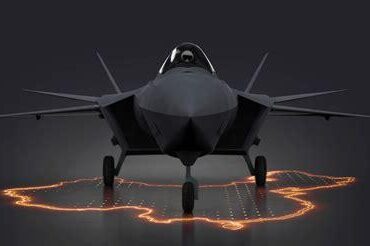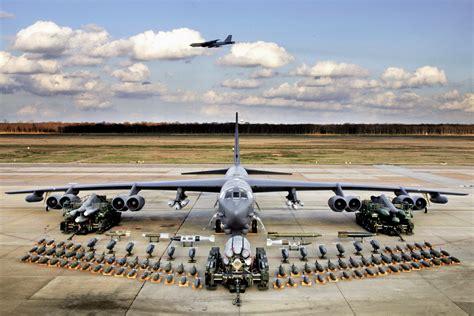
The United States Air Force (USAF) operates the most formidable strategic bomber fleet in the world, a core pillar of its global strike capability. For decades, the U.S. has led advancements in long-range bomber design, fielding aircraft capable of delivering conventional and nuclear payloads anywhere on the planet. As of 2025, the fleet comprises three active bomber types — the B-52 Stratofortress, B-1B Lancer, and B-2 Spirit — with the next-generation B-21 Raider on the horizon.
These aircraft represent the ultimate blend of range, payload capacity, and strike precision, ensuring the U.S. retains its edge in strategic deterrence and rapid global response. While aerial refueling extends their operational reach beyond 6,000 miles, each bomber already boasts intercontinental range, allowing them to operate from American soil to strike virtually any target worldwide.
Current U.S. Strategic Bomber Types
B-52 Stratofortress — The Long-Serving Icon
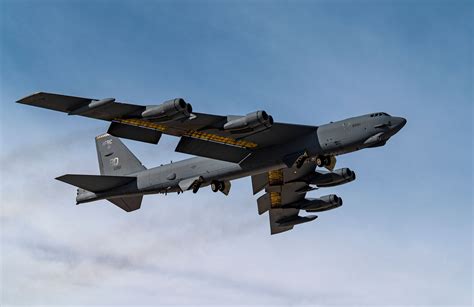
The B-52 Stratofortress first entered service in 1955, making it the oldest bomber still in active duty anywhere in the world. Despite its age, the B-52 has undergone extensive modernization to maintain its relevance. The latest B-52J variant is powered by eight Rolls-Royce F130 engines, replacing the aging TF33 turbofans for improved efficiency and reliability.
- Fleet Size (2025): 74
- Service Life Expectancy: Beyond 2050
- Primary Role: Long-range strategic strike with nuclear and conventional payloads
The USAF plans to upgrade 51 B-52Js by FY2032, with the remaining 23 completed by FY2033, ensuring all remain at peak performance. Its unmatched endurance and adaptability have made the B-52 the backbone of U.S. strategic airpower for nearly seven decades.
B-1B Lancer — The Supersonic Workhorse
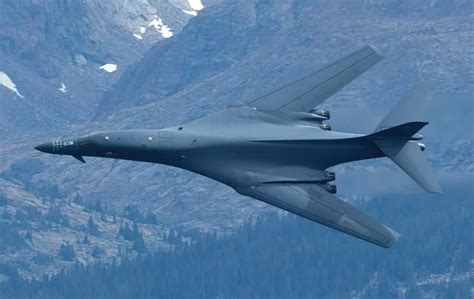
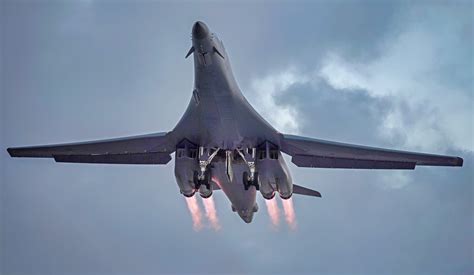
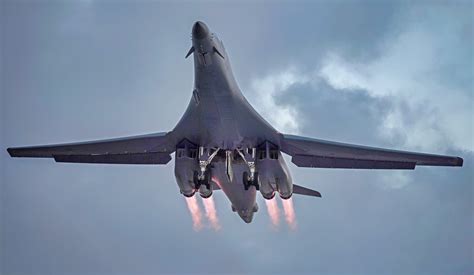
Introduced in 1986 (following development from the 1970s), the B-1B Lancer was designed as a supersonic, variable-sweep wing bomber capable of low-level penetration to evade radar defenses. Initially intended for nuclear delivery, it now serves exclusively in a conventional role.
- Fleet Size (2025): 45
- Max Speed: Mach 1.25
- Retirement Timeline: By 2036
The B-1B’s payload capacity is unmatched — capable of carrying up to 75,000 pounds of ordnance, the largest of any bomber in U.S. history. However, with the introduction of the B-21 Raider, the B-1B is slated for retirement, ending its four-decade service.
B-2 Spirit — Stealth Dominance
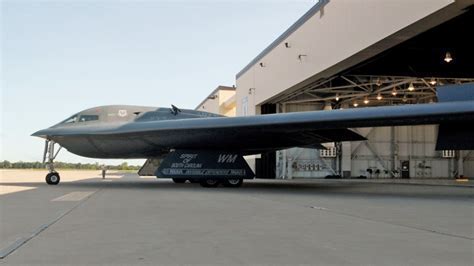
The B-2 Spirit, first flown in 1989 and operational by 1997, remains the only stealth-capable strategic bomber currently in service worldwide. Developed for deep penetration of dense anti-aircraft environments, the B-2’s low radar cross-section allows it to strike highly defended targets without detection.
- Fleet Size (2025): 19 operational aircraft
- Unit Cost (2025 dollars): ~$2 billion each
- Retirement Timeline: Replaced by B-21 by 2032
Only 21 B-2s were ever built, with two lost in accidents. Each aircraft is meticulously maintained at Whiteman Air Force Base, Missouri, and serves as a critical asset for nuclear deterrence and precision strikes.
The Future: B-21 Raider
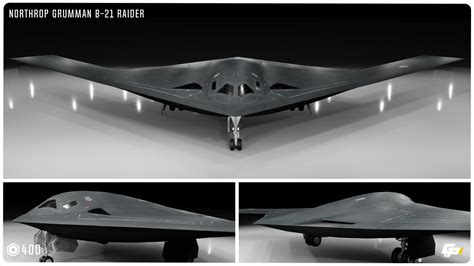
The B-21 Raider represents the next leap in U.S. bomber capability. Developed by Northrop Grumman, the B-21 aims to replace all existing bomber types over time, unifying the fleet into a single, highly advanced platform.
- First Public Reveal: December 2022
- Development Start: 2011
- Expected Entry into Service: Mid-2020s
- Projected Fleet Size: 100–145 aircraft
- Unit Cost: ~$814 million
The B-21 incorporates lessons from the B-2 program but emphasizes affordability, maintainability, and multi-mission capability. It will be able to carry nuclear and conventional weapons, operate in both manned and unmanned configurations, and leverage advanced stealth coatings resistant to evolving radar systems.
Bomber Fleet Numbers in 2025
| Bomber Type | In Service (2025) | Role | Expected Retirement |
|---|---|---|---|
| B-52 Stratofortress | 74 | Long-range nuclear/conventional strike | Post-2050 |
| B-1B Lancer | 45 | High-speed conventional bomber | 2036 |
| B-2 Spirit | 19 | Stealth nuclear/conventional strike | 2032 |
| B-21 Raider (planned) | 3 (test units) | Stealth multi-role bomber | N/A |
| Total Operational | 138 | — | — |
Why the U.S. Maintains a Large Bomber Fleet
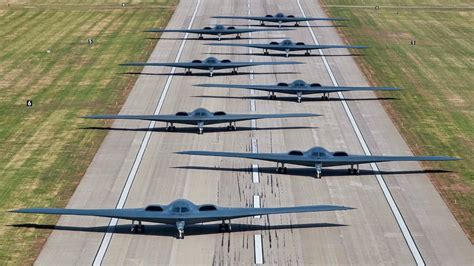
The U.S. National Defense Strategy relies heavily on strategic deterrence and rapid global strike capabilities. Bombers offer unmatched payload versatility, able to deliver nuclear, precision-guided, and stand-off munitions across continents without reliance on forward bases.
Unlike fighter aircraft, which are limited in range and payload, bombers serve as visible symbols of deterrence and can be deployed on Bomber Task Force (BTF) missions to reassure allies and deter adversaries. They also form one leg of the nuclear triad, alongside ICBMs and submarine-launched ballistic missiles.
Transition to the B-21 Era
The B-21 Raider will mark the most significant transformation of the U.S. bomber fleet since the Cold War. It will replace the B-1B and B-2 first, followed eventually by the B-52. The projected fleet size of 220 bombers in the late 2020s and early 2030s will gradually settle as older models are retired.
The integration of the B-21 will improve maintenance efficiency, standardize pilot training, and enhance mission flexibility. With multi-role capability, the B-21 is expected to remain at the forefront of U.S. airpower for decades, much like the B-52 has since the 1950s.
FAQ
1. How many bombers does the U.S. have in service today?
As of 2025, the United States operates 138 strategic bombers: 74 B-52 Stratofortresses, 45 B-1B Lancers, and 19 B-2 Spirits. Additionally, 3 B-21 Raiders exist as test aircraft.
2. When will the B-21 Raider enter service?
The B-21 Raider is expected to achieve initial operational capability in the mid-2020s, with full fleet integration by the early 2030s.
3. Will the B-52 really serve past 2050?
Yes. Despite being over 70 years old by that time, extensive upgrades — including new engines and avionics — will keep the B-52 Stratofortress operational into the 2050s and potentially beyond.