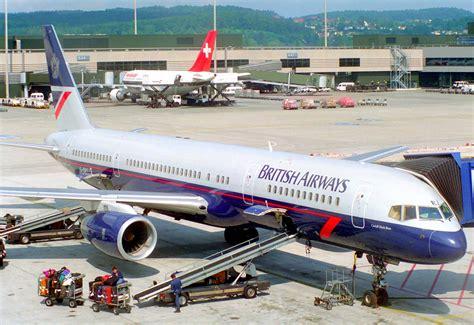
For nearly three decades, the Boeing 757 played a pivotal role in British Airways’ short-haul and medium-haul operations, carving out a legacy as a workhorse on busy domestic and European routes. From its inaugural flight in 1983 until its final farewell in 2010, the 757 was an unmistakable part of the British Airways fleet. Today, its absence evokes a mix of nostalgia and intrigue: what became of these iconic aircraft after retirement?
The Dawn of a New Era: British Airways Introduces the Boeing 757
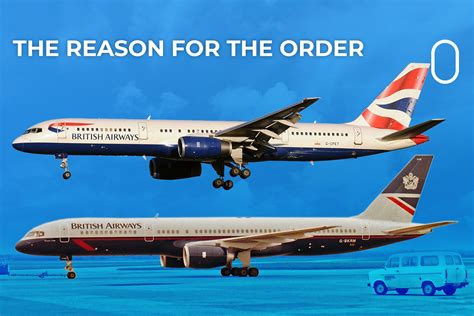
In February 1983, British Airways (BA) made European aviation history by becoming the first European airline to operate the Boeing 757. The inaugural flight on February 9, 1983, marked a significant shift in BA’s fleet strategy. Deployed first on the high-frequency London–Belfast shuttle, the 757 swiftly replaced the aging Hawker Siddeley Trident.
The arrival of the Boeing 757 was part of a broader modernization effort. At the time, BA’s fleet was predominantly UK-built, but following the 1974 merger of BOAC and BEA, Boeing aircraft had started to filter into the roster. With the 707 and 747 already in service and the 737 making its debut in the late 1970s, the 757 became the fourth Boeing aircraft type to fly for BA.
The first 757 to join BA was G-BIKB, delivered on January 25, 1983. That same year, BA rapidly expanded its 757 fleet with eight more deliveries. By the close of the 1980s, BA had integrated 35 Boeing 757-200s into its operations. Deliveries continued through the 1990s, with the last airframe, G-CPEV, arriving on June 11, 1999, bringing the total count to 54 units.
Decades of Service and a Gradual Goodbye
The Boeing 757s became staples on British Airways’ high-density short-haul routes. Their fuel efficiency and powerful engines made them ideal for flying in and out of airports with shorter runways or strict climb-out procedures, such as London City and Edinburgh.
The retirement process began subtly. The first notable departure was G-BKRM, a jet with a non-standard career. It had been leased from Air Europe on two separate occasions and left the fleet for good in 1987, long before the other 757s faced their exits.
By the early 2000s, BA’s fleet strategy shifted again. Larger and more fuel-efficient Airbus models began to dominate its short-haul operations. The year 2000 saw the first wave of five 757s retired. In 2001, the retirement pace accelerated, with 18 aircraft phased out, followed by 15 more in 2002. From then on, the departures became more measured, with the final aircraft leaving service on October 30, 2010, after a farewell flight from Edinburgh to London.
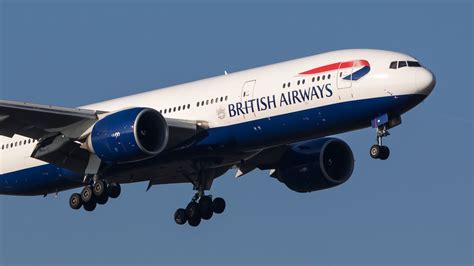
Where Are They Now? The Post-BA Life of the 757s
Although many of the original 54 aircraft have since been dismantled and scrapped, not all have met such a final fate. According to ch-aviation data, 30 units have reached ‘end-of-life’ status, broken down for parts and retired from any active duty. But that leaves 24 aircraft still intact in various corners of the world.
One of the most intriguing survivors is the aforementioned G-BKRM, BA’s second 757 delivery. This aircraft has undergone a long and varied post-BA career, passing through the hands of Air 2000, Nationair Canada, and Star Air Tours. Today, it is listed under Juliet Romeo Aviation, carrying the U.S. registration N757SS, and is believed to be available on the secondary market.
From Passengers to Parcels: Cargo Airlines and 757 Conversions
The majority of the surviving British Airways 757s have found a second life hauling cargo. In particular, five aircraft from the 1980s — G-BMRA, G-BMRB, G-BMRD, G-BMRJ, and G-BMRI — are actively flying with DHL Aviation, still bearing their original UK registrations. These freighters operate extensively across Europe, the Middle East, and North Africa, a testament to the aircraft’s durability and adaptability.
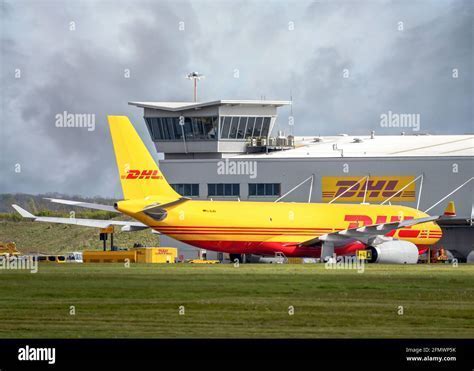
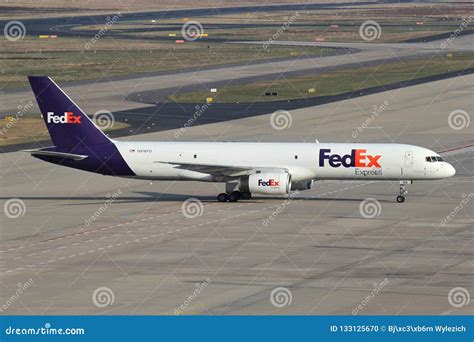
Many of the other surviving BA 757s have also transitioned into freight roles. FedEx Express, the American logistics giant, operates a substantial number of them. One BA 757 has even found its way to SF Express, a major logistics company based in China. These aircraft typically undergo passenger-to-freighter (P2F) conversions, which involve removing seats, reinforcing the floor, and installing cargo doors. With a high-thrust engine and a narrow fuselage, the 757 is ideal for medium-load, long-range logistics missions.
The Last Passenger Holdouts
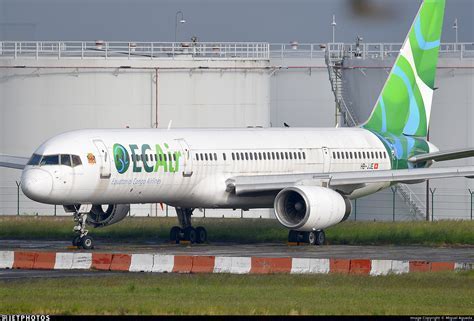
As of 2025, only two former British Airways Boeing 757s are still registered in passenger configurations. The first, G-BPEJ, was acquired by Equatorial Congo Airlines (ECAir) in 2018, re-registered as TN-AJR. Despite wearing the full ECAir livery, the aircraft has remained parked at Addis Ababa Bole International Airport since acquisition and has never flown commercially under its new owner.
The second, G-BPEK, experienced a similar fate. It transferred to Cabo Verde Airlines in 2018, later moving to the Icelandic register as TF-LLV under Icelandair in 2021. However, it has not operated a single flight since then. Currently, this aircraft is stored at Miami Opa-Locka Executive Airport (OPF) and is likely destined for part-out or scrapping.
These passenger aircraft are relics of a bygone era, and the chances of seeing one return to passenger service are virtually nonexistent. Airlines today demand more efficient, technologically advanced, and environmentally compliant airframes.
Why the Boeing 757 Still Matters
While British Airways’ 757s no longer serve passengers, their continued use in the cargo sector underlines the lasting utility of the model. With Rolls-Royce RB211 engines, high takeoff performance, and a range that exceeded most narrowbodies of its era, the 757 was built to endure. Even now, 757s can access airports that would challenge modern airliners like the Airbus A321neo or Boeing 737 MAX.
In fact, the 757’s design was so ahead of its time that Boeing has struggled to find a direct successor. The aircraft’s ability to bridge short and transatlantic routes efficiently — like those between London and smaller U.S. East Coast cities — gave it a unique position that even newer aircraft struggle to emulate.
A Legacy Etched in Aviation History
The story of British Airways’ Boeing 757s is a compelling chapter in European aviation history. From pioneering European operations in the early 1980s to a graceful farewell in 2010, these aircraft carried millions of passengers, navigated countless miles across the continent, and now continue to ferry freight across the globe. Their transformation from passenger jets to freighters stands as a powerful testament to Boeing’s engineering vision and British Airways’ commitment to operational excellence.
While none remain in BA colors today, their silhouette still graces the skies — often unnoticed but very much at work. So the next time a DHL or FedEx 757 roars overhead, know that you’re witnessing the second life of a British aviation icon.