For nearly a decade, St. Louis Lambert International Airport (STL) stood as a significant node in American Airlines’ vast network. Once bustling with hundreds of daily flights under the airline’s banner, STL’s status as a hub is now a chapter of history—a casualty of economic downturns, strategic shifts, and evolving market realities.
The roots of this story trace back to the early 2000s, when American Airlines absorbed the once-iconic Trans World Airlines (TWA), acquiring not only its fleet and routes but also its key hub at St. Louis. At the time, TWA had built STL into its largest operational base, with the airport serving as a vital gateway for domestic connections and transcontinental travel.

American Airlines’ TWA Acquisition and STL’s Temporary Glory
In 2001, facing its third bankruptcy, TWA was acquired by American Airlines in a deal that seemed poised to reshape the Midwest aviation landscape. Almost overnight, STL transformed into an American Airlines hub, designed to relieve pressure from the airline’s major centers at Chicago O’Hare (ORD) and Dallas/Fort Worth (DFW).
The early optimism was backed by numbers. By July 2001, American Airlines operated over 500 daily flights from St. Louis, leveraging both mainline aircraft and Trans World Express, TWA’s regional carrier, to serve a vast domestic network.
However, the honeymoon period was short-lived. The September 11th attacks triggered an industry-wide collapse in travel demand. STL, like many airports across the U.S., saw passenger numbers plummet. What was intended as a thriving hub quickly became redundant in a downsized aviation market.
Market Pressures and Chicago’s Role in STL’s Decline
Beyond declining travel demand, another pivotal factor undercut STL’s hub viability—the strategic liberation of Chicago O’Hare Airport. In 2002, the city of Chicago removed slot restrictions at ORD, granting American Airlines unprecedented freedom to expand its operations there. With Chicago serving as a more significant metropolitan center and offering greater international connectivity, investing in ORD made far more sense.
By the end of 2002, American Airlines began to drastically scale back its presence at St. Louis. From 417 daily flights, the number shrank to just 207 by 2003, signaling the beginning of the end for STL’s hub status.
The Official Closure of STL as a Hub
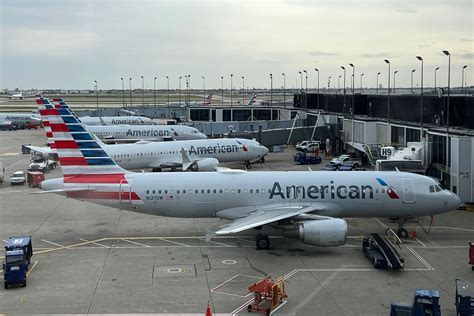
Despite attempts to stabilize operations, the economic downturn of the late 2000s delivered a final blow. In September 2009, American Airlines formally announced the removal of St. Louis Lambert International Airport from its list of hubs. Instead, the airline pledged to consolidate and strengthen its presence at core airports:
- Dallas/Fort Worth International Airport (DFW)
- Chicago O’Hare International Airport (ORD)
- Miami International Airport (MIA)
- John F. Kennedy International Airport (JFK)
The decision was met with industry surprise but reflected broader realities. STL, serving roughly 15 million passengers at its 2008 peak, could not compete with the growing dominance of other hubs. The collapse of air traffic post-2008 economic downturn ensured STL’s hub operations never recovered.
Redistribution of Flights and the Impact on American’s Network
Following the STL downgrade, American Airlines realigned its network. Chicago O’Hare emerged as the primary beneficiary, adding 57 new flights, mostly operated by regional jets under the American Eagle brand. Meanwhile, Dallas/Fort Worth gained additional mainline and regional services, albeit with some regional flights reallocated to Chicago to counter United Airlines’ market share.
Other key changes included:
- Miami International Airport adding 23 daily flights
- John F. Kennedy Airport gaining 7 new daily flights
- Los Angeles International Airport seeing a modest single daily flight increase
The closure of STL’s hub operations allowed American Airlines to refine its core routes, improve aircraft utilization, and streamline operations across more profitable airports.
STL’s Transition to a Regular Service Airport
Despite losing its hub status, American Airlines maintained a presence at St. Louis Lambert. In 2009, after the hub’s closure, the airline still operated 36 daily flights, albeit to a mere nine destinations. Most of these routes connected to American’s hubs and focus cities:
- Chicago O’Hare (ORD)
- Dallas/Fort Worth (DFW)
- Miami (MIA)
- New York JFK
- Los Angeles International (LAX)
- Boston Logan (BOS)
- New York LaGuardia (LGA)
- Seattle-Tacoma (SEA)
- Ronald Reagan Washington National (DCA)
Over time, the Seattle route was discontinued, but American Airlines introduced new services to destinations like:
- Phoenix Sky Harbor International Airport (PHX)
- Cancun International Airport (CUN)
- Will Rogers World Airport (OKC)
- Charlotte Douglas International Airport (CLT)
- Philadelphia International Airport (PHL)
Today, American operates approximately 12 daily flights from STL, focusing on high-demand routes while connecting passengers to its global network via larger hubs.
The Broader Evolution of American Airlines’ Hub Strategy
In the years following STL’s demotion, American Airlines aggressively expanded its hub portfolio. From just four primary hubs in 2009, the airline’s network grew to include ten major hubs across the United States:
- Charlotte Douglas International Airport (CLT)
- Los Angeles International Airport (LAX)
- LaGuardia Airport (LGA)
- Philadelphia International Airport (PHL)
- Phoenix Sky Harbor International Airport (PHX)
- Ronald Reagan Washington National Airport (DCA)
This expansion cemented American’s position as the world’s largest airline by passenger numbers and daily flights, albeit at the expense of smaller former hubs like St. Louis.
Reflecting on STL’s Short-Lived Hub Era
For St. Louis, the end of its tenure as a major hub marked a sobering reality check. Once thriving under TWA’s leadership and briefly rejuvenated by American Airlines, the airport faced the dual challenge of declining national travel demand and being overshadowed by larger, better-connected cities.
Infrastructure adjustments soon followed. Concourse D at STL was closed, symbolizing the downsizing of operations. Passenger traffic, which flirted with 15 million annually in 2007, dropped significantly after the 2008 financial crisis.
Yet, STL endures. While no longer a major hub, the airport continues to serve millions of travelers yearly, supported by a combination of domestic routes, regional services, and international leisure destinations.
The rise and fall of American Airlines’ St. Louis hub is a stark reminder of aviation’s volatility—where market shifts, economic cycles, and strategic recalibrations can reshape entire airports’ fortunes seemingly overnight. Though STL’s hub era ended, its story reflects the broader dynamics that continue to define the U.S. airline industry today.