US Airways’ story is one of ambition, reinvention, and ultimately absorption into the largest airline in the world. From its humble beginnings as a mail carrier to its high-stakes mergers and final flight in 2015, US Airways shaped the contours of American aviation across nearly eight decades. What follows is an intricate account of the carrier’s rise, turbulence, and final transformation.
Origins: From Airmail to Passenger Carrier
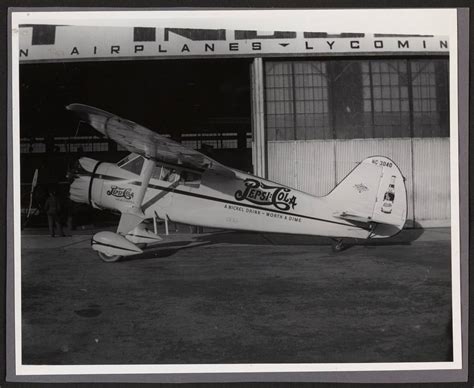
US Airways began life in 1937 as All American Aviation, founded by Lytle Schooler Adams in Pittsburgh, Pennsylvania. The company initially focused on experimental airmail pickup systems, operating with a fleet of Stinson Reliant aircraft designed for single-engine utility and short-distance flights. However, the airline’s leadership changed before operations commenced, as the Du Pont brothers, Richard and Alexis Felix, removed Adams and redirected the company’s mission.
By 1949, All American Aviation shifted from mail to passengers, rebranding as All American Airways. This was the first in a series of name changes that mirrored the company’s growing ambitions and expanding footprint.
Allegheny Airlines and the Early Expansion Era
In 1953, the airline adopted the name Allegheny Airlines, reflecting a broader regional vision. Throughout the 1960s and 70s, Allegheny expanded rapidly through acquisitions and technological investments. The addition of turbine airliners in 1959 and jet aircraft like the Douglas DC-9 in 1965 modernized the fleet. It became a trailblazer in regional airline partnerships, launching what would later become the model for feeder networks nationwide.
Mergers with Lake Central Airlines in 1968 and Mohawk Airlines in 1972 expanded its reach significantly. However, despite its success, the airline earned the nickname “Agony Air” due to operational difficulties and customer dissatisfaction. Rising fuel prices and inefficient systems further strained the company.
Birth of USAir: Deregulation and Strategic Realignment
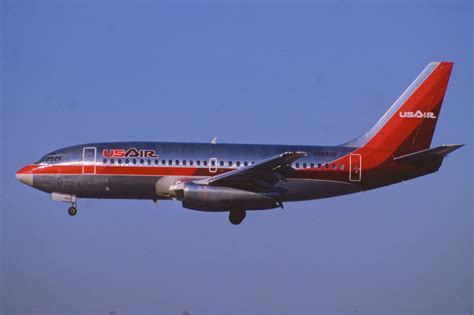
The late 1970s brought about the deregulation of the U.S. aviation industry, allowing airlines more control over routes and pricing. Allegheny Airlines seized this moment to shed its negative reputation and reposition itself. In October 1979, the airline rebranded again, this time to USAir.
Through the 1980s and early 1990s, USAir pursued a strategy of aggressive acquisitions, absorbing Pacific Southwest Airlines and Piedmont Airlines, significantly boosting its route network and fleet. It became one of the largest domestic carriers in the U.S., with over 5,000 daily flights and more than 180 destinations served.
International Expansion and Fleet Modernization
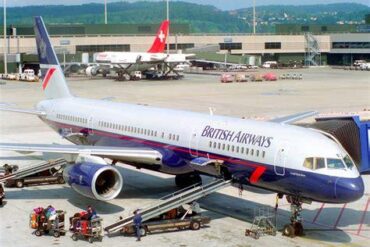
During the 1990s, USAir began to eye transatlantic routes, launching services to London, Paris, and Frankfurt using Boeing 767-200ER aircraft. It even entered into a significant partnership with British Airways, which took a financial stake in the airline. Some USAir 767s even carried British Airways’ branding—a bold sign of international aspiration.
In 1996, the airline announced a massive shift toward Airbus aircraft, placing an order for up to 400 A320-family jets, including 120 firm orders—a deal that ranked among the largest bulk aircraft orders in history. Soon after, it also ordered 30 A330s, marking its commitment to widebody, long-haul capabilities.
In 1997, the company changed its name to US Airways. This rebranding reflected not just a new visual identity—navy blue, gray, and red based on the American flag—but also a strategic repositioning to match its newfound global outlook.
Turbulence: Failed Deals, Bankruptcy, and 9/11 Impact
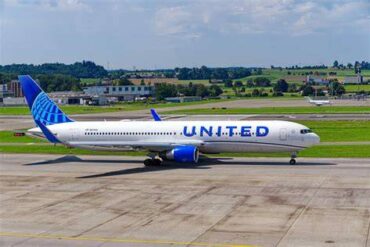
The early 2000s brought unprecedented challenges. In 2000, United Airlines’ parent company, UAL Corp, announced a $3.4 billion acquisition of US Airways. However, regulatory concerns and industry resistance led to the deal’s collapse in July 2001, with UAL paying a $50 million penalty.
Then came September 11th, a turning point for the entire airline industry. US Airways was hit especially hard due to its dependency on Washington Reagan National Airport (DCA), which was closed for an extended period following the attacks. The shutdown disrupted its network and operations significantly.
The financial toll was devastating. The airline filed for bankruptcy in 2002, emerged, and filed again in 2004, becoming one of the most unstable carriers in the U.S. During this time, US Airways was desperate for a lifeline.
Merger with America West: A New US Airways Emerges
That lifeline came in 2005 through a merger with America West Airlines. While America West was the smaller carrier, it took the reins operationally, retaining the US Airways name to benefit from broader brand recognition. The merger created the fifth-largest airline in the world at the time.
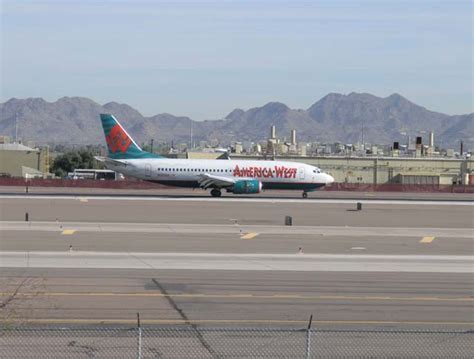
The newly merged US Airways now had to integrate complex route structures, aircraft fleets, and employee cultures. Full operational integration would take nearly two years, but by 2007, the airline had returned to profitability.
Despite its recovery, US Airways remained ambitious. In 2006, it attempted a $10 billion hostile takeover of Delta Air Lines, but the bid was strongly resisted and ultimately failed. Still, the airline’s management, led by CEO Doug Parker, continued to seek a path to secure long-term stability.
The American Airlines Merger: The Final Chapter
From 2008 to 2012, US Airways explored merger possibilities with various legacy carriers, including United and Delta. Talks with United progressed in 2010 but were abandoned when United opted to merge with Continental instead.
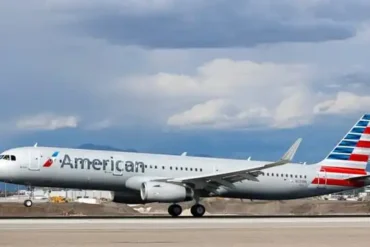
By 2012, US Airways turned its focus to American Airlines, which was struggling under bankruptcy. In a surprising twist, the merger received judicial approval, and though the combined airline retained the American Airlines brand, US Airways’ management team took control.
The merger officially created the world’s largest airline, measured by fleet size, revenue, and passengers carried. However, the legacy of US Airways was now on borrowed time. In 2015, the company initiated its final phaseout.
The Last Flight: October 17, 2015
On October 17, 2015, US Airways Flight 1939—named after the year of the airline’s founding—departed Philadelphia International Airport. It marked the symbolic and literal end of an era. After completing its multi-leg journey across cities central to the airline’s history, it landed as American Airlines Flight 1939, concluding US Airways’ 78-year journey.
Legacy of US Airways
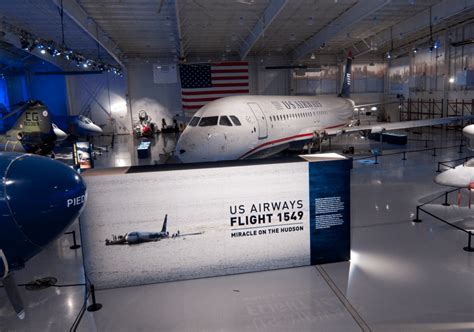
Over the decades, US Airways played a pivotal role in shaping U.S. commercial aviation. From pioneering regional networks to transatlantic ambitions, its impact remains embedded in the structure of today’s American Airlines. It operated a fleet of over 780 aircraft during its final years, including:
- A319, A320, A321 narrowbodies
- A330-200 and A330-300 widebodies
- Boeing 737s, 757s, and 767s
- Regional jets like the Embraer 190 and various BAe and Fokker aircraft
The brand may be gone, but its contributions to fleet strategy, route development, and airline mergers remain benchmarks in aviation history. The legacy of US Airways lives on through the network, personnel, and aircraft now operating under American Airlines.