India’s national carrier, Air India, has taken a decisive step toward expanding its international connectivity by forming interline agreements with four regional airlines: airBaltic, Bulgaria Air, Cyprus Airways, and Uzbekistan Airways. This strategic move significantly strengthens Air India’s presence across Europe and Central Asia, enabling smoother travel experiences, broader destination access, and increased convenience for global travelers.
Air India’s Interline Strategy: Connecting Continents through Regional Gateways
The newly signed agreements were unveiled during the 81st IATA Annual General Meeting in New Delhi, a fitting stage for Air India to assert its renewed global ambitions. Through these partnerships, Air India leverages the power of regional carriers to plug into niche and emerging markets that traditionally fall outside the radar of major long-haul airlines. The interline format allows for single-ticket itineraries, unified baggage handling, and seamless transit, a vital requirement for passengers navigating complex international journeys.
By teaming up with carriers like airBaltic and Bulgaria Air, Air India taps into a sophisticated hub-and-spoke model, where travelers can initiate or end their journey in cities such as Riga, Sofia, or Larnaca, via connecting hubs like London, Frankfurt, and Dubai. This effectively opens dozens of new travel options for passengers from both India and Europe.
Partner Profiles: How Each Airline Adds Unique Geographic Value
The strength of this strategy lies in the unique regional footprint of each partner airline, which collectively offer access to cities underserved by global carriers.
airBaltic (BT): India Meets the Baltics
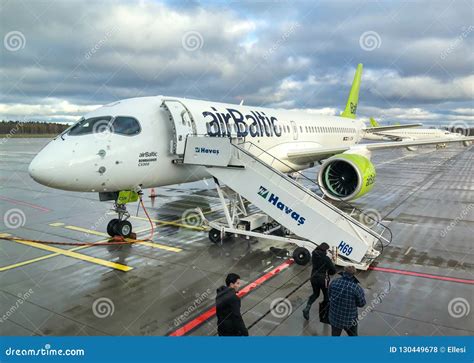
Air India’s partnership with airBaltic opens vital links to the Northern European capitals of Riga (RIX), Tallinn (TLL), and Vilnius (VNO). These routes become accessible via Air India’s existing flights to Frankfurt (FRA), London Gatwick (LGW), and Dubai (DXB). It marks a significant leap in connecting Indian travelers to the Baltic region, which is increasingly important for business, tourism, and education exchanges.

Bulgaria Air (FB): Gateway to the Balkans
With Bulgaria Air, Air India now facilitates travel to Sofia (SOF), the vibrant capital of Bulgaria, via London Heathrow (LHR), Milan (MXP), and Tel Aviv (TLV). Further access to regional destinations such as Varna and Burgas is also included, reinforcing ties with Southeastern Europe and enabling travel to lesser-known, but culturally and economically rich regions.
Cyprus Airways (CY): Opening the Mediterranean
Through its agreement with Cyprus Airways, Air India links travelers to Larnaca (LCA) via key nodes such as Paris (CDG), Milan (MXP), and Dubai (DXB). Cyprus serves not only as a popular leisure destination but also as a bridge between Europe, the Middle East, and Africa, enhancing strategic geographic coverage.
Uzbekistan Airways (HY): India to Central Asia
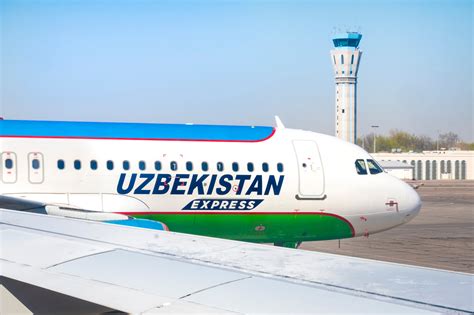
Perhaps the most geopolitically significant link comes from Uzbekistan Airways, offering direct routes from Delhi (DEL), Mumbai (BOM), and Goa-Mopa (GOX) to Tashkent (TAS). From there, travelers can explore the historic Silk Road cities of Samarkand and Bukhara. This interline not only improves tourism flows but also nurtures business and cultural exchange in a rapidly growing Central Asian market.
Enhanced Inbound Access to Indian Cities
These interline deals are not just about outbound travel from India. Inbound passengers from Europe and Central Asia now gain unified entry points into over 30 Indian cities, from major metro areas like Chennai (MAA) and Bengaluru (BLR) to tier-2 cities such as Kochi (COK). The benefit is twofold: it boosts India-bound tourism and facilitates diaspora connectivity, making India more accessible to its widespread communities across Europe.
Nipun Aggarwal on Strategic Connectivity
Commenting on the significance of the agreements, Nipun Aggarwal, Chief Commercial Officer of Air India, said:
“These four new interline partnerships significantly enhance Air India’s global reach and open seamless pathways to vibrant cities across some of the most important emerging markets of today.”
He emphasized how the agreements reinforce India’s stature as a rising global aviation hub, catering to the shifting demand dynamics of global travelers.
Strengthening the Network: Codeshare with Icelandair
In parallel to these interline developments, Air India has signed a codeshare agreement with Icelandair, a move that opens travel between India and Iceland, a route previously underserved by any direct connection. Under this agreement:
- Air India places its AI code on Icelandair-operated flights across major hubs like Frankfurt (FRA), Copenhagen (CPH), and London (LHR, LGW), all connecting to Reykjavik (KEF).
- Icelandair places its FI code on Air India’s flights between Delhi (DEL) and Mumbai (BOM) to Europe.

Passengers will enjoy streamlined schedules and integrated baggage handling, making the experience of transiting across continents far more efficient. For India, the codeshare fosters tourism and trade relations with Iceland, a country that is seeing growing popularity among Indian travelers for its unique landscapes and environmental experiences.
Expanding Southern Horizons: Partnership with Air Mauritius
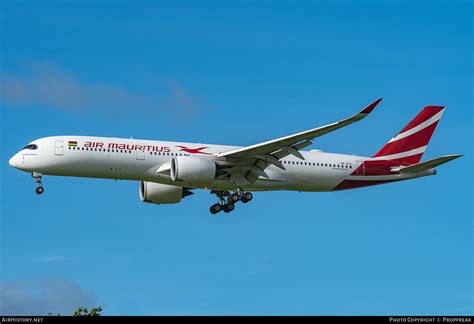
Air India has also expanded its existing codeshare agreement with Air Mauritius (MK) to encompass South Africa and Madagascar. This alliance supports India’s growing role as a strategic trade and tourism partner to the Southern African region.
Under this extended pact:
- Air India places its AI code on Air Mauritius flights to Cape Town (CPT), Johannesburg (JNB), and Antananarivo (TNR) via Mauritius (MRU).
- Air Mauritius adds its MK code on key Air India domestic routes including Mumbai, Delhi, and Chennai.
Campbell Wilson, CEO & Managing Director of Air India, noted:
“India is one of the largest tourism source markets for destinations in Southern Africa, including Mauritius and South Africa. This expanded codeshare partnership with Air Mauritius is another step toward widening our extended global network.”
The Bigger Picture: Elevating India as a Global Aviation Node
These strategic partnerships come at a crucial time for Air India, which is actively rebranding under the ownership of the Tata Group. The new interline and codeshare arrangements align with a broader transformation that includes fleet modernization, service enhancements, and network restructuring. Rather than attempting to fly everywhere itself, Air India is opting for a collaborative growth model that allows it to extend its footprint without overextending its resources.
As a result, travelers are likely to see a more robust, reliable, and globally integrated Air India, with direct and indirect access to hundreds of cities worldwide, all backed by consistent service standards and ticketing simplicity. The benefits for passengers include shorter transit times, simplified itineraries, and the comfort of knowing that baggage and booking systems are harmonized across carriers.
Conclusion: Building a Web of Seamless Travel Across Continents
Air India’s newly signed interline and codeshare agreements with airBaltic, Bulgaria Air, Cyprus Airways, Uzbekistan Airways, Icelandair, and Air Mauritius mark a defining step in its international strategy. As the airline continues to emerge from years of operational restructuring, it’s becoming clear that collaboration—not competition—is the cornerstone of its global growth.
For Indian travelers, this means expanded access to Europe, Central Asia, the Baltics, the Mediterranean, Iceland, and Southern Africa like never before. For international passengers, India becomes an easily navigable and compelling destination. Ultimately, these strategic moves cement Air India’s intent to serve as a true global connector, positioning India at the heart of modern air travel.