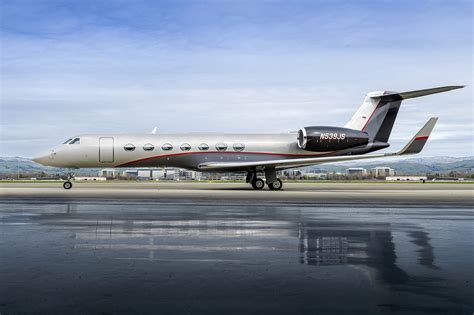
Gulfstream Aerospace Corporation, a pioneering force in business aviation, has cultivated a legacy of performance, luxury, and innovation. As a wholly owned subsidiary of General Dynamics, it operates from its headquarters in Savannah, Georgia, producing a family of aircraft that are the preferred choice of global elites, governments, and corporate leaders alike. With over 2,000 aircraft delivered since its inception in 1958, Gulfstream’s name has become synonymous with precision engineering and executive comfort.
The Genesis of Gulfstream: From Propellers to Jet-Powered Prowess
Gulfstream’s origins trace back to the late 1950s with the development of the Grumman Gulfstream I (G-I), a 12-seat twin-turboprop aircraft. Developed by Grumman Aircraft Engineering Co., the G-I was a commercial and performance success, paving the way for the jet-powered Gulfstream II (GII). The GII ushered in a new era, with its advanced design and powerful engines enabling higher speeds and longer ranges.
The strategic relocation of Gulfstream’s operations to Savannah in 1966 marked the beginning of its sustained expansion. Driven by access to skilled labor, transport facilities, and favorable weather, this move transformed the city into a hub for world-class aircraft manufacturing.
The Paulson Era and the Rise of Modern Gulfstream Aircraft
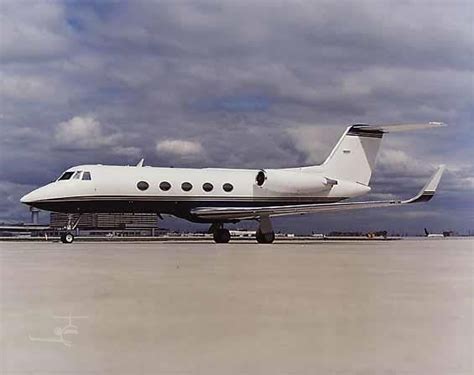
When aviation entrepreneur Allen Paulson acquired Gulfstream in 1978, the company experienced a renaissance. Paulson’s leadership was instrumental in launching the Gulfstream III (GIII), the first business jet capable of flying over both poles, setting a precedent for intercontinental travel in corporate aviation. Gulfstream’s bold design innovations, such as combining the GII’s fuselage with GIII’s wings to create the GIIB, solidified its engineering prowess.
By the mid-1980s, Gulfstream had become a formidable force, delivering cutting-edge aircraft like the Gulfstream IV (GIV). The GIV made history as the first business jet to feature an all-glass cockpit, establishing a benchmark in avionics. The company’s success was acknowledged with a listing on the Fortune 500 following its acquisition by Chrysler Corporation.
Technological Evolution and Global Expansion in the 1990s
The 1990s were marked by further innovation with the introduction of the Gulfstream V (GV), an ultra-long-range jet that set 40 city-pair and distance records shortly after its debut. Gulfstream’s test facility in Savannah became the foundation for next-generation aircraft development. Strategic acquisitions, including K-C Aviation and Galaxy Aerospace, expanded its capabilities and global footprint.
This decade also witnessed the formation of long-term partnerships, notably with NetJets, and the unveiling of modernized naming conventions. Gulfstream models adopted simplified numerical designations, such as G550 and G500, reflecting a streamlined identity aligned with its elite branding.
The 2000s: A Decade of Breakthroughs and Innovations
After being acquired by General Dynamics in 1999, Gulfstream’s trajectory soared. The early 2000s brought forth revolutionary advancements, including the launch of the Airborne Product Support program using the G100 jet to deliver parts rapidly across North America and the Caribbean.
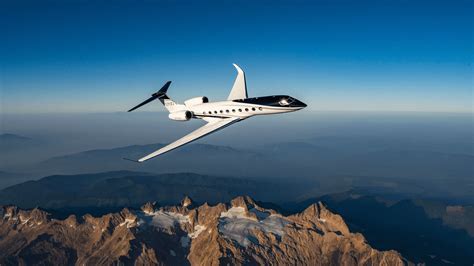
In 2004, the Gulfstream G550 became the first civil aircraft to feature an Enhanced Vision System (EVS) as standard equipment, an innovation that earned the company its second Collier Trophy. This system enhanced pilot situational awareness in poor visibility, redefining flight safety in business aviation.
Simultaneously, Gulfstream committed to environmental responsibility, introducing the Stage 4 noise-compliant G150 and launching the Quiet Spike project to explore sonic boom mitigation for future supersonic travel.
Design Philosophy: Performance, Comfort, and Safety
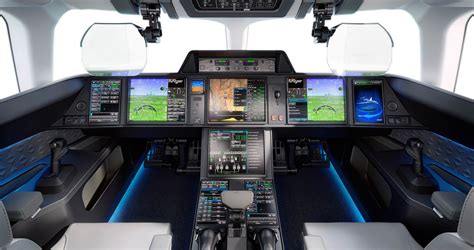
Each Gulfstream aircraft is a testament to engineering and ergonomic brilliance. The design philosophy integrates high-speed efficiency, cabin pressurization for comfort at 51,000 feet, and state-of-the-art avionics. Signature features across Gulfstream jets include:
- Cabin Altitude of 4,850 feet at 51,000 feet, enhancing passenger well-being.
- Symmetry Flight Deck™ with active control sidesticks and intuitive touchscreens.
- EVS and SV-PFD, delivering real-time terrain visuals.
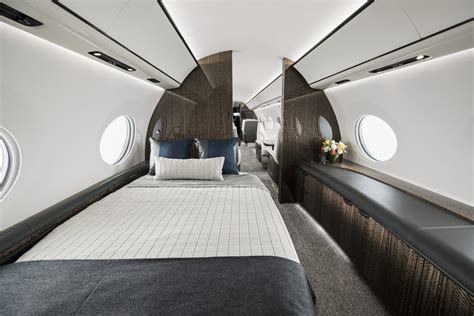
- Custom interior configurations, including private staterooms, entertainment suites, and fully equipped galleys.
The Modern Lineup: Global Range with Unmatched Luxury
Gulfstream’s current fleet exemplifies ultra-long-range capability, advanced aerodynamics, and personalized luxury:
- G280: Midsize excellence with a 3,600 nm range and superior short-field performance.
- G400: Reintroducing the 4,000 nm class with modern comfort and digital flight systems.
- G500/G600: Designed for speed and innovation, cruising at Mach 0.90.
- G700: Flagship luxury with a range of 7,500 nm, featuring the tallest, widest, and longest cabin in the industry.
- G800: Ultimate endurance with a record 8,000 nm range at Mach 0.85.
Strategic Infrastructure and Global Support Network
Gulfstream’s infrastructure expansion underlines its commitment to exceptional customer service. With maintenance centers across North America, Europe, and South America, the company ensures 24/7 global support. Its Savannah campus, expanded with a $500 million investment, houses cutting-edge R&D labs, production lines, and the company’s largest service center.
In March 2023, Gulfstream opened a luxurious 12,000 sq ft design center in Beverly Hills, offering high-net-worth clients hands-on experiences with full-scale cabin mock-ups for G400, G700, and G800 models.

Government and Special Mission Aircraft
With around 200 Gulfstream aircraft in government service across 35 nations, the brand plays a vital role in global defense and humanitarian missions. The G550, in particular, is favored for roles in:
- Head of state transportation
- Medical evacuation
- Airborne early warning and control (AEW&C)
- ISR (Intelligence, Surveillance, Reconnaissance)
These special-mission configurations integrate advanced sensor arrays, communication suites, and mission management systems—cementing Gulfstream’s role in national security and aeronautical research.
Overcoming Tragedy and Pursuing Excellence
Despite its success, Gulfstream faced challenges. In 2011, a tragic G650 test flight accident led to a full-scale investigation. The NTSB identified key issues in takeoff performance testing and pilot response. Gulfstream responded swiftly, recalibrating performance standards and implementing more stringent safety protocols. The G650 received its certification later that year and went on to become one of the most decorated and commercially successful aircraft in its class.
Sustainability and the Future of Gulfstream
As sustainability becomes a core tenet of aviation, Gulfstream is taking bold steps. Its use of Sustainable Aviation Fuel (SAF), reduction of carbon emissions, and investments in quiet supersonic travel research position the company at the forefront of future-ready aerospace solutions. The continued development of synthetic vision, autonomous systems, and fuel-efficient designs signal Gulfstream’s readiness to lead the next century of flight.

Conclusion: A Symbol of Aspirational Aviation
Gulfstream Aerospace stands as a benchmark for innovation, luxury, and operational excellence. Its aircraft are not merely tools of travel but statements of ambition and sophistication. With unwavering dedication to engineering brilliance, safety, and client satisfaction, Gulfstream continues to define what it means to fly at the pinnacle of possibility.
From pioneering twin turboprops to leading the ultra-long-range jet category, Gulfstream’s legacy is both storied and evolving—an enduring symbol of the future of business aviation.