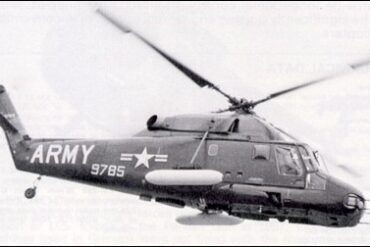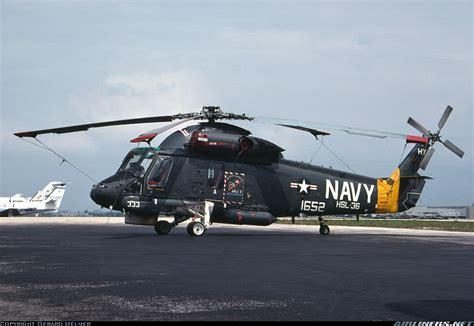
The Kaman SH-2 Seasprite stands as a testament to innovative naval aviation, evolving from a modest utility helicopter into a formidable anti-submarine warfare (ASW) platform. Initially developed in response to a 1950s U.S. Navy requirement, the Seasprite’s journey from the HU2K-1 prototype to the advanced SH-2G variant illustrates a legacy of adaptability and enduring service across multiple navies worldwide.
Design and Development: From Utility to ASW Specialist
Origins and Early Challenges
In 1956, Kaman Aircraft Corporation’s K-20 design won the U.S. Navy’s competition for a compact, all-weather utility helicopter. The initial HU2K-1, later redesignated as UH-2A, featured a single General Electric T58-8F turboshaft engine. Despite its innovative design, the single-engine configuration proved underpowered, leading to performance issues during sea trials. Notably, the Royal Canadian Navy canceled its order due to these shortcomings and escalating costs.
Transition to Twin-Engine and LAMPS Integration
Responding to performance concerns, Kaman initiated a twin-engine retrofit program in 1968, enhancing speed and range capabilities. This upgrade paved the way for the Seasprite’s selection as the interim platform for the Light Airborne Multi-Purpose System (LAMPS) I in 1970. The resulting SH-2D/F variants incorporated advanced radar, sonar, and electronic warfare systems, significantly expanding the helicopter’s mission profile.
Operational History: A Versatile Asset Across Conflicts
United States Navy Service
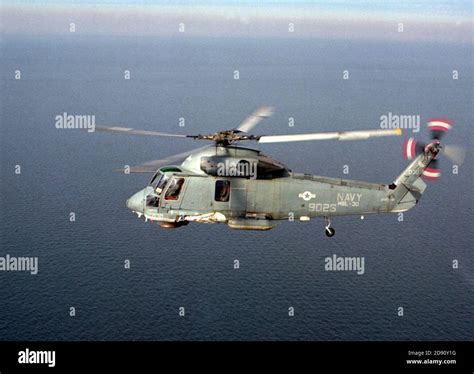
The U.S. Navy operated nearly 200 Seasprites in various roles, including ASW, search and rescue (SAR), and utility transport. During the Vietnam War, the Seasprite played a crucial role in combat search and rescue missions, notably during the Tonkin Gulf incident and Operation Rolling Thunder. The helicopter’s compact size allowed operations from smaller flight decks, extending its utility across the fleet.
In the 1980s and 1990s, the SH-2F variant participated in operations such as Earnest Will, Praying Mantis, and Desert Storm, showcasing its adaptability in surface warfare roles. The final U.S. Navy Seasprites, including the advanced SH-2G models, were retired by 2001 after accumulating over 1.5 million flight hours across 600 deployments.
International Operators
New Zealand
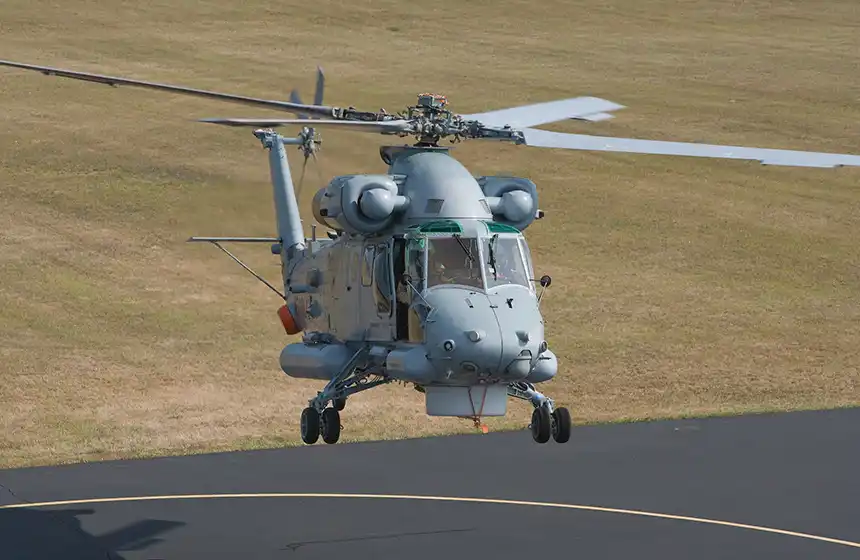
The Royal New Zealand Navy (RNZN) initially acquired four ex-U.S. SH-2F helicopters in the 1990s, later supplementing its fleet with five new SH-2G(NZ) models. These helicopters operated from ANZAC-class frigates and participated in missions such as the East Timor deployment. In 2014, New Zealand procured ten ex-Australian SH-2G(I) helicopters, enhancing its maritime capabilities.
Egypt
In 1995, Egypt procured ten SH-2G helicopters equipped for ASW missions, including AQS-18A dipping sonar and advanced electronic support measures. These helicopters operate alongside Egypt’s fleet of Westland Sea Kings, bolstering the nation’s maritime defense.
Peru and Poland
Peru acquired four ex-New Zealand SH-2G(NZ) helicopters, which were upgraded before entering service in 2018. The Polish Navy operates four SH-2G helicopters, modified to carry MU90 Impact torpedoes and 7.62mm PK machine guns, enhancing their ASW and surface warfare capabilities.
Variants: Adapting to Evolving Naval Needs
- YUH-2A: Prototype powered by a single 875 shp engine.
- UH-2A/B: Initial production models with single-engine configuration.
- UH-2C: Upgraded to twin-engine setup for improved performance.
- SH-2D/F: Integrated with LAMPS I systems, enhancing ASW capabilities.
- SH-2G Super Seasprite: Featured advanced avionics and more powerful General Electric T700-GE-401 engines, extending operational range and payload capacity.
Technical Specifications (SH-2F)
- Crew: 3 (pilot, co-pilot, sensor operator)
- Length: 38 ft 4 in (11.68 m)
- Rotor Diameter: 44 ft (13.41 m)
- Powerplant: 2 × General Electric T58-GE-8F turboshaft engines, 1,350 shp each
- Maximum Speed: 143 knots (265 km/h)
- Range: 367 nautical miles (680 km)
- Armament: Mk 46/50 torpedoes; export models equipped with AGM-65 Maverick or other anti-surface warfare missiles
Legacy and Preservation
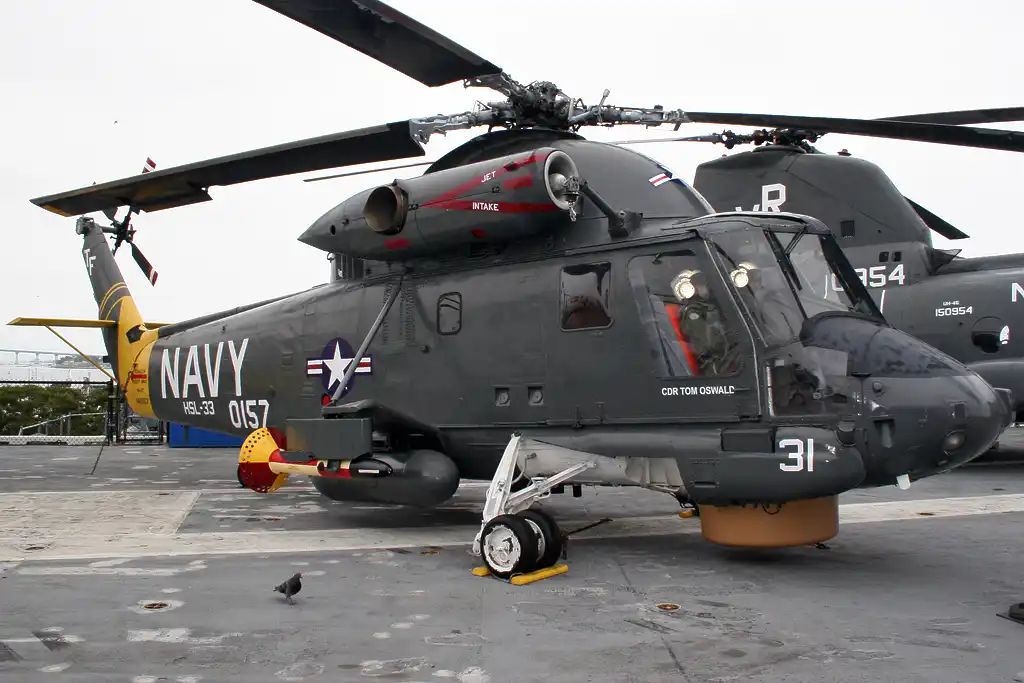
Several SH-2 Seasprites are preserved in museums, serving as a testament to their historical significance:
- USS Hornet Museum, Alameda, California
- Pima Air & Space Museum, Tucson, Arizona
- Naval Aviation Museum, Pensacola, Florida
- Air Force Museum of New Zealand, Wigram, Christchurch
Conclusion: A Compact Powerhouse in Naval Aviation
The Kaman SH-2 Seasprite exemplifies the evolution of naval rotary-wing aircraft, transitioning from a utility helicopter to a sophisticated ASW platform. Its adaptability, compact design, and advanced systems have ensured its relevance across decades of service. As it continues to operate within several navies, the Seasprite’s legacy endures as a symbol of innovation and resilience in maritime aviation.