Air Canada has joined the ranks of Delta Air Lines, United Airlines, American Airlines, Hawaiian Airlines, Wizz Air and Air Astana in achieving record revenue growth during a remarkable rebound in global travel demand. As borders reopen and travelers regain confidence, these airlines have capitalized on pent‑up demand, reshaped their networks and refined their service offerings to capture every available opportunity. Their collective success underscores a strategic pivot across the industry—one that balances bold expansion with measured risk management, ensuring long‑term resilience and profitability.
Despite operating in diverse regions—from North America’s vast transcontinental markets to Europe’s low‑cost corridors and Central Asia’s emerging tourism hubs—these carriers share a unifying theme: adaptation. Air Canada’s choices now mirror trends adopted by its peers. By cutting underperforming routes, reallocating capacity and investing in premium and ancillary services, the airline has not only weathered market shifts but leveraged them to drive sustained growth. The story of Air Canada’s latest update is therefore inseparable from the broader narrative of an aviation comeback, where agility and data‑driven decisions reign supreme.
In this comprehensive overview, we delve into the key developments shaping Air Canada’s strategy and performance, comparing its moves to those of Delta, United, American, Hawaiian, Wizz Air and Air Astana. From the stark decline in transborder travel to the soaring demand for sun‑soaked destinations and premium cabins, each chapter reveals how the airline is redefining success in a fast‑evolving landscape. Read on to discover the critical updates you need to know.
Air Canada Faces Turbulence in U.S. Travel Segment
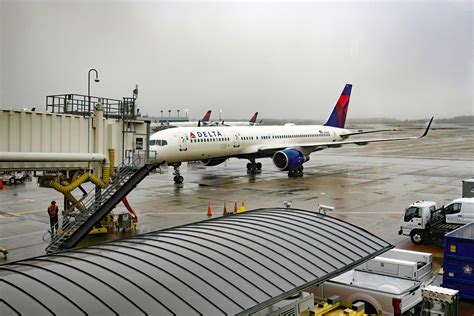
During the second quarter of 2025, Air Canada’s transborder passenger revenue plunged by 11%, falling to $961 million between April and June. This sharp contraction in demand from Canadian travelers heading south prompted a swift response: the airline began reallocating aircraft and seat capacity to more profitable markets. While Delta and United similarly trimmed underperforming U.S. routes and redirected flights toward high‑yield transatlantic and transpacific services, Air Canada’s move was particularly notable given the historical importance of the Canada‑U.S. corridor. By acknowledging the weakness early, the airline prevented deeper revenue erosion and set the stage for growth elsewhere.
International Markets Shine as Revenue Engines
With domestic routes contributing a 3% revenue increase, Air Canada’s true growth engines have been its international offerings. From sun‑drenched destinations in the Caribbean and Mexico to cultural hubs in Europe and emerging Latin American cities, the airline has deployed an agile route‑planning model that maximizes seat occupancy and yields. Comparable to Wizz Air’s expansion into secondary European airports and Air Astana’s cautious network scaling, Air Canada’s strategy balances demand forecasting with operational flexibility. By concentrating on routes with stable political climates and strong tourism fundamentals, the carrier has outperformed many rivals still wrestling with uneven recovery patterns.
Why Canadians Are Skipping U.S. Travel
Underlying the transborder slump is a behavioral shift among Canadians. In May 2025, Statistics Canada reported a 24% year‑over‑year drop in air arrivals to the U.S. and a 38% plunge in automobile returns. While airfare costs played a role, growing political tensions and rhetoric around immigration crackdowns and sovereignty debates have eroded traveler confidence. As a result, vacationers and business travelers are opting for Europe, Mexico and domestic excursions. This nuanced change in consumer sentiment echoes patterns observed in American and Hawaiian Airlines’ loyalty programs, where incentives and reassurance on border‑crossing protocols have become critical engagement tools.
Strategic Pivot: From U.S. Routes to Global Growth
Recognizing these trends, Air Canada’s leadership executed a strategic pivot early in 2025. The airline reduced seat supply on underperforming U.S. routes, redeploying capacity to high‑demand international markets. Sun‑destination frequencies were ramped up for the latter half of the year, aligning with peak leisure travel seasons. This network agility—mirrored by American’s focus on premium leisure segments and United’s long‑haul service enhancements—demonstrates that survival in today’s market hinges on profitability, not merely passenger counts.
The Numbers Behind the Shift
Even with a transborder setback, Air Canada’s overall passenger revenue grew to $5.03 billion, marking a 1% increase on just a 2.5% capacity uptick. These figures highlight a more efficient use of assets, where smarter route choices drive higher yields per available seat mile. Net income dipped to $186 million from $410 million a year earlier, but on an adjusted basis, profits stood at $207 million versus $369 million. While margins compressed, the airline’s resilience shines through in its ability to maintain positive growth amid shifting demand dynamics.
Why Analysts Are Not Panicking
Despite a 12% drop in Air Canada’s share price, leading analysts at RBC term the market reaction “overdone.” They point to the airline’s nimble fleet reallocation and targeted international expansion as indicators of strong leadership. High labor costs and conservative cash‑flow projections may have dampened investor sentiment, but long‑term trends—rising global travel demand and premium cabin growth—favor Air Canada’s disciplined approach. This stance parallels investor confidence in Delta and United, both of which have seen stock dips in response to temporary headwinds yet maintain robust forward guidance.
Boost in Domestic Demand Offers Support
On the home front, Canadian route revenues climbed by 3% as Air Canada increased capacity to leisure hotspots such as Vancouver, Halifax and Quebec City. Driven by summer festivals, national events and a renewed appetite for domestic exploration, this segment provided a crucial buffer against cross‑border softness. Hawaiian Airlines and American have reported similar domestic market rebounds, leveraging local partnerships and regional promotions to sustain steady load factors and ancillary spend.
Flexible Network Strategy Is the Airline’s Lifeline
Chief Commercial Officer Mark Galardo emphasizes that early identification of the U.S. segment’s weakness allowed Air Canada to adjust capacity plans ahead of competitors. This flexible network design, which can swiftly add or cut flights, is essential in a world where economic shifts, geopolitical events and evolving traveler preferences can disrupt established plans. Delta’s use of real‑time booking data to adjust frequencies on transcontinental routes and Wizz Air’s dynamic pricing algorithms both underscore the critical value of agility.
Currency Swings and Global Competition Still Loom
While strategy adjustments have driven growth, Air Canada remains exposed to currency fluctuations, particularly as the Canadian dollar oscillates against the U.S. greenback and euro. Additionally, competition on routes to China and Hong Kong is intensifying, with global carriers vying for market share and exerting downward pressure on yields. These factors require vigilant route profitability analyses and may necessitate further capacity tweaks as geopolitical landscapes evolve.
Airlines Around the World Are Earning More Than Ever
Industry‑wide, the aviation sector is poised to generate $979 billion in total revenue in 2025, with passenger revenue hitting $693 billion and average load factors at 84%. Despite a measured 1% rise in operating expenses, falling fuel costs and ancillary revenue from priority boarding, baggage fees and in‑flight services have enabled carriers to grow profits without significantly hiking base fares above $374 on average.
Passenger Travel Is Fueling the Growth
The Asia‑Pacific and European markets lead the recovery, exhibiting the strongest year‑over‑year traffic and revenue gains. Cities like Tokyo, Paris, Singapore and London have seen record passenger flows, while North and Latin America register steady, if slightly slower, growth. Air Canada’s parallel expansion into European leisure routes reflects this upside, as does Air Astana’s cautious increase in Central Asian connections.
Airlines Are Earning More Without Raising Ticket Prices Too Much
With base fares remaining competitive, carriers are driving incremental revenue through ancillary services—priority boarding, extra baggage allowances, onboard Wi‑Fi and premium seat selection. This has proven especially profitable for premium‑focused airlines like Delta and United, which now derive over half of their revenue from business and first‑class passengers and high‑value loyalty members.
Top Airlines Posting Record Results
In North America, Delta Airlines achieved $61.6 billion in revenue, American Airlines $54.2 billion and Alaska Airlines $11.7 billion. In Europe, Wizz Air delivered 13% revenue growth alongside an 11% increase in passenger numbers, while Kazakhstan’s Air Astana reported $1.3 billion in revenue carrying 9 million travellers. Africa’s largest carrier, Ethiopian Airlines, led regional performance with $7.02 billion, expanding its fleet and cargo network.
Premium Travel Is Helping Airlines Earn More
The surge in first‑class and business‑class bookings has been a critical profit driver. Frequent flyers and corporate travellers are opting for enhanced comfort and flexibility, fueling loyalty program revenues. Airlines such as Emirates, alongside Delta and United, now rely on their premium cabins and loyalty tiers to underpin more than half of total revenue, offsetting slower growth in economy segments.
Airline Profits Are Set to Keep Rising
Global airline profits are forecast to reach $36 billion in 2025, up from $32.4 billion the previous year. This projection is underpinned by declining fuel costs, modest operating expense growth and constrained aircraft deliveries, which help sustain higher ticket pricing and improved margins.
Low‑Cost Airlines Are Feeling the Pressure
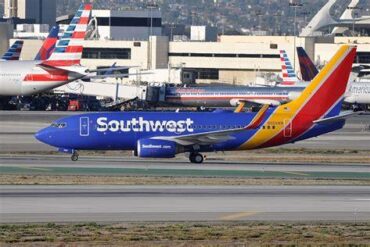
Not all carriers share in the windfall. U.S. low‑cost operators, notably Southwest Airlines, missed profit targets on weak domestic demand and fare compression, forcing them to rethink network strategies. As premium and international segments surge, budget airlines may need to introduce ancillary services or partnerships to remain competitive.
Strong Demand in Emerging Markets
Rapid growth in India, Southeast Asia and Latin America is reshaping global aviation. New airports, upgraded infrastructure and a burgeoning middle class are driving record passenger volumes. Airlines investing in these regions, like Air Astana and Ethiopian, are reaping dividends through new route launches and expanded cargo services.
Airline Strategies Are Changing
Across the industry, carriers are aligning around four core strategic pillars: expanding premium cabin offerings, enhancing loyalty programs, maintaining flexible route planning and exercising stringent cost control. This approach enables rapid capacity shifts to capitalize on emerging demand, whether driven by seasonal tourism peaks or unforeseen geopolitical events.
Risks That Airlines Still Face
Despite robust growth, airlines must navigate persistent headwinds: potential economic slowdowns in major markets, rising labor costs, ongoing aircraft shortages and the specter of trade tensions affecting cargo and international travel. Vigilant risk management and continued agility will be critical in sustaining momentum.
Final Thoughts and Outlook
Air Canada has reaffirmed its full‑year 2025 guidance, underscoring its commitment to disciplined cost control, network diversification and data‑driven decision‑making. Canadian travelers can anticipate more non‑U.S. route options, competitive fares on sun and European destinations, and continued focus on key domestic corridors. As the global aviation industry watches closely, Air Canada’s agile pivot offers a blueprint for post‑pandemic recovery—one in which rapid adaptation, diversified growth and strategic foresight keep planes full, profits rising and passengers smiling.