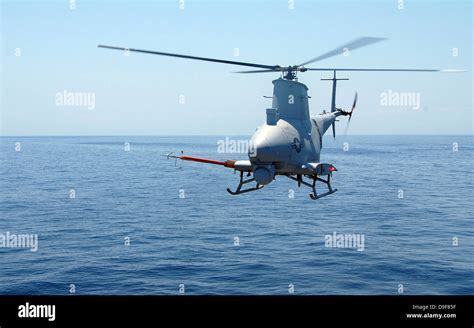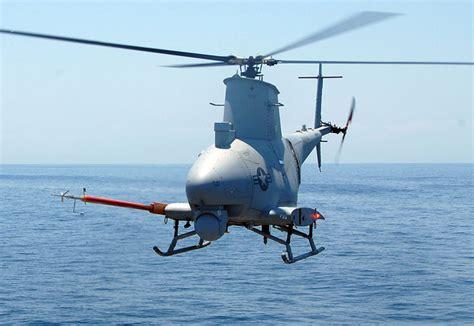
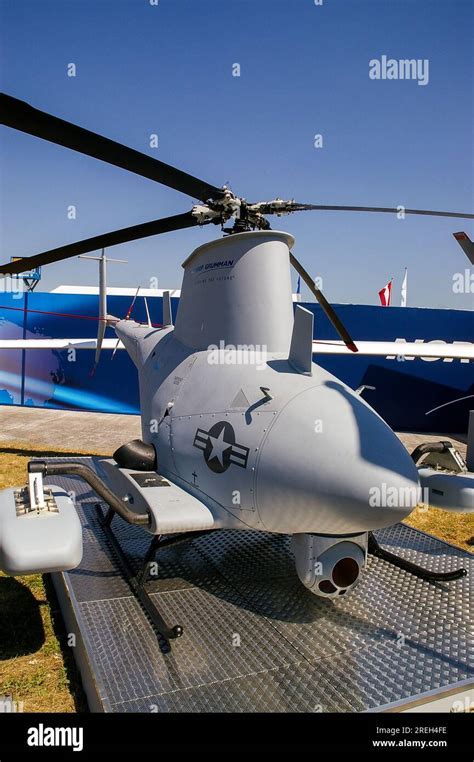
The MQ-8 Fire Scout may resemble a traditional helicopter, but under its sleek, rotor-driven frame lies an autonomous aviation marvel. Developed by Northrop Grumman, the same defense contractor behind the stealthy B-21 Raider, the Fire Scout has served as a vital unmanned aerial vehicle (UAV) for the U.S. Navy. Its ability to take off, land, and operate without a pilot on board has made it a staple in modern naval operations focused on surveillance, reconnaissance, and limited support roles.
Unlike many UAVs that are fixed-wing or quadcopters, the MQ-8 Fire Scout offers the hovering and vertical takeoff capabilities of a helicopter while delivering real-time intelligence. As the Navy looks to phase out the Fire Scout by 2026, it’s worth exploring its technical performance, especially its top speed and flight range, and why this unique drone is being retired after more than a decade of service.
MQ-8 Fire Scout Overview: Design and Purpose
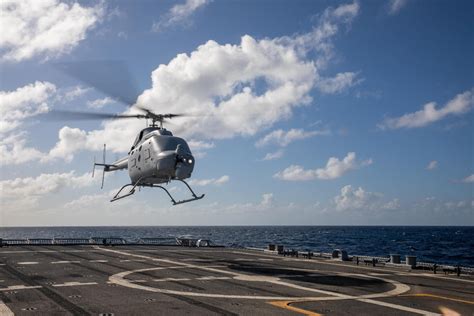
Originally introduced as a way to extend the Navy’s eyes beyond line-of-sight without putting pilots in danger, the MQ-8 Fire Scout was built to deliver persistent surveillance and precision targeting for ground and naval forces. Its vertical takeoff and landing (VTOL) capability makes it ideal for shipboard operations, especially on smaller vessels like littoral combat ships (LCS) that can’t support larger manned helicopters.
The MQ-8 family includes two main versions:
- MQ-8B, which was based on the Schweizer 333 helicopter platform.
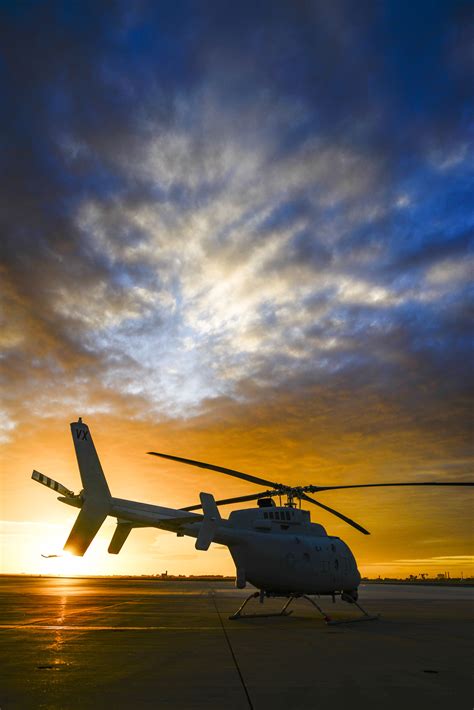
- MQ-8C, the more advanced and current version, based on the Bell 407.
The MQ-8C boasts a greater payload, longer endurance, and higher speed, and has largely replaced its predecessor in front-line service.
Top Speed: How Fast Can the MQ-8 Fire Scout Fly?
Speed plays a crucial role in surveillance operations, particularly when covering expansive maritime areas. The MQ-8C Fire Scout reaches a top speed of approximately 135 knots, which translates to around 155 miles per hour (250 km/h). While this may not rival fighter jets, it’s impressive for an unmanned rotary-wing aircraft.
This top speed allows the MQ-8C to:
- Rapidly reposition to changing mission parameters
- Keep pace with fast-moving naval fleets
- Respond quickly to intelligence or emergency situations
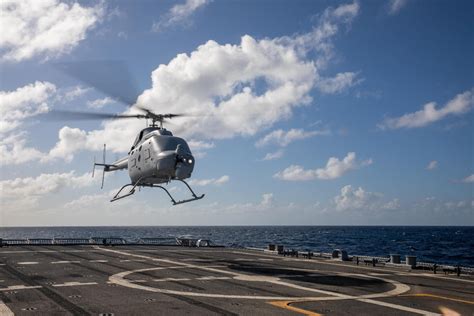
The speed also ensures minimal lag in providing real-time surveillance and target acquisition information to surface ships or command centers. Compared to the MQ-8B’s top speed of just over 125 mph, the MQ-8C offers a clear performance upgrade in both speed and stability.
Operational Radius vs. Maximum Range
Understanding the Fire Scout’s flight range requires distinguishing between its operational radius and maximum flight range.
Operational Radius
The operational radius is the effective distance the drone can fly from base and return safely while still performing its mission. For the MQ-8C, this is roughly:
- 150 nautical miles (nm)
- 172 miles (277 km)
This means it can launch from a ship, conduct reconnaissance or targeting missions, and return without external fuel support. It’s an optimal distance for missions such as coastal surveillance, anti-piracy operations, and threat detection.
Maximum Range
Under ideal conditions, the MQ-8C can fly a maximum of:
- 1,227 nautical miles
- Over 1,400 miles (2,250 km)
However, this maximum range is theoretical, achieved only under specific conditions such as light payloads, favorable weather, and no return requirement. In real-world deployments, Navy commanders prioritize the operational radius to ensure safe return and reusability of the drone.
Why the Fire Scout’s Range Matters in Naval Missions
The modest operational radius of the MQ-8C is both its strength and its limitation. For missions requiring persistent intelligence gathering near coastlines or fleet groups, it’s highly effective. But as the military shifts toward distributed maritime operations in the Indo-Pacific and beyond, longer-range and more autonomous systems are needed.
The Fire Scout’s inability to carry heavy payloads or loiter for extended periods over distant targets means that newer drones — with more endurance, stealth, and autonomy — are being sought to fill that role.
The MQ-8’s Retirement and the Navy’s Shift Toward Future Platforms
The U.S. Navy has confirmed it will retire the MQ-8 Fire Scout fleet by 2026, signaling the end of an era for helicopter-based UAVs. The MQ-8B model has already been phased out, following its successful deployment in Afghanistan, where it supported counter-IED missions by detecting and tracking ground-based threats.
The MQ-8C, despite its enhancements, faces obsolescence due to:
- Limited endurance and speed compared to fixed-wing UAVs
- Increasing demand for multi-domain integration (cyber, space, air, sea)
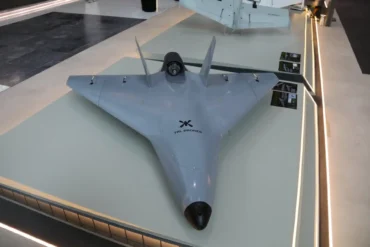
- The emergence of modular VTOL drones with AI-driven navigation and data processing
What Comes Next: The Future Vertical Lift (FVL) Program
The MQ-8’s retirement does not indicate a step back in UAV capability — rather, it marks a transition to next-gen platforms. The Navy is deeply invested in the Future Vertical Lift (FVL) program, which seeks to create aircraft that:
- Can operate both autonomously and with pilots
- Have longer endurance and greater range
- Carry heavier payloads and advanced sensor packages
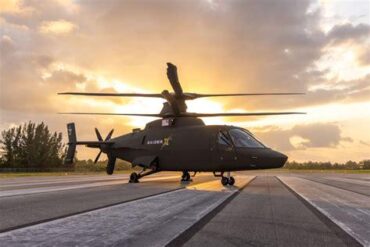
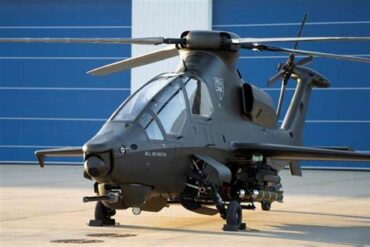
These new platforms will integrate seamlessly into networked combat environments, capable of working alongside crewed aircraft and ground units to deliver real-time data across the entire battlespace. Think of it as an evolution from a single-drone asset to a swarming, multi-platform ecosystem.
Legacy and Lessons of the MQ-8 Fire Scout
Despite its limitations, the Fire Scout has left a lasting impact on modern drone warfare. It helped establish operational doctrine for rotary-wing UAVs and showed the benefits of autonomous helicopters in real-world combat scenarios. In addition, it:
- Proved the viability of unmanned VTOL aircraft on naval ships
- Provided continuous ISR (intelligence, surveillance, reconnaissance) support during asymmetric warfare
- Reduced risk to human pilots in hostile environments
The drone’s integration into coastal patrols, counter-drug operations, and maritime interdictions has laid the groundwork for future unmanned systems that will likely dominate 21st-century naval warfare.
Final Thoughts: The Fire Scout’s Role in Drone Evolution
The MQ-8 Fire Scout’s journey from cutting-edge innovation to near-retirement encapsulates the rapid pace of defense technology evolution. Its relatively short service life does not imply failure; instead, it reflects how quickly operational requirements and capabilities are advancing.
With top speeds around 155 mph and a mission radius exceeding 170 miles, the MQ-8C filled a valuable niche in naval intelligence operations. As the Navy gears up for longer-range, AI-enabled drone aircraft, the Fire Scout’s DNA will live on in the innovations it inspired.
In the future, UAVs that rise from carrier decks may look dramatically different, but their core mission — extending awareness without risking lives — remains unchanged. And for a decade, the MQ-8 Fire Scout did just that.