Flight Progress Strips
Definition
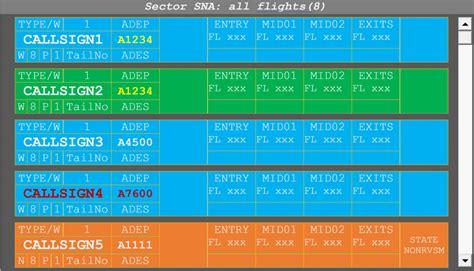
A flight progress strip, whether electronic or paper, is a tool that contains essential flight plan data for a specific flight. This information is displayed on an electronic screen or a flight progress board for air traffic controllers (ATCs) to use during air traffic services (ATS).
Description
Flight progress strips, often called flight strips, present crucial flight information in a clear, tabular format. They are standardized to help controllers quickly locate necessary data. Each strip is divided into fields that hold specific details, such as aircraft identification, type, transponder code, and both departure and destination aerodromes. When using paper strips, controllers can write down important information, like clearances and estimates. However, there isn’t a universal design for these strips. Each Air Navigation Service Provider (ANSP) or Air Traffic Service Unit (ATSU) may create a layout that best fits their operations. Typically, different layouts are used for departing, arriving, and transit overflying aircraft, especially in Control Towers or Approach units. Additionally, an Area Control Center (ACC) might have distinct strips for eastbound and westbound traffic. Different background colors may be utilized to highlight the purpose of the flight strip, like green for departures and blue for arrivals.
Strip Management
Strip holders are plastic boots designed to hold individual paper strips, which are then placed on strip boards according to the traffic situation. These holders can come in various colors to indicate which strip is inserted, especially useful when many strips are identical in color. Each ATS unit has its procedures for managing strips, determining how they are moved around to reflect the current traffic status. For instance, in a tower setting, designated areas may include: flights that have started up but not yet taxied, flights in the taxi phase, incoming flights awaiting landing clearance, and those cleared for take-off or landing. Controllers must shift strips between these areas; when a taxiing flight receives clearance for takeoff, the controller moves the strip from the taxi area to the runway area. This system helps prevent accidental runway incursions and aids in situational awareness during handovers. Another key aspect of strip management is annotation. Given the limited space, ATC clearances and other data must be abbreviated. Standardized symbols and abbreviations ensure that all controllers can easily interpret the information, such as an up arrow indicating the aircraft is climbing.
Electronic Strips
While paper strips have their limitations—like being unable to connect to other systems, being time-consuming to update, and potential issues with readability—electronic strips have been developed to overcome these challenges. They maintain a similar layout and color scheme to paper strips, making it easy for controllers to adapt. Editing electronic strips is generally comparable to modifying fields in an aircraft label within stripless air traffic management (ATM) systems. Electronic strips offer several advantages, including:
-
Enhanced visualization tools, where different colors can indicate updated or coordinated fields.
-
Various fonts and background shades to emphasize specific details.
-
Dynamic color changes to capture attention.
-
Integration with ATM system safety features, providing early warnings for conflicting clearances.
-
Instant updates and sharing of flight information.
Stripless Systems
While strips (either paper or electronic) are common in control towers, ACCs have been moving towards a stripless environment for over a decade. This transition integrates the information previously found on strips into elements of ATM systems, such as aircraft labels and lists. Flight lists can display comprehensive information about a flight, significant details about all flights in a sector, or specific data, such as Mode S-derived information. Going paperless aims to reduce workload for controllers, enhancing their efficiency and capacity. Despite this shift, some ACCs still keep paper strips as a backup solution even after implementing stripless systems.