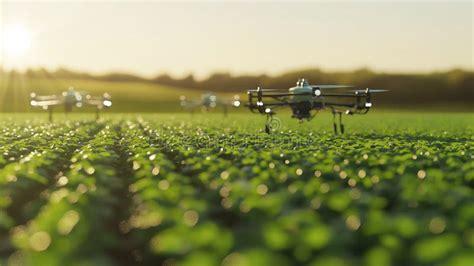
The evolution of pesticide application in agriculture is being rewritten by the rise of drone technology. While fixed-wing aircraft continue to dominate U.S. aerial spraying, unmanned aerial vehicles (UAVs)—commonly known as drones—are gaining traction globally as a more precise, cost-efficient, and adaptable alternative. From the early stages of crop surveillance to full-fledged pesticide delivery systems, the role of drones in farming is no longer a futuristic concept—it’s current, impactful, and fast-growing.
By enabling localized pesticide application, reducing operator exposure, and performing well in challenging terrain, drones present solutions that traditional equipment cannot easily match. As we explore their components, applications, and operational nuances, it becomes clear that drones are not just filling gaps but are actively reshaping how we manage agricultural health.
The Shift from Surveillance to Spraying
Drones initially carved out their place in agriculture through remote sensing and data collection. They allowed growers to assess soil variability, plant health, moisture stress, and the spread of weeds and disease with remarkable accuracy. High-resolution cameras, coupled with GNSS/GPS technologies, gave farmers a bird’s-eye view down to the square inch. However, it was only a matter of time before this observational role evolved into direct action.
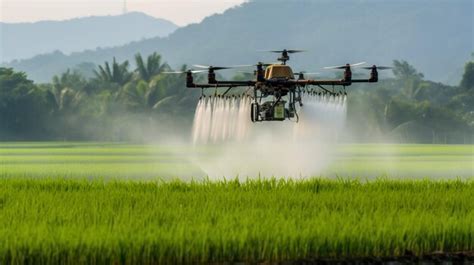
Today, agricultural drones are widely used for liquid pesticide application, including herbicides, insecticides, and fungicides. While the technology also supports the dispersal of dry materials like biopesticides and fertilizers, this article focuses on liquid pesticide spraying, which has emerged as the most transformative function.
Global Surge in Ag Drone Adoption
The numbers speak for themselves. The global agricultural drone market was valued at $4.98 billion in 2023 and is expected to skyrocket to $18.22 billion by 2030, reflecting a CAGR of 20.3%. Adoption is taking off in Asia, particularly in countries like Japan, South Korea, and China, each leveraging drones to handle large-scale spraying tasks more efficiently.
In Japan, over 2,800 unmanned helicopters were registered by 2016, covering more than one-third of the nation’s rice fields and gradually expanding to include wheat, oats, and soybeans. South Korea now utilizes drones for 30% of pesticide applications, a significant shift from traditional methods.
China leads the way in both innovation and scale. Since introducing its first multi-rotor spray drone in 2009, China has rapidly scaled operations. As of 2021, over 153 million acres were sprayed using drones—up from 64 million the previous year—with a registered fleet exceeding 120,000 drones and over 200,000 trained pilots.
In contrast, the United States has been slower to adopt, but the momentum is building. With increased awareness, regulation flexibility, and the rise of irregular or small plots, the utility of drones is becoming more apparent. Emerging pest threats and operator safety concerns further enhance their appeal.
Essential Components of a Spray Drone
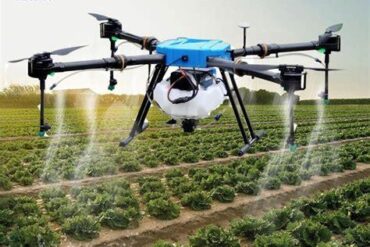
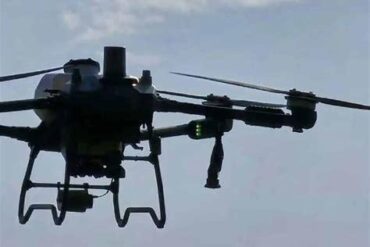
A typical pesticide spray drone is a marvel of compact engineering, consisting of:
- Tank for liquid storage (often 4–5 gallons)
- Pump and pressure gauge to regulate spray delivery
- Nozzles for droplet dispersion (boom-mounted or under-rotor)
- Flow meter to monitor application rates
- Filters and hoses to maintain clean delivery lines
- GNSS receiver for precision navigation
- Collision-avoidance sensors to enhance safety
- Remote control and telemetry for ground-based operation
Each part contributes to the drone’s ability to execute controlled, efficient, and repeatable pesticide applications in diverse field conditions.
The Birth of the Spray Drone Era
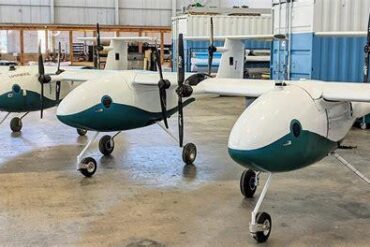
The landmark moment in agricultural spraying came with the introduction of the Yamaha RMax in 1997. Weighing 207 pounds with a 10-foot rotor diameter and a 4-gallon tank, it offered one hour of flight time, guided by terrain sensors and a hybrid autopilot/manual mode. Although only FAA-approved in California by 2015, it marked the transition to serious aerial precision farming.
Multi-Rotor Designs and Spray Effectiveness
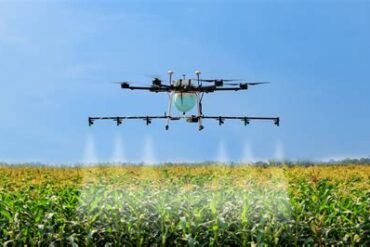
Modern drones feature multi-rotor systems that create downward turbulence, enhancing canopy penetration and spray distribution. Variations exist in rotor number, nozzle design, and placement:
- Boomless, under-rotor nozzles offer broader, uniform coverage.
- Boom-mounted systems are prone to drift due to rotor-induced vortices.
- Drop hoses can direct flow with pinpoint accuracy, reducing unintended exposure.
These configurations are critical in tailoring the drone’s performance to crop type, canopy density, and environmental conditions.
Choosing the Right Spray Delivery System
Two primary systems dominate drone pesticide delivery:
- Hydraulic nozzles use pressure to atomize liquid, offering adjustable flow and pressure settings, but they are more susceptible to clogging and drift due to the creation of smaller droplets.
- Rotating-disc atomizers operate at low pressure and create uniform droplet sizes, reducing the risk of clogging and enabling consistent application. However, real-time calibration is limited, and rotational speed (RPM) must be monitored with a tachometer.
Flight Characteristics and Operational Guidelines
A well-operated spray drone flies at 7–12 feet above ground level, with application rates between 1.5 and 2 gallons per acre. A full tank can be emptied in 2–3 minutes, requiring frequent returns for refill. Average speeds range from 10 to 30 mph, with forestry applications demanding higher altitudes of 30+ feet.
Key technologies ensure stability and precision:
- Terrain-following sensors and RTK (Real-Time Kinematic) GNSS for level spraying
- Tank-level sensors trigger automatic return-to-base (RTB) for refilling
To ensure accurate swath coverage, operators often use dye-treated paper tape to verify distribution patterns and fine-tune speed, altitude, and nozzle setup.
Constraints and Regulatory Barriers
Despite their advantages, drones face several performance and regulatory limitations:
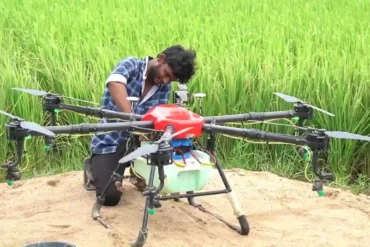
- Battery life is short—typically 5 to 15 minutes—necessitating multiple battery swaps or fast-charging systems.
- FAA regulations cap the drone’s weight at 55 lbs, require visual line of sight (VLOS), limit to single-drone operations, and demand certified pilots (Part 107) and applicators (Part 137).
- State-level licensing (e.g., Ohio Category 1) and altitude restrictions (≤400 ft) further constrain operational flexibility.
Additionally, limited peer-reviewed data makes it challenging to assess long-term efficacy versus conventional ground or aerial spraying.
Strategic Advantages and Ideal Use Cases
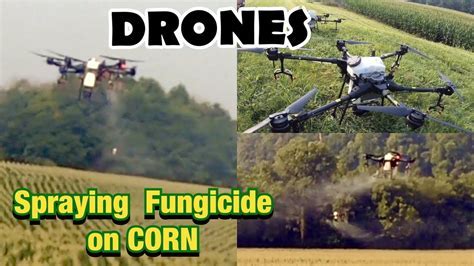
Drones offer unmatched advantages in small, irregularly shaped fields, hilly terrain, and wet conditions where tractors or planes cannot safely operate. Spot treatments for weeds, fungal outbreaks, or insect infestations are especially effective. Crop types that benefit most include corn, wheat, and rice, particularly during critical growth phases requiring targeted fungicide applications.
The Future of Drone-Based Pesticide Spraying
The future of drone spraying lies in integration, automation, and scalability. As the FAA gradually opens the door to swarming (multi-drone fleets), and as battery and tank capacities improve, drones will move from niche roles into mainstream agricultural practices. Cutting-edge features like variable-rate application, AI-based obstacle avoidance, and real-time mapping are already being prototyped.
Manufacturers are pushing toward autonomous systems capable of scanning, mapping, and spraying within the same flight cycle, revolutionizing precision agriculture even further.
Best Practices Before Deployment
Operators should:
- Carefully study label instructions to verify aerial or drone use.
- Work with Extension educators and state regulators to ensure full compliance.
- Use simulation tools and dye tests to verify swath and droplet size.
- Maintain buffer zones, spray as low as safely possible, and choose the right nozzle type and droplet spectrum for the task.
Conclusion: A Complement, Not a Replacement
While drones will not fully replace ground rigs or crop dusters, their role as highly flexible, precise, and data-driven tools is already reshaping pest management in agriculture. They represent a crucial step toward sustainable, efficient, and localized crop protection.
As technology advances and regulations mature, drones are poised to become an indispensable asset in the future of farming. Investing in training, compliance, and high-quality equipment now will pay dividends in productivity, safety, and environmental stewardship for years to come.