The Evolution of Aerial Cranes in Modern Aviation
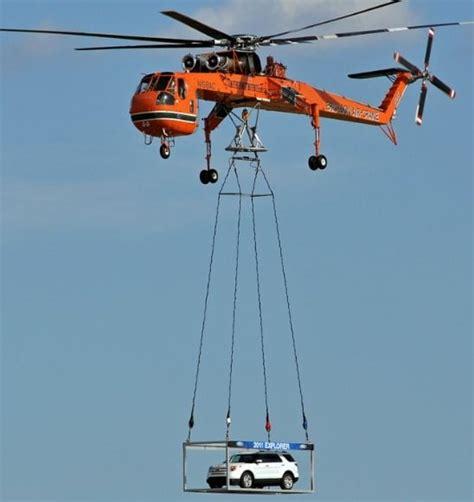
Aerial cranes, also known as flying cranes, have transformed the way we approach construction, logistics, and heavy lifting in inaccessible or environmentally sensitive areas. These specialized helicopters serve a unique role: hoisting large, awkward, or extremely heavy loads with precision by means of long cables or slings suspended beneath their airframes. Their ability to bypass terrain and infrastructural constraints has made them indispensable across diverse industries including logging, construction, and emergency response.
The application of helicopters for heavy lifting first emerged in the early 1950s, but it was not until the 1960s that they began seeing widespread use. The early models, such as the Bell 47, were lightweight and limited in lifting capacity, capable of transporting only a few hundred pounds. As the demand for more capable aircraft grew, the industry responded with purpose-built solutions that laid the groundwork for the advanced aerial cranes we see today.
Pioneers of Heavy-Lift Helicopter Engineering
The first substantial shift in aerial crane capability arrived with the introduction of the Sikorsky S-58. This model provided a greater power margin and thus improved lifting capability, becoming a medium-duty workhorse throughout the 1960s. Around the same time, other commercial adaptations began to appear. The Bell 211 HueyTug, a derivative of the UH-1C, offered improved load handling for medium-lift operations, while the widely-used Bell 206 supported lighter duties.
Post-Vietnam, the market experienced another pivotal development. Military surplus aircraft such as the Boeing Vertol Model 107 and Model 234 were repurposed for commercial use. These helicopters, originally designed for transporting troops and equipment, proved to be well-suited for carrying heavier payloads over rugged and remote locations. However, even these aircraft had their limits. The demand for a dedicated aerial crane capable of lifting extreme loads led to the emergence of a game-changer.
The Arrival of the Sikorsky S-64 Skycrane
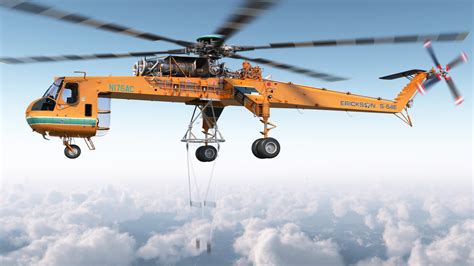
When Sikorsky Aircraft introduced the S-64 Skycrane, it represented a paradigm shift in airborne heavy lifting. Designed initially for military use as the CH-54 Tarhe, the aircraft was intentionally minimalistic — a bare airframe equipped with powerful twin engines, rotor systems, and an advanced cargo hook mechanism. Everything about the Skycrane was engineered for functionality, stability, and lifting power, shedding unnecessary fuselage weight to maximize payload efficiency.
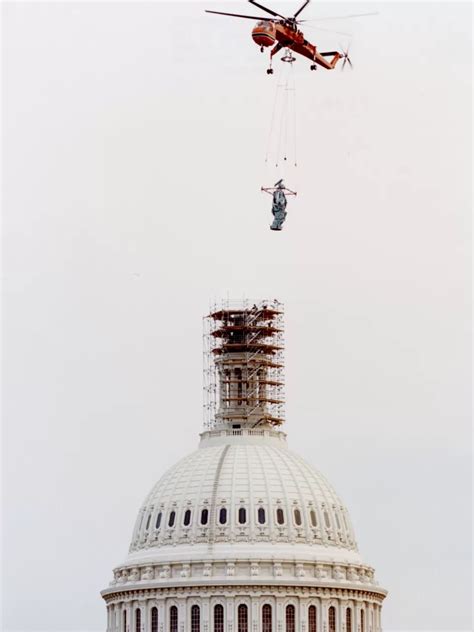
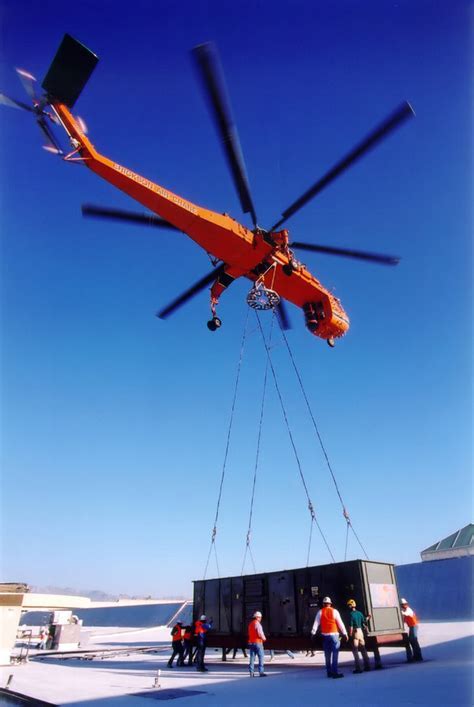
The S-64 quickly found its niche in both civilian and military applications. Its success as a true aerial crane was demonstrated in several landmark projects. During the construction of the Chesapeake Bay Bridge in 1972, Skycranes transported concrete and heavy materials to locations unreachable by land. More notably, in 1993, an Erickson Skycrane — a variant of the S-64 — was used to delicately remove and later reinstall the Statue of Freedom atop the U.S. Capitol dome for restoration.
Industrial Applications and Longline Operations
Aerial cranes are essential in terrain-challenged environments where traditional lifting or transportation methods are unfeasible. One of the most consistent applications is in the logging industry, particularly in heli-logging operations. In these settings, aerial cranes use longline systems — single, extended cables — to extract felled trees from remote forest regions. This minimizes environmental disruption by eliminating the need for road construction and reducing ground impact.
Beyond forestry, aerial cranes are widely used in:
- Powerline construction and maintenance, especially in mountainous regions
- Pipeline installations across deserts or swamplands
- Telecommunication tower erection in remote or elevated locations
- Disaster response for transporting relief supplies or debris removal
- Urban construction on high-rise buildings where ground crane access is impractical
These aircraft can precisely position loads in locations that even ground-based cranes cannot reach, making them a critical asset in high-stakes, high-precision environments.
Purpose-Built Models and Their Capabilities
Over the years, a number of helicopters have been specifically engineered or modified to serve as aerial cranes. While the S-64 remains the flagship model, several others have been employed based on mission demands:
- Boeing Vertol XCH-62: A heavy-lift experimental aircraft designed for military logistics
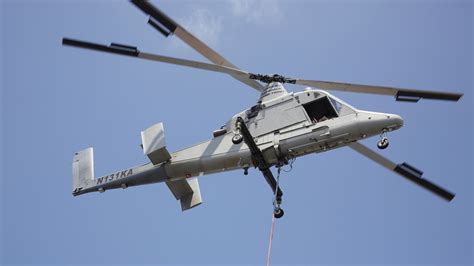
- Kaman K-MAX: A synchropter optimized for external lift operations with minimal crew
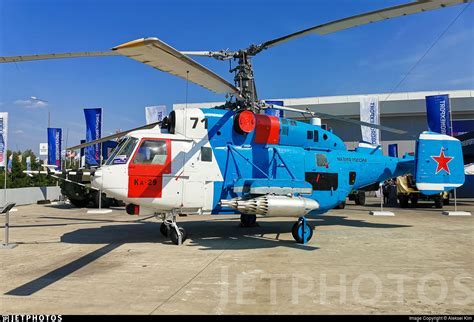
- Kamov Ka-27: A Russian design used for naval resupply and offshore operations
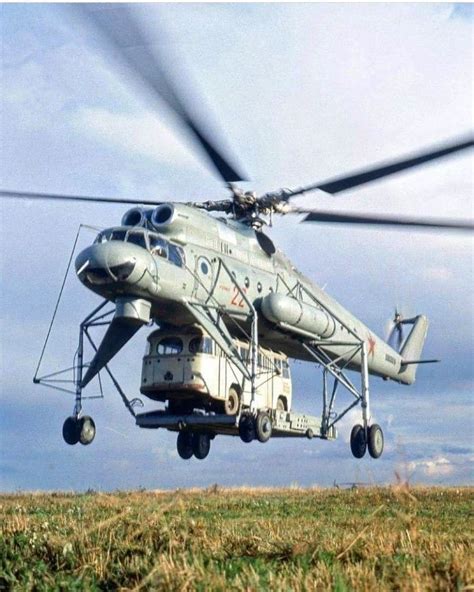
- Mil Mi-10: A Soviet-era transport with landing gear modified for large cargo platforms
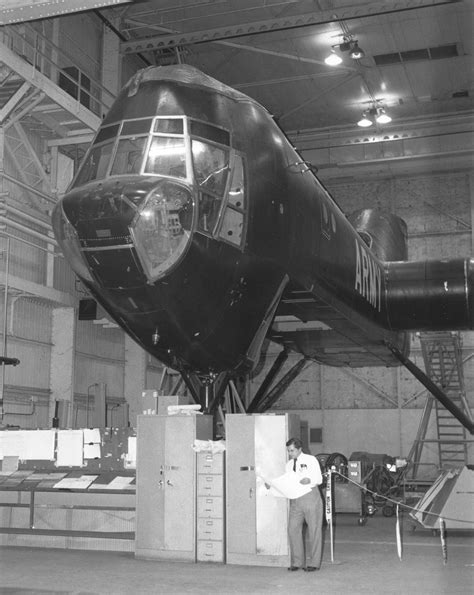
- Sikorsky CH-37 Mojave: One of the first U.S. heavy-lift helicopters
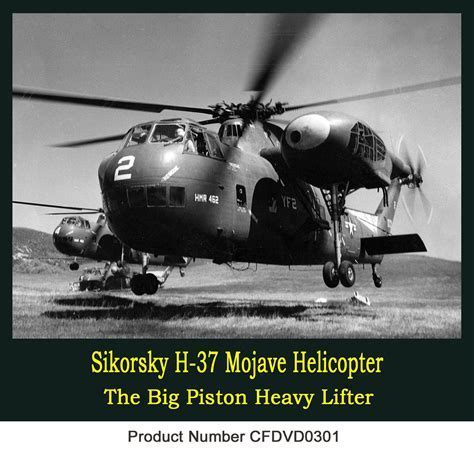
- Sikorsky CH-54 Tarhe: Military version of the S-64 Skycrane

These aircraft vary widely in design and propulsion, but all share a common focus: external cargo lifting with precision and reliability.
Engineering Design and Control Systems
The success of aerial cranes lies not just in brute force but in precision engineering. Each unit is equipped with flight stabilization systems, cargo winches, and camera or sensor-assisted control interfaces that allow pilots and onboard flight engineers to manage the load safely.
Advanced Skycrane models, such as those operated by Erickson Inc., include:
- Autonomous load stabilization systems to counter wind drift
- Fire suppression modules for aerial firefighting
- Real-time telemetry feeds to ground crews for synchronized operations
- Adjustable hook systems for mid-air load realignment
The modularity and specialization of these systems allow for seamless adaptation to different mission profiles, from placing HVAC units atop skyscrapers to transporting prefabricated structures into remote mountain resorts.
Safety, Training, and Regulatory Oversight
Operating aerial cranes involves high-stakes precision flying, and as such, the industry is governed by strict regulations and pilot certification requirements. Pilots undergo extensive longline training and must master hovering techniques, load dynamics, and visual coordination.
Key safety protocols include:
- Load balancing and rigging inspections prior to flight
- Flight path assessments to identify environmental and manmade obstacles
- Emergency drop mechanisms in case of load instability
- Constant communication between pilots, ground crews, and traffic control
Agencies such as the Federal Aviation Administration (FAA) and European Union Aviation Safety Agency (EASA) oversee operational standards, ensuring that aerial crane operations are conducted with maximal safety and minimal risk.
The Future of Aerial Cranes: Automation and Hybrid Power
Looking ahead, the next generation of aerial cranes is likely to be shaped by hybrid-electric propulsion, automation, and unmanned systems. Manufacturers are already exploring semi-autonomous flying cranes with AI-assisted stabilization, which could reduce pilot workload and increase operational safety.
In addition, hybrid-electric helicopters offer promising advancements in reducing fuel consumption, emissions, and noise — critical factors for urban and environmental operations. Research into composite materials and modular cargo platforms will further streamline lift processes.
As infrastructure projects continue to expand into challenging geographies and as urban development grows vertically, the role of aerial cranes will only become more central. With ongoing innovation in flight systems, control precision, and environmental adaptability, aerial cranes remain not just tools of engineering excellence but symbols of airborne problem-solving in the modern world.