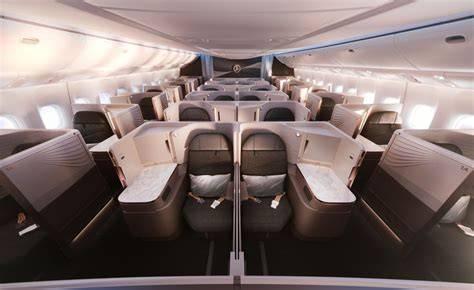
Turkish Airlines is entering a new phase in the evolution of its long-haul cabin. After years of relying on a relatively open business-class layout, the Istanbul-based carrier is moving toward a privacy-focused suite concept while simultaneously evaluating a premium-economy cabin for future widebody aircraft. The shift represents more than a seat redesign. It reflects a broader attempt to capture higher-value passengers across an increasingly complex global network.
The airline’s existing long-haul business-class product dates largely from the 2019 generation of its cabin strategy. Its Boeing 787 Dreamliner and Airbus A350 aircraft feature a 1-2-1 configuration, allowing direct aisle access and fully flat beds, while center seats receive privacy dividers. The arrangement was competitive when introduced, but the premium market has moved rapidly toward enclosed suites, sliding doors, greater personal space, and more clearly differentiated cabin products.
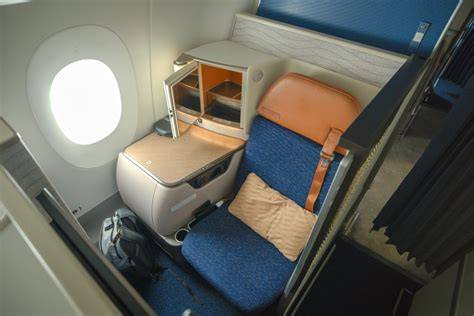
The contrast becomes even more obvious on the carrier’s Airbus A330 fleet. Depending on the aircraft and configuration, passengers can encounter a 2-2-2 business-class arrangement, with seats that may recline or convert into lie-flat beds. While the A330 remains an important part of Turkish Airlines’ long-haul operation, its cabin architecture belongs to an earlier generation of premium travel, particularly when placed alongside the newest products from major European and Middle Eastern competitors.
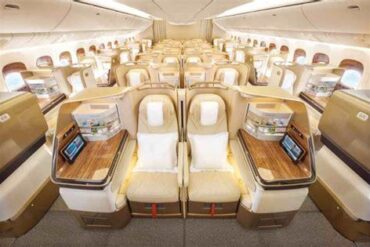
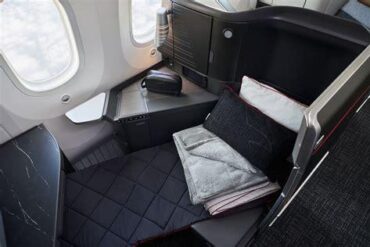
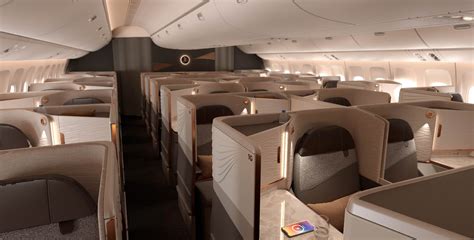
The next major step is the Crystal Suite, Turkish Airlines’ new business-class product. First announced in 2024, the suite is scheduled to begin entering service on newly delivered A350s in early 2027 before the airline begins applying the concept to Boeing 777-300ER aircraft during refurbishment cycles. Developed by Turkish Airlines subsidiary TCI Aircraft Interiors, the product is designed specifically for the carrier rather than being a simple off-the-shelf installation.
Turkish Airlines Crystal Suite Brings Privacy to Business Class
The defining characteristic of Crystal Suite is privacy. Turkish Airlines is moving toward a business-class environment in which passengers have a greater degree of physical separation from the aisle and neighboring seats. The concept follows a direction already visible across premium cabins operated by airlines such as Air France and Lufthansa, where privacy doors have increasingly become an expected feature rather than an exotic luxury.
TCI Aircraft Interiors has developed the seat as a bespoke product for Turkish Airlines, incorporating leather and fabrics sourced from Türkiye. That approach gives the airline an opportunity to combine a modern premium hard product with design elements intended to reinforce its identity as Türkiye’s flag carrier.
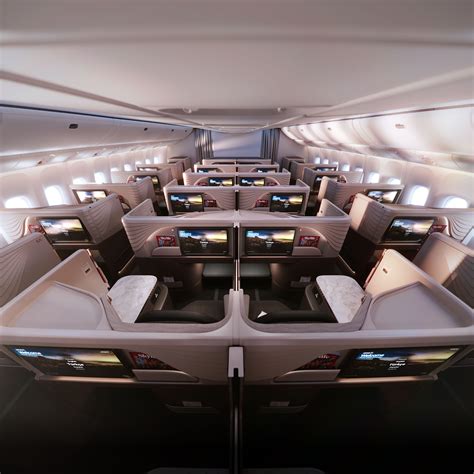
The significance of the Crystal Suite is therefore larger than the presence of a new seat. A door changes the passenger experience because it creates a physical boundary around the seat. That boundary can make sleeping, working, dining, and spending long periods alone in the cabin feel substantially different from sitting in an open business-class environment.
For Turkish Airlines, the timing is important. The carrier operates one of the world’s most geographically extensive international networks, linking Europe, the Middle East, Africa, Asia, and North America through Istanbul. Its network gives it access to a wide range of passenger types, but not every route produces the same level of premium demand.
A more sophisticated cabin structure gives the airline another way to capture differences in willingness to pay.
Why Turkish Airlines Is Moving Toward Cabin Segmentation
The most important strategic change is not simply the replacement of one business-class seat with another. It is the movement toward greater cabin segmentation.
For years, airlines could largely divide long-haul aircraft into economy and business class, with some operators adding first class. The market has since become more complicated. Premium leisure travel has expanded, corporate travelers continue to value privacy and productivity, and passengers increasingly recognize substantial differences between economy, premium economy, and business class.
Turkish Airlines is now considering how to capture that demand more precisely.
Newly appointed CEO Ahmet Olmuştur said the airline is evaluating a premium-economy product for widebody aircraft beginning around 2028, although the concept was not yet part of official planning. The proposal would potentially allocate approximately 8–9% of existing economy capacity to the new cabin.
That figure is significant because premium economy would occupy space that currently generates economy revenue. The decision therefore depends on whether the higher fares produced by premium-economy seats can compensate for the reduction in standard economy capacity.
Olmuştur also said Turkish Airlines’ research indicated that around two-thirds of long-haul passengers were willing to pay more for additional legroom and comfort. If that research translates into actual booking behavior, premium economy could become an important additional revenue layer between economy and business class.
This is where the Crystal Suite and potential premium economy become part of the same strategy. Instead of treating the aircraft as a simple collection of seats, Turkish Airlines can divide its cabin into increasingly precise products aimed at different levels of demand.
A traveler unwilling to pay business-class prices could still purchase additional comfort. A premium leisure passenger could select premium economy. A corporate traveler or high-value leisure customer could choose a private business-class suite.
The result is a more segmented revenue structure.
Turkish Airlines Faces Different Demand Across Its Network
This strategy is particularly relevant because Turkish Airlines does not operate a narrowly focused premium network. Istanbul gives the airline an unusually broad geographical reach, and the carrier has consistently expanded into destinations that do not necessarily generate large volumes of high-paying passengers.
The economics of a route to a major financial center can be very different from those of a route serving a smaller or highly price-sensitive market. The airline’s network includes destinations where premium demand is substantial as well as markets where passenger volumes are stronger than premium yields.
For example, markets such as Bissau, Kinshasa, Turkistan, and Billund present different commercial characteristics. Bissau represents a relatively small market with limited premium demand. Kinshasa can produce considerable passenger volume while remaining highly price-sensitive. Turkistan has significant pilgrimage-related seasonality, while Billund has a stronger leisure and regional orientation.
A segmented cabin strategy does not remove those differences. Instead, it makes them more important.
On a premium-heavy route, Turkish Airlines can potentially fill business-class suites with passengers willing to pay significantly more for privacy. Premium economy can then capture another group of customers seeking additional comfort without paying business-class fares.
On a lower-yield route, however, the airline has to determine whether the additional complexity and lost economy seats can be justified.
Crystal Suite Could Strengthen Turkish Airlines Against European Rivals
Turkish Airlines already competes with major full-service carriers across Europe, while its Istanbul hub also places it directly in competition with the large Middle Eastern airlines.
That competitive environment has changed the expectations surrounding business class.
Qatar Airways, Emirates, Air France, and Lufthansa have all invested heavily in premium cabins, although their approaches differ. Privacy, direct aisle access, enhanced dining, personal space, and increasingly enclosed seating have become important components of the long-haul premium proposition.
Turkish Airlines has historically had a major advantage in its soft product, particularly its reputation for onboard catering and broad international connectivity. But soft product advantages are increasingly being complemented by sophisticated physical cabin designs.
The Crystal Suite gives the airline a way to close part of that hard-product gap.
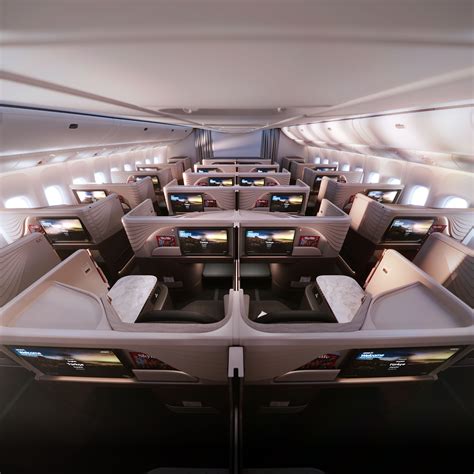
The planned installation on the A350 and 777-300ER is especially significant. These aircraft operate on many of the carrier’s longest and most strategically important routes, making them natural platforms for a premium product designed to generate higher yields.
The 777-300ER is also an aircraft where refurbishment can have a substantial commercial impact. Rather than replacing an entire fleet at once, Turkish Airlines can introduce the new cabin gradually as individual aircraft enter scheduled heavy maintenance and refurbishment cycles.
That approach spreads capital expenditure and reduces the operational disruption associated with a fleet-wide overnight transformation.
The A350 Will Be a Critical Test
The Airbus A350 could become the most revealing aircraft in Turkish Airlines’ cabin strategy because its fleet does not necessarily have a completely uniform interior history.
Turkish Airlines operates more than 30 A350-900s, with additional aircraft arriving during 2026. The fleet has also been influenced by the transfer of aircraft and orders originally associated with Russian airline plans following sanctions affecting Russian aviation.
As a result, different A350s can arrive with different interior configurations.
Some aircraft have Stelia Symphony business-class seats, while others have Collins Aerospace Horizon suites featuring privacy doors and other premium-cabin characteristics. The existence of multiple configurations creates a difficult question for Turkish Airlines: should all A350s eventually receive the same Crystal Suite architecture, or should different versions remain in service?
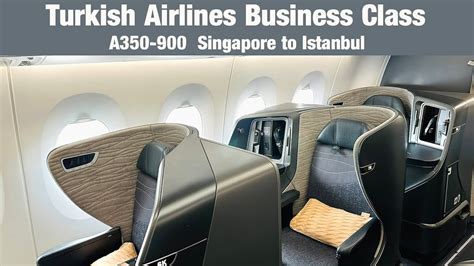
A fully standardized cabin would make the passenger proposition easier to communicate. Travelers would know that booking business class on a particular A350 route means receiving the same fundamental product regardless of the individual aircraft.
However, standardization requires investment.
Retrofitting aircraft that already have relatively modern business-class seats can be difficult to justify financially if those aircraft are not approaching a major maintenance event. Turkish Airlines therefore has to balance passenger expectations against the cost and operational consequences of creating a uniform fleet.
This is one reason why the next wave of A350 deliveries and future retrofit announcements will be particularly important.
Premium Economy Could Change Turkish Airlines’ Revenue Model
The possible return of premium economy from around 2028 introduces another major dimension to the strategy.
Premium economy is increasingly important on long-haul routes because it can attract passengers who value comfort but do not need the full business-class experience. The cabin can appeal to leisure travelers spending their own money, corporate travelers operating under stricter travel policies, and passengers upgrading for long flights.
For Turkish Airlines, the product could be especially useful on routes connecting Europe with North America, Asia, Africa, and other long-distance markets.
The proposed 8–9% allocation of current economy capacity suggests that premium economy would not simply become an additional cabin added without consequences. Instead, the airline would need to determine how many economy seats should be converted and on which aircraft and routes.
That creates a classic revenue-management challenge.
A premium-economy seat can generate considerably more revenue than an economy seat when demand exists, but an empty premium-economy seat does not automatically produce a better financial result than a filled economy seat. Turkish Airlines therefore needs to deploy the cabin where passenger willingness to pay is strong enough to support the additional space.
The airline’s enormous network makes this particularly complex.
Fleet Growth Makes the Cabin Strategy More Important
Turkish Airlines is pursuing an aggressive long-term expansion plan. Its broader target includes a fleet of more than 800 aircraft by 2033, annual revenue above $50 billion, and an international network reaching approximately 345 destinations.
A fleet growing at that scale cannot rely on a single cabin philosophy without considering the economics of individual markets.
The carrier already uses aircraft such as the 737 MAX and A321neo extensively across Europe, Africa, and the Middle East, while its widebody fleet handles longer international missions. Newer narrowbody aircraft can serve thinner markets with lower capacity, while long-range widebodies can concentrate premium capacity on routes where demand supports it.
That creates the foundation for a more sophisticated network strategy.
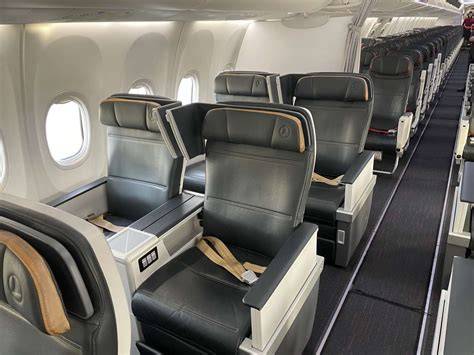
The long-term objective is therefore not simply to make every Turkish Airlines aircraft more luxurious. It is to make the cabin configuration match the revenue potential of the route.
A high-demand North American service may justify a premium-heavy widebody with business suites and premium economy. A price-sensitive market may require a different balance. A seasonal destination may need another configuration or aircraft assignment.
This is why cabin segmentation ultimately becomes a network-planning issue.
The Financial Logic Behind the Cabin Overhaul
Turkish Airlines’ financial performance provides another reason for the timing of the transformation.
The airline reported a $2.2 billion operating profit in 2025, while revenue increased by approximately 9.7%, with premium-cabin performance contributing to the growth. The same period also demonstrated that rapid network expansion cannot automatically guarantee stronger profitability.
The carrier suspended 18 low-yield routes amid changing market conditions, highlighting the importance of distinguishing between passenger volume and economically attractive passenger volume.
That distinction is crucial.
An aircraft can leave Istanbul full and still generate disappointing returns if too many passengers are traveling on low fares. A premium cabin provides an airline with a mechanism to extract more revenue from passengers whose willingness to pay is higher.
Crystal Suite is therefore part of a broader effort to increase the value generated by each long-haul aircraft rather than relying exclusively on network expansion to drive growth.
What Happens to the A330 Fleet?
The A330 presents a separate question.
Turkish Airlines has operated different A330 cabin configurations, including aircraft with the older 2-2-2 business-class arrangement. Compared with the Crystal Suite, those cabins will inevitably look less private.
However, completely rebuilding an A330 fleet can be expensive, particularly if individual aircraft have different remaining service lives and maintenance schedules.
Turkish Airlines could therefore continue operating multiple cabin generations for some time.
That would not necessarily mean the Crystal Suite strategy has failed. Airlines frequently operate different generations of premium cabins simultaneously, especially when large fleets have been acquired over many years.
The challenge is managing passenger expectations.
If two aircraft operating the same long-haul route offer substantially different business-class experiences, customers may perceive a greater degree of uncertainty when booking. The airline can mitigate that through aircraft scheduling, seat maps, product descriptions, and route-specific deployment, but mixed fleets inevitably create complexity.
Turkish Airlines Is Moving From a Seat Strategy to a Cabin Strategy
The most important change is that Turkish Airlines appears to be moving away from thinking about its premium cabin as a single product.
The Crystal Suite, potential premium economy, A350 deliveries, 777-300ER refurbishments, and continued operation of older widebody interiors point toward a more segmented system in which different products serve different revenue opportunities.
That approach reflects how the long-haul market itself has changed.
Passengers now have more choices between economy, premium economy, business class, and increasingly private business suites. Airlines can no longer assume that a traditional reclining or lie-flat business-class seat will remain competitive indefinitely.
For Turkish Airlines, the transition will take several years. The first major milestone should arrive with the Crystal Suite-equipped A350s in early 2027, followed by 777-300ER refurbishment work. A potential premium-economy introduction around 2028 could then add another layer to the strategy.
The ultimate test will be whether the airline can maintain a coherent product architecture while operating a huge and diverse fleet.
If Turkish Airlines succeeds in matching cabin capacity to passenger willingness to pay, the strategy could fundamentally change how it monetizes its long-haul network. The Crystal Suite would then represent more than a new business-class seat. It would be the centerpiece of a broader shift toward privacy, segmentation, premium revenue, and route-specific cabin economics.
For an airline targeting more than 800 aircraft and hundreds of international destinations, that distinction matters. The next phase of Turkish Airlines’ growth will not depend only on where its aircraft fly. Increasingly, it will depend on who sits in each cabin, how much they are willing to pay, and how efficiently the airline can turn every section of a long-haul aircraft into revenue.