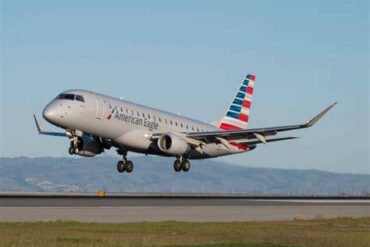
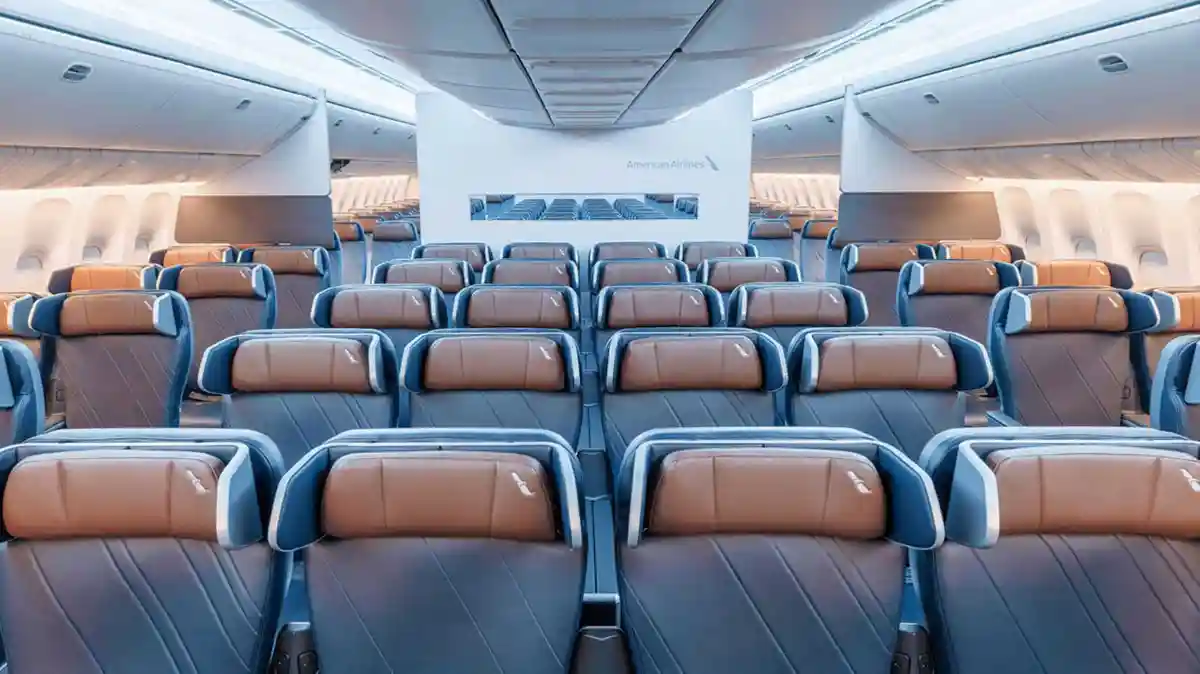
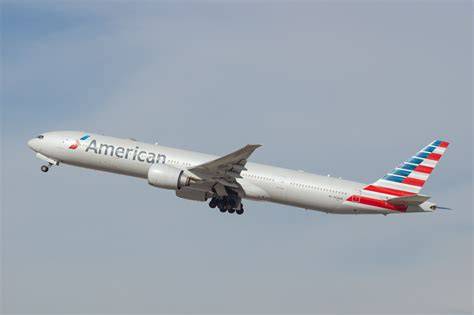
American Airlines is making a fundamental change to its international premium travel strategy by removing traditional first class from its largest passenger aircraft, the Boeing 777-300ER. The airline has introduced a retrofitted version of the widebody featuring 70 Flagship Suite business-class seats, 44 premium economy seats, and a more tightly organized economy cabin. The aircraft completed its inaugural flight from New York to Buenos Aires on September 2, marking an important step in American’s effort to reshape its long-haul passenger experience around a different definition of luxury.
The decision is about much more than replacing one type of seat with another. For decades, international first class represented the highest level of service offered by major network airlines, with exclusive cabins, exceptional personal space, and premium amenities aimed at travelers willing to pay substantially more for an individual journey. However, the economics of premium travel have changed. Business class has improved dramatically, corporate travelers increasingly have alternatives to traditional first class, and airlines have discovered that a larger number of premium seats can generate more revenue than a small collection of exceptionally expensive suites.
American plans to stop selling its legacy international Flagship First product for travel beginning November 19, effectively ending the traditional international first-class offering among the three largest US network airlines. The strategy reflects five connected developments: weakening demand for traditional first class, the rise of business-class suites, the financial advantages of additional premium seats, the growing profitability of premium travel, and competitive pressure to modernize the airline’s cabin strategy.
1. Declining Demand for Traditional International First Class
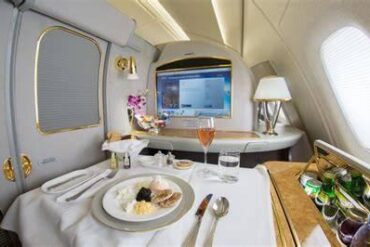
The first reason American Airlines is eliminating traditional first class is that the cabin no longer attracts enough paying passengers to justify the space it occupies on many long-haul flights. First class was once the ultimate expression of airline luxury, offering an experience far beyond business class. Yet the distinction between the two products has narrowed considerably as airlines have introduced lie-flat beds, improved dining, greater privacy, and more attentive service in their business cabins.
American had already acknowledged this changing market several years ago. During the airline’s third-quarter earnings call in 2022, then-chief commercial officer Vasu Raja explained that traditional first class would disappear from the Boeing 777 and eventually from the airline’s wider network. He argued that customers were not purchasing the product in sufficient numbers and that modern business-class seats had become good enough to satisfy many travelers who previously might have considered first class.
The problem is particularly significant because first-class seats consume a disproportionate amount of valuable cabin space. Airlines must balance the revenue generated by each passenger against the space required for seating, aisles, storage, and service facilities. An international first-class suite can occupy considerably more floor area than a business-class seat, yet the fare difference does not always compensate for the reduction in passenger capacity.
On certain long-haul routes, first-class cabins can experience very low occupancy, with the reference material citing load factors falling to around 20% on some sectors. Such figures should not be treated as a universal average across American’s network, but they illustrate the commercial risk of maintaining an expensive cabin that regularly flies with empty seats.
American also faced a product-positioning challenge after introducing international premium economy in 2016. The new cabin created an attractive intermediate option between economy and business class, giving passengers more space and improved service without requiring them to purchase a lie-flat seat. As premium economy gained traction, the airline could capture additional revenue from travelers who wanted a more comfortable journey but did not need the exclusivity of first class.
Traditional Flagship First consequently became harder to justify. If customers were choosing premium economy for affordability and business class for comfort, the airline had fewer compelling reasons to preserve a separate first-class cabin with a limited customer base.
2. Flagship Suites Have Replaced Much of First Class’s Luxury Advantage
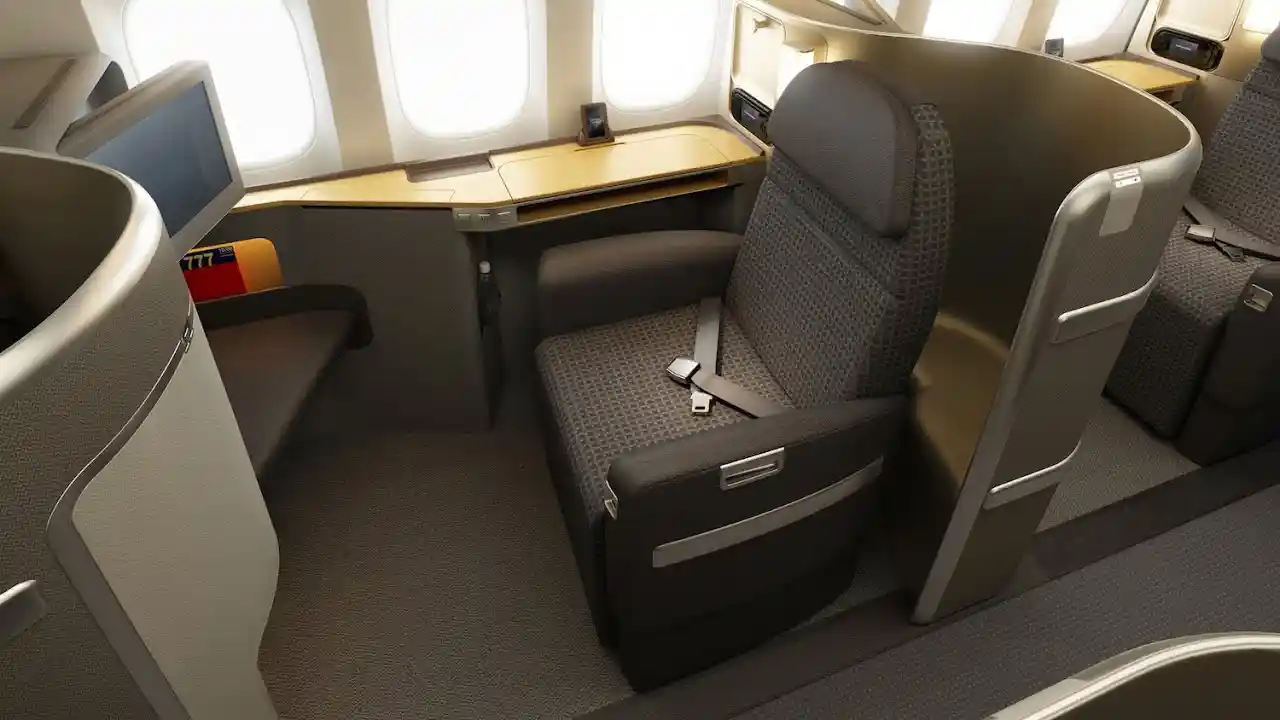
The second reason is the transformation of business class itself. American is not simply removing first class and leaving passengers with an unchanged business-class product. Instead, it is introducing Flagship Suites designed to deliver many of the privacy and comfort features historically associated with first class.
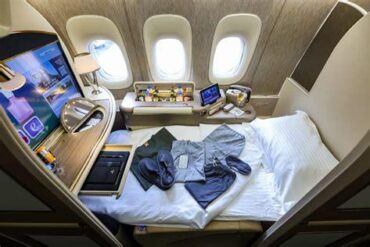
The updated Boeing 777-300ER features individual business-class suites with sliding privacy doors, direct aisle access, additional personal storage, and a chaise lounge position that allows passengers to stretch out beyond the conventional flat-bed arrangement. These features help create a more private environment, particularly on overnight flights when passengers want to sleep without being disturbed by neighboring travelers.
Privacy doors have become an important feature in the premium airline market. Delta Air Lines introduced business-class suites with doors in 2017, helping establish a product standard that other carriers have since pursued. American’s decision to expand its own suite-based offering reflects a broader industry shift toward giving business-class passengers a more enclosed and personalized space without maintaining a separate first-class cabin.
The airline is also reducing the service differences between its premium products. Flagship Suite passengers receive benefits such as expedited check-in, security, boarding, and baggage handling. American has also extended access to Flagship Dining, its premium dining offering, to all eligible Flagship customers, further strengthening the business-class experience.
These changes matter because luxury is not determined by the cabin label alone. A passenger choosing between first class and business class is likely to consider privacy, sleeping comfort, food, airport services, and the overall journey rather than the name printed on the ticket. When business class provides many of the same practical benefits, first class must offer a substantial additional advantage to command a much higher fare.
American has already introduced Flagship Suites on a premium-focused version of the Boeing 787-9 and on the Airbus A321XLR. Extending the concept to the 777-300ER creates a more consistent premium experience across different aircraft types.
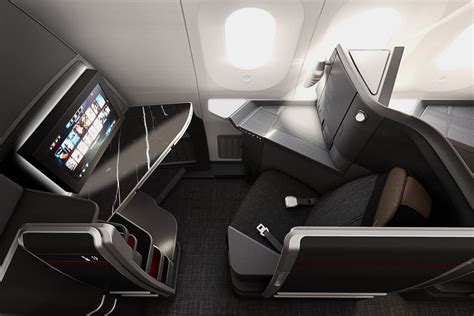
The result is a change in how American defines its most luxurious offering. Rather than preserving first class as a distinct category, the airline is positioning its newest business-class suites as the top of its international passenger experience.
3. More Business-Class Seats Can Generate Greater Revenue
The third reason is straightforward: American can use the space previously occupied by first class to install more seats that it believes customers are more likely to purchase. The redesigned 777-300ER demonstrates the scale of this change.
The aircraft’s previous configuration included eight first-class suites, 52 business-class seats, 28 premium economy seats, and 216 economy seats, accommodating a total of 304 passengers. Under the new configuration, the aircraft has 70 Flagship Suite business-class seats, 44 premium economy seats, and 216 economy seats, increasing total capacity to 330 passengers.
The transformation adds 18 business-class seats and 16 premium economy seats while retaining the same 216 economy seats in the configuration described in the reference material. The resulting layout provides 26 additional passenger positions overall, despite removing the dedicated eight-seat first-class cabin.
That increase becomes more significant when viewed through the lens of premium capacity. The aircraft’s combined business-class and premium economy inventory rises from 80 seats to 114 seats. Including the 30 extra-legroom economy spaces identified in the aircraft’s introductory configuration, American can market a substantial selection of seats offering additional comfort and service.
The redesigned aircraft therefore shifts the balance of its cabin toward passengers who are willing to pay extra but may not be willing to purchase traditional first class. Business-class suites can appeal to corporate travelers, affluent leisure passengers, and customers using loyalty points or upgrade benefits. Premium economy provides another opportunity to collect higher fares from passengers who do not require a lie-flat bed.
There is, however, an important distinction between adding capacity and automatically increasing profits. Every additional seat creates revenue potential, but it also introduces costs associated with catering, cleaning, handling, and passenger service. The airline must sell those seats at fares high enough to justify their inclusion.
The strategy also comes with a trade-off. The 777-300ER’s total economy capacity remains at 216 seats in the stated layout, but the distribution of space changes, and not every passenger benefits equally from the conversion. The additional premium inventory is valuable to American only if demand supports it across the routes where the aircraft operates.
American expects the refreshed aircraft to serve major international markets, including London, Tokyo, São Paulo, Buenos Aires, and Sydney. These destinations have different passenger profiles, competitive conditions, and levels of premium demand. A configuration that performs well on one route may not produce identical results on another, making route planning and revenue management essential to the success of the new cabin.
4. Premium Travelers Are Becoming More Important to American Airlines’ Revenue
The fourth reason is the growing financial contribution of premium passengers. American’s strategy reflects a broader industry trend in which a relatively small share of passengers can generate a disproportionately large share of ticket revenue.
According to figures cited in the reference material, American reported that premium customers occupied approximately 30% of its seats while generating nearly half of its ticketed revenue in the second quarter. The airline also reported premium unit revenue growth of more than 13% year over year, while lie-flat and premium economy capacity expanded more than twice as quickly as Main Cabin capacity during the period.
These figures help explain why American is directing investment toward business class and premium economy rather than maintaining a traditional first-class cabin. Premium passengers generally pay more for additional space, flexibility, privacy, and service. By expanding the number of seats that appeal to this group, the airline can pursue greater revenue without relying on a small number of exceptionally expensive first-class tickets.
The strategy also aligns with developments at rival airlines. Delta reported premium revenue growth of 17% in the second quarter, compared with 8% growth for main-cabin ticket revenue, according to the figures cited in the reference material. Although results vary by airline and reporting period, the pattern suggests that premium products have become an increasingly important part of airline revenue generation.
American’s investment extends beyond the 777-300ER. Deliveries of upgraded Boeing 787-9 aircraft, Airbus A321XLRs, and retrofits of existing 777-200ERs are part of a broader plan to increase the availability of premium seating. The airline expects its international lie-flat capacity to grow substantially by the end of the decade, while its narrowbody fleet is also moving toward a higher proportion of premium seats.
The commercial logic is that airlines no longer need a dedicated first-class cabin to sell a premium experience. Instead, they can offer several price levels, from extra-legroom economy to premium economy and business-class suites, allowing customers to select the degree of comfort they value.
For American, this structure could improve the use of cabin space while expanding the number of passengers willing to pay above the standard economy fare. However, premium revenue growth across an entire airline does not guarantee that every new business-class seat will be profitable. The actual outcome will depend on fares, occupancy, competition, and the mix of customers on each route.
5. American Airlines Is Catching Up With Competitors That Already Abandoned International First Class
The fifth reason is competitive pressure. American’s decision places it in line with a market that has already moved away from traditional international first class among the three largest US network carriers.
United Airlines eliminated its international first-class service in 2018, concentrating its long-haul premium strategy on Polaris business class. Delta had combined its business and first-class cabins in 1998, although its premium products and cabin naming have evolved since then. American therefore remained the last of the three major US airlines to maintain a distinct international first-class product.
Keeping first class could have preserved a point of differentiation, but it also required American to maintain a cabin that was becoming less central to the competitive landscape. As rival airlines invested in enclosed business-class suites, lie-flat seats, and upgraded premium dining, American faced pressure to ensure that its own premium experience remained attractive to high-paying customers.
The airline is also changing its domestic premium strategy. It plans to stop selling Flagship First on transcontinental flights beginning March 28, 2027, as its Airbus A321 fleet transitions away from the older A321T configuration toward the A321XLR and its combined Flagship Suite concept. This indicates that the shift is not limited to the international 777-300ER fleet but forms part of a wider effort to standardize premium offerings.
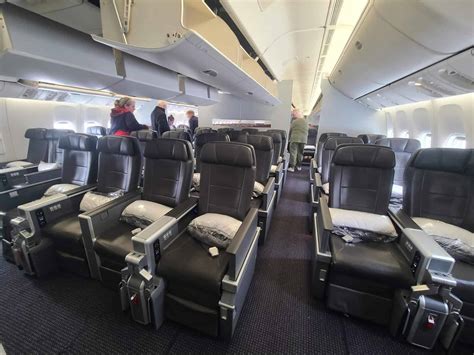
The transition will not happen overnight. Industrial delays pushed the initial 777-300ER retrofit schedule beyond its original 2024 target, and the reference material indicates that all 20 aircraft are expected to be completed sometime in 2027. During the transition, some aircraft may continue to carry physical first-class seats after sales of the traditional product end. Those seats can be sold as business class until the individual aircraft receives its new interior.
This temporary arrangement highlights the difference between ending a product commercially and removing it physically. American can change how it sells premium travel before every aircraft has been converted, allowing the airline to move toward a common business-class proposition while retrofits continue.
Still, matching competitors does not guarantee success. American must persuade customers that its new suites deliver a compelling experience, fill the expanded cabin at sustainable fares, and maintain service standards across a larger number of premium passengers. The airline’s new layout represents a strategic bet, not a proven result on every route.
What the End of American Airlines First Class Means for Travelers
American Airlines’ decision to remove traditional first class from its largest aircraft reflects a fundamental change in the economics of premium air travel. The airline is moving away from a small, space-intensive cabin designed for a limited group of customers and toward a larger business-class product that can serve more travelers.
For passengers, the change offers a mixture of benefits and compromises. Business-class customers gain access to a larger inventory of Flagship Suites featuring privacy doors, direct aisle access, and improved personal space. Premium economy passengers may also benefit from the expanded cabin, which gives American more opportunities to offer an intermediate product between standard economy and lie-flat business class.
However, travelers who specifically value the exclusivity of a separate first-class cabin will lose an option that once distinguished the airline’s highest-end international service. A larger business-class cabin may offer many of the same practical comforts, but it does not necessarily recreate every element of a traditional first-class experience.
The commercial outcome will become clearer as the retrofitted aircraft enter regular service and American reports its financial results. The most important questions are whether the additional business-class suites attract enough paying passengers, whether premium economy can sustain its expanded capacity, and whether the airline can improve revenue without weakening the overall passenger experience.
Ultimately, American Airlines is not abandoning premium travel; it is changing which premium products receive the most space and investment. Its 777-300ER redesign captures the direction of the modern airline industry, where privacy, lie-flat comfort, and a broad range of premium fares increasingly matter more than maintaining a separate first-class label. The traditional cabin is disappearing because American believes the space can earn more money elsewhere—and the success of its strategy will depend on whether travelers agree.