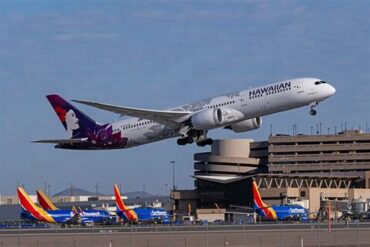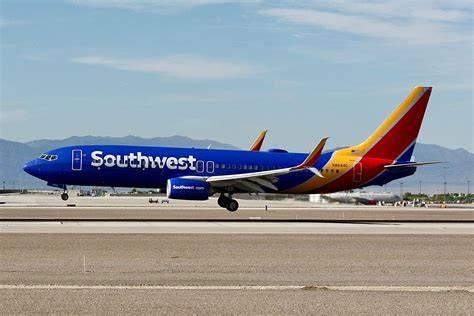
Southwest Airlines could be approaching one of the biggest changes in its history, with reports suggesting that the carrier is considering Boeing 787-9 Dreamliners for potential long-haul international services. Although the airline has not confirmed plans to introduce widebody aircraft, the possibility would represent a major departure from its traditional all-narrowbody fleet and domestic-focused business model.
The potential move comes as Southwest reshapes its operations to increase revenue, attract different types of travelers, and compete more directly with larger US airlines. Changes already under way include assigned seating, premium seating options, overnight flights, baggage fees, and plans associated with a more comprehensive passenger experience. Adding long-haul flights could become another step in this transformation, opening markets that Southwest’s Boeing 737 fleet cannot serve efficiently.
However, operating transatlantic or transpacific services would require much more than acquiring a different aircraft. Southwest would need to establish new operating procedures, negotiate pilot agreements, develop international connections, and identify airports capable of supporting profitable widebody operations. If the plan progresses, Las Vegas, Denver, Baltimore, and Nashville stand out as four potential departure points, although each presents different opportunities and challenges.
Why Southwest Airlines Could Choose the Boeing 787-9
The Boeing 787-9 Dreamliner would give Southwest access to international markets beyond the practical range of its existing narrowbody fleet. The aircraft combines long range with comparatively efficient fuel consumption, making it suitable for routes linking US cities with destinations across Europe and Asia. Its capacity would also allow Southwest to transport substantially more passengers per departure than a Boeing 737 MAX.
The 787-9 is already widely used for long-haul services, giving prospective operators access to an established aircraft type, maintenance ecosystem, and international operating experience. Rather than waiting for newly manufactured aircraft, Southwest could potentially explore the secondhand or leasing market to accelerate its entry into widebody operations. The availability of suitable aircraft, their condition, and lease terms would determine whether that approach made commercial sense.
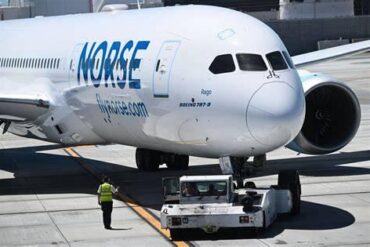
One possibility discussed in industry reporting involves Norse Atlantic Airways, which previously leased six 787-9s to India’s IndiGo. That arrangement ended earlier than originally planned, leaving Norse needing to place aircraft with other operators. A transaction involving Southwest is conceivable, but no confirmed agreement establishes that the two airlines will work together.
Aircraft availability would only address part of the challenge. Southwest would also need to negotiate with the Southwest Airlines Pilots Association over widebody operations, training, staffing, and compensation for long-haul flying. Those discussions could take considerable time, even if aircraft were secured beforehand. Consequently, any introduction of the 787-9 would depend on a broader operational and labor framework rather than an aircraft acquisition alone.
1. Las Vegas Could Become Southwest’s Gateway to Long-Haul Markets

Las Vegas is an intriguing candidate because of its international appeal, substantial passenger demand, and extensive Southwest network across the western United States. The airline operates a large number of flights through the city, allowing passengers from numerous domestic markets to connect to a single long-haul departure. That connectivity would be particularly valuable for routes requiring consistent demand throughout the year.
Based on the October 2026 operating estimates in the supplied reference material, Southwest has approximately 503 daily aircraft movements at Las Vegas, including takeoffs and landings. Around 35% of its estimated daily passengers at the airport are connecting travelers. That provides a meaningful foundation for international expansion, although the proportion of connecting passengers alone does not establish whether any particular long-haul route would be profitable.
Las Vegas could support services to major European destinations if Southwest can attract sufficient demand from leisure travelers and connecting passengers. London, Paris, and selected Southern European cities could offer potential opportunities, depending on aircraft availability, airport access, and competition. The city might also provide a starting point for transpacific services, with Southwest’s domestic network supplying passengers from across the western US.
Its existing international profile would help Southwest market long-haul flights to travelers already familiar with Las Vegas. Nevertheless, seasonal demand, competing airlines, and the need to fill a widebody aircraft consistently would remain important considerations.
2. Denver Offers the Strongest Domestic Connecting Network
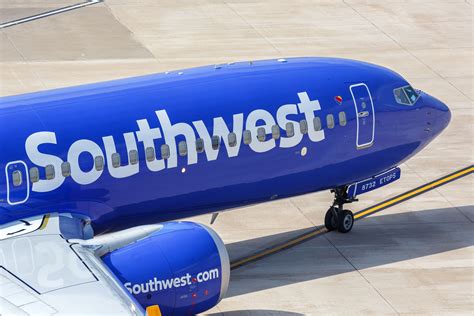
Denver is another logical possibility, particularly because of its importance to Southwest’s domestic network. The airport provides connections across a broad range of US destinations, making it useful for collecting passengers from multiple markets before sending them on longer international journeys.
The reference estimates approximately 496 daily Southwest aircraft movements at Denver, with around 40% of its estimated daily passengers connecting. Its estimated 31,200 daily transfer passengers make it Southwest’s largest connecting airport in absolute terms among the airports examined. Such a passenger base could help support long-haul services by bringing together travelers who would otherwise need to depart from different cities.
However, Denver presents a significant competitive challenge. United Airlines maintains a major hub there, offering extensive domestic and international connectivity. Southwest would need to identify routes where it could attract enough passengers without relying entirely on matching United’s established network.
Denver’s geographic position also matters. It can work well as a connecting point for passengers traveling from across the western and central United States, although some international routes may be more naturally served from coastal gateways. Long-haul flights to Europe could be considered, but the airline would need to assess demand, operating costs, and the competitive response before committing aircraft.
3. Baltimore Could Connect the Eastern US With Southern Europe
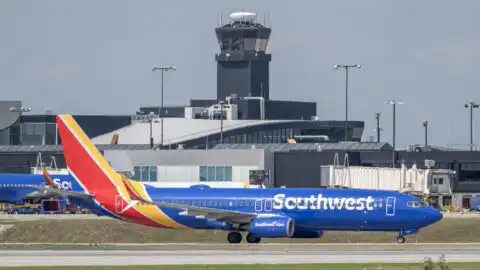
Baltimore/Washington International Thurgood Marshall Airport (BWI) offers a different proposition. Southwest has a substantial presence there, and the airport provides access to a large population across the Mid-Atlantic region. It could also gather connecting passengers from markets that lack their own nonstop long-haul services.
The supplied figures indicate approximately 412 daily Southwest aircraft movements at Baltimore, with around 50% of estimated daily passengers transferring between flights. That high connecting share could make the airport a useful platform for international services, particularly if Southwest can coordinate schedules to create convenient connections.
Southern Europe is a potentially interesting target. Destinations such as Rome, Athens, Barcelona, Naples, and Venice have strong appeal for American leisure travelers. Some routes could fall beyond the practical operating range or commercial capabilities of Southwest’s existing 737 fleet, making a 787-9 a possible alternative.
Baltimore’s challenge is international visibility and competition from nearby airports. Washington Dulles, a major United Airlines hub, already provides extensive long-haul connectivity. Southwest would therefore need to demonstrate that BWI could attract enough local and connecting passengers to justify widebody service.
The opportunity is not necessarily limited to Europe. A long-haul route would need to fit Southwest’s network strategy and the aircraft’s capabilities, while airport facilities, available slots, and seasonal demand would influence the final decision.
4. Nashville Could Become an Unexpected Long-Haul Contender
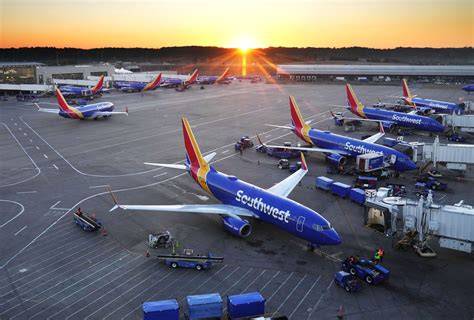
Nashville could be a particularly interesting candidate as international airlines expand their presence in the city. The Tennessee capital has developed into a major leisure and business destination, while Southwest’s domestic network could help supply passengers for overseas flights.
The reference material estimates approximately 404 daily Southwest aircraft movements at Nashville, with around 44% of estimated daily passengers connecting. Those figures suggest the airport has a substantial operational footprint, even though its absolute transfer-passenger volume is lower than Denver’s or Baltimore’s.
A Southwest-operated 787-9 could potentially link Nashville with major European destinations, offering local travelers nonstop options while collecting passengers from other parts of the country. London and Paris would be natural markets to evaluate, while additional European destinations would depend on demand and competition.
Nashville’s growth in international service could provide useful evidence that the market is attracting attention from overseas carriers. However, the existence of other airlines’ routes does not automatically establish a profitable opportunity for Southwest. The airline would need to determine whether it could sustain sufficient passenger volumes and generate attractive revenue throughout the year.
Unlike Denver, Nashville would not necessarily rely on a traditional mega-hub model. Its appeal could instead come from combining a growing local market with selected domestic connections and carefully chosen international routes.
Could Southwest Launch Flights to Asia Instead of Europe?
Although Europe is an obvious focus for speculation about Southwest’s potential long-haul expansion, Asia could also feature in the airline’s calculations. A 787-9 would provide access to markets well beyond the range of Southwest’s current aircraft, but the most attractive destinations would depend on demand, operating costs, and the strength of competing carriers.
Las Vegas could be considered for services connecting western US passengers with Asian destinations, while Denver might offer a broader domestic feed. Nevertheless, transpacific routes introduce their own challenges, including longer flight times, different demand patterns, and the need to compete with airlines that already operate established international networks.
Southwest would also need to decide whether its first widebody services should prioritize nonstop demand from individual cities or rely heavily on domestic connections. A conservative approach would likely favor major international markets with recognizable destinations and sufficient passenger demand before expanding into less-established routes.
Why Southwest’s Boeing 787 Plans Remain Uncertain
The central question is whether Southwest can make widebody flying work within its evolving business model. Introducing a 787-9 would involve substantial changes to aircraft maintenance, crew training, airport operations, passenger services, and labor agreements. The airline would also need to determine how international baggage handling, connections, and irregular operations would fit into its existing systems.
The October 2026 airport estimates provide useful clues about where the airline could begin, but they are not evidence that any route has been selected. Chicago Midway and Dallas Love Field face airfield constraints that complicate widebody operations, while Phoenix faces strong competition from American Airlines and Orlando has a more limited connecting-passenger profile in the supplied data. Houston Hobby and San Diego also appear less compelling for this particular strategy.
For now, Las Vegas, Denver, Baltimore, and Nashville represent plausible candidates rather than confirmed gateways. Each has a substantial Southwest operation and a potential source of connecting traffic, but their commercial strengths differ. The eventual decision would depend on aircraft availability, pilot agreements, airport capabilities, route economics, and whether Southwest can attract enough passengers to fill a widebody aircraft consistently.
If Southwest does introduce the Boeing 787-9, the move would signal a fundamental expansion beyond its traditional domestic narrowbody model. It could create new nonstop options for American travelers while giving the airline another way to increase revenue. Until the carrier confirms its plans, however, the most important distinction remains between a plausible long-haul strategy and an announced operational commitment.