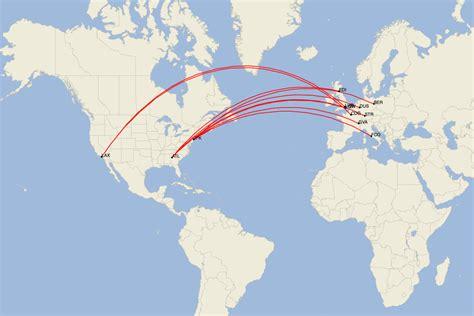
Industry insiders are abuzz with reports that Southwest Airlines may be preparing to leap into the transatlantic market for the very first time. The speculation, grounded in airline agreements, route analytics, and executive commentary, points to Reykjavík’s Keflavík International Airport (KEF) as the likely inaugural European destination. If true, this move would mark a historic shift for the low-cost US carrier, which has, until now, limited its international operations to North America and the Caribbean.
This expansion is more than rumor—it’s backed by recent developments, including a strategic interline agreement with Icelandair, subtle executive hints, and increased transcontinental operations from key hub airports. At the core of this speculation are three primary US departure cities: Baltimore (BWI), Nashville (BNA), and Denver (DEN)—all currently served by Icelandair and within range of Southwest’s existing Boeing 737 MAX 8 fleet.
Why Reykjavik Could Be Southwest’s First European Destination
The clearest indicator of Southwest’s European ambitions is its formalized interline agreement with Icelandair. Initially limited to Baltimore/Washington International (BWI), the partnership has recently expanded to include Denver, Nashville, Orlando, Pittsburgh, and Raleigh-Durham. This deal allows passengers to book flights across both networks on a single ticket—seamlessly connecting Southwest’s domestic network with Icelandair’s robust European offerings.
What started as logistical cooperation has now evolved into a potential codeshare agreement, as hinted in a recent Wall Street report from TD Cowen. Analysts believe Southwest may offer flights from the U.S. to Reykjavík in exchange for a deeper partnership with Icelandair, including expanded codesharing privileges. This move would allow Southwest customers to book trips not just to Iceland, but to over 40 European destinations served by Icelandair.
Strategic Comments From Leadership Signal Major Change
The buzz intensified following statements made by Bob Jordan, CEO of Southwest Airlines, during a major aviation industry conference in New York. Jordan acknowledged that the carrier has limitations—no first class, no lounges, no long-haul international service—but hinted that “we aren’t stopping there.” While he stopped short of confirming new products or services, the acknowledgment signaled internal discussions around growth into longer-haul international territory.
This sentiment aligns with recent trends. Southwest has been methodically growing its transcontinental presence, particularly from its Baltimore hub. The carrier launched six new long-haul domestic routes from BWI in a single day this year, a move seen by many analysts as a dry run for more complex international scheduling and operations.

Baltimore, Nashville, and Denver: The Key Launch Cities
Among the routes under consideration, three U.S. cities stand out as likely launchpads for Southwest’s foray into transatlantic travel:
Baltimore/Washington International (BWI)
- Distance to KEF: 2,754 miles
- Current Icelandair Service: Daily with Boeing 737 MAX 8
Baltimore is a no-brainer. It’s one of Southwest’s busiest hubs and serves as a critical East Coast stronghold. Icelandair already operates daily service from BWI to Reykjavík using the 737 MAX 8, the same aircraft in Southwest’s fleet. With a 73% market share at BWI, Southwest has the infrastructure, passenger demand, and loyalty base to justify launching an international route from this airport.
Nashville International (BNA)
- Distance to KEF: 3,231 miles
- Current Icelandair Service: Four times weekly with Boeing 737 MAX 8
Nashville represents an important growth market. It’s centrally located, leisure-driven, and already familiar with Icelandair service. If Southwest were to launch flights to Reykjavík from BNA, it could take advantage of existing operational knowledge while diverting Icelandair’s aircraft capacity to other underserved markets, benefiting both carriers.
Denver International (DEN)
- Distance to KEF: 3,556 miles
- Current Icelandair Service: Twice daily with Boeing 757-200
Denver presents a challenge. At over 3,500 miles and a high-altitude airport, flights to Iceland could be at the upper edge of the 737 MAX 8’s operational limits. Icelandair relies on the longer-range 757-200 for its DEN-KEF service. If Southwest hopes to launch from Denver, it may need to rethink its fleet strategy or accept weight and fuel limitations on such routes.
The Role of the Boeing 737 MAX 8 in Route Viability
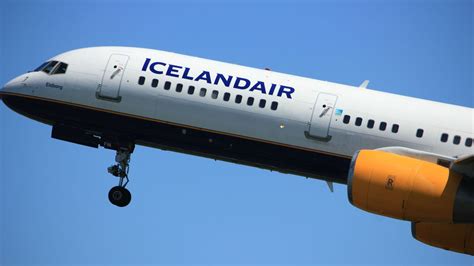
The feasibility of Southwest’s Iceland ambitions largely hinges on the capabilities of its 737 MAX 8 fleet. With a maximum range of approximately 3,550 nautical miles, the aircraft can technically reach Reykjavík from most Eastern and Central U.S. cities. However, factors like headwinds, passenger load, airport altitude, and fuel reserves play a significant role in determining real-world performance.
Baltimore and Nashville are well within comfortable range, making them ideal candidates. Denver, however, tests the outer boundaries of the MAX 8. If Southwest plans to maintain a full passenger load while ensuring operational safety and fuel efficiency, it may be forced to either reduce capacity or explore new aircraft options—something Bob Jordan hinted at.
“It could require that we think about a different aircraft,” Jordan said, implying that the next phase of Southwest’s growth might involve reassessing its single-fleet philosophy, a foundational element of its low-cost model.
Could the UK and Ireland Be Next?
Southwest’s ambitions may not stop at Iceland. Industry experts speculate that routes to the UK and Ireland could be viable from BWI as well. While direct flights to London or Dublin would stretch the MAX 8’s range, they are technically within reach, especially with lighter payloads or adjusted flight profiles.
Such a move would be game-changing for the U.S. low-cost market, effectively allowing Southwest to compete directly with legacy carriers and transatlantic budget players like Norse Atlantic, PLAY, and JetBlue. With Icelandair as a codeshare partner and potential gateway to the continent, Southwest could quickly establish a network of low-cost European travel options for U.S. passengers.
Short-Term Focus Still on Close-In International Markets
While Reykjavík captures headlines, Southwest’s immediate international growth will remain focused on Mexico, the Caribbean, and Central America. This was reaffirmed during the International Air Transport Association (IATA) summit in New Delhi, where Steven Swan, managing director of international at Southwest, emphasized that the carrier is evaluating “everything within MAX range.”
When pressed about the Reykjavík speculation, Swan remained non-committal but did not deny the possibility, further fueling expectations. His comments suggest that Southwest’s network planners are actively modeling longer-haul scenarios, and that the airline is open to experimentation if the economics and partnerships align.
Why This Move Matters for the Airline Industry
If Southwest moves forward with transatlantic flights, it will be the first major low-cost U.S. airline to operate to Europe using only narrowbody aircraft under a traditional low-cost model. This represents a significant evolution for the brand, potentially attracting:
- New leisure customers seeking affordable European vacations
- Loyalty program users interested in redeeming points for more exotic travel
- Budget-conscious international travelers disillusioned with legacy airline pricing
The move also pressures competitors to reconsider their own international strategies. Legacy carriers may be forced to match prices, while other LCCs will eye similar partnerships or expansion opportunities.
Conclusion: A Strategic Gamble With Enormous Potential
Southwest Airlines has never been known for rash moves. Its route planning is methodical, its fleet uniform, and its financial performance consistently stable. But the transatlantic opportunity, catalyzed by the Icelandair partnership and the performance envelope of the 737 MAX 8, may be too compelling to pass up.
Baltimore and Nashville stand as clear frontrunners for the airline’s first-ever European flights, while Denver remains an intriguing—but operationally complex—wild card. Regardless of where the first MAX lifts off to Reykjavík, the ripple effects will be felt industry-wide.
The sky over the North Atlantic may soon carry a familiar livery, one that until now has been firmly grounded on this side of the ocean.