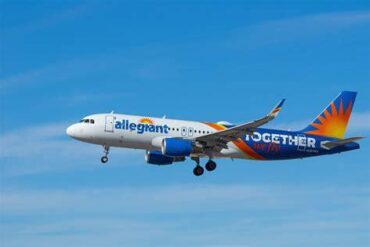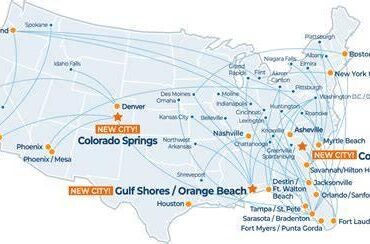
Allegiant Air has built a distinctive position in the American aviation industry by flying to airports that many larger airlines overlook. While major carriers concentrate their operations around busy hubs such as Atlanta, Chicago O’Hare, and Dallas/Fort Worth, Allegiant connects smaller communities directly with popular vacation destinations. Its network includes regional airports that serve relatively modest populations but offer access to substantial leisure travel demand.
The airline’s strategy raises an important question: why does Allegiant continue to operate from secondary airports when larger facilities offer more connections, greater passenger volumes, and extensive infrastructure? The obvious answer is that smaller airports often charge lower fees, but that explanation only captures part of the picture. Allegiant’s business model depends on combining low operating costs, carefully targeted leisure demand, limited direct competition, and flexible flight schedules.
Rather than building a conventional hub-and-spoke network, Allegiant focuses on connecting travelers who want to reach vacation destinations without driving long distances or changing planes. Airports such as Orlando Sanford International Airport (SFB), Phoenix-Mesa Gateway Airport (AZA), St. Pete–Clearwater International Airport (PIE), and Chicago Rockford International Airport (RFD) support this approach. They allow the airline to serve customers outside the largest metropolitan airports while maintaining a cost structure designed around inexpensive, straightforward travel.
Why Secondary Airports Fit Allegiant Air’s Business Model
Lower airport charges provide an important starting point for understanding Allegiant’s network. Major airports typically have expensive terminal facilities, high gate lease costs, significant congestion, and substantial demand for limited runway and parking capacity. These expenses can make it difficult for an airline operating inexpensive tickets to earn acceptable returns on routes with relatively small passenger volumes.
Secondary airports often offer a different economic environment. Their lower landing fees, less expensive facilities, and more flexible operating arrangements can reduce the cost of establishing service. For an airline that needs to keep fares attractive to price-sensitive vacationers, those savings can make the difference between a commercially viable route and one that loses money.
However, cheap airport access is not the primary objective on its own. An airport becomes valuable to Allegiant when its costs align with a market containing enough travelers willing to fly directly to a destination. A regional airport with low fees but insufficient demand is not automatically an attractive base. Allegiant must identify communities where local residents want affordable access to Florida beaches, Las Vegas, Arizona, or other popular leisure markets.
This explains why the airline does not simply operate from every small airport available. It selects locations that combine manageable operating expenses with identifiable vacation demand. The result is a network built around specific travel opportunities rather than the need to connect passengers through a nationwide system.
How Allegiant Avoids the Expense of Major Airline Hubs
Traditional network airlines organize much of their domestic flying around large connecting hubs. Passengers from smaller cities travel to those hubs before transferring to another aircraft for their final destination. This structure creates extensive connectivity, but it also requires complex scheduling, coordinated arrivals and departures, and sufficient flight frequency to accommodate connecting passengers.
Allegiant generally avoids that complexity by operating a point-to-point network. Instead of transporting travelers through a major hub, it connects an origin airport directly to a destination where leisure demand is strong. Someone living near Appleton, Wisconsin, for example, may prefer a nonstop flight to a vacation destination over a journey involving a drive to a larger airport and a connection elsewhere.
This model reduces the need to coordinate flights across an extensive connecting network. Allegiant does not have to construct every route around banks of arriving and departing aircraft, nor does it need to maintain a broad collection of regional feeder services to support its long-haul operations. Its route economics can instead be assessed on a more direct basis: how many people want to travel between these two cities, what fares will they pay, and can the flight operate profitably?
The distinction is particularly important because Allegiant’s passengers are often traveling for holidays rather than business appointments. Many vacationers care more about obtaining a convenient nonstop flight at an attractive price than about having several departure choices every day.
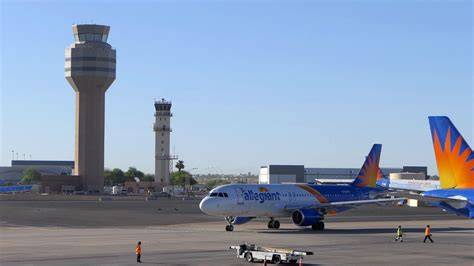
Serving Cities That Major Airlines Have Overlooked
The consolidation of the American airline industry has reshaped air service across smaller cities. As large carriers have concentrated resources on their principal hubs and the routes feeding them, some regional communities have lost nonstop services that previously connected them with important leisure destinations.
For travelers in these markets, the alternatives can be inconvenient. Reaching a major airport may require a lengthy drive, while flying from the local airport might involve one or more connections. Either option adds time, expense, or uncertainty to a vacation that is supposed to be relaxing.
Allegiant looks for opportunities created by these gaps in service. By connecting smaller origin markets directly to destinations with strong holiday appeal, it can attract passengers who might otherwise drive several hours or avoid flying altogether. The airline is not necessarily trying to take customers away from a competing nonstop service. In many markets, it is introducing a route that was previously unavailable.
This approach can stimulate new air travel demand rather than merely redistribute existing passengers. A family that considers an expensive connecting itinerary impractical might decide to take a vacation when a low-cost nonstop flight becomes available nearby. Similarly, travelers who would normally drive to a large airport may find that departing from their local airport saves enough time and money to justify flying.
That distinction matters commercially. An airline entering a heavily contested market must persuade passengers to switch from existing services, often by reducing fares. In an underserved market, Allegiant can appeal to travelers whose choices were previously limited. The potential opportunity is not unlimited, but the absence of convenient alternatives can help support a route that would be difficult to sustain in a more competitive market.
Why Allegiant Does Not Need Daily Flights on Every Route
One of the most distinctive features of Allegiant’s strategy is its willingness to operate some routes only a few days per week. Major network carriers frequently offer multiple daily departures on important business and connecting routes because passengers need schedule flexibility. A flight operating only on selected days would be insufficient for many corporate travelers.
Leisure travel follows different patterns. Vacationers often plan their trips around weekends, school holidays, and longer stays. They may be perfectly willing to depart on a Thursday or Friday and return on a Sunday or Monday if the fare is attractive and the nonstop service fits their plans.
Allegiant can therefore concentrate capacity around periods when demand is strongest. Rather than operating a flight every day and risking weak passenger numbers on quieter departures, it can schedule selected services to match anticipated travel patterns.
This low-frequency operating model helps control capacity and protect profitability. A route does not need to generate enough demand for daily service to become commercially attractive. It only needs sufficient passengers on the days when the airline chooses to operate, provided the resulting revenue covers the relevant costs and contributes an acceptable return.
The flexibility also allows Allegiant to adjust its schedule as demand changes. A seasonal route may warrant additional capacity during a busy vacation period but less service during quieter months. A market that performs poorly may receive fewer flights or lose service entirely, while a stronger market can support additional departures.
Secondary airports make these adjustments easier when airport facilities and operating arrangements offer flexibility. Allegiant can focus on the flights that have the best commercial prospects without having to reproduce the dense schedules expected of a major hub airline.
Aircraft Utilization and the Economics of Staying Small
Aircraft are expensive assets, and airlines generally seek to use them productively. However, maximizing flying hours is not always the same as maximizing profitability. A flight operated simply to keep an aircraft moving can lose money if passenger demand is weak or ticket prices are too low.
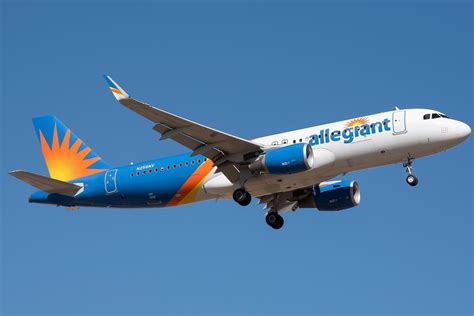
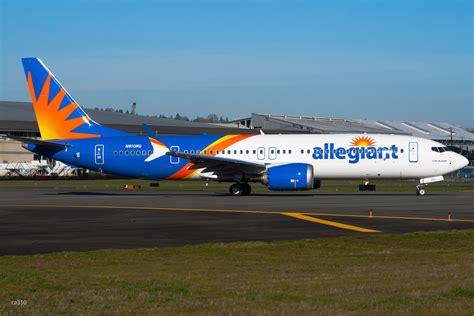
Allegiant’s model places considerable emphasis on matching aircraft capacity to the opportunities available across its network. Its Airbus A320-family aircraft provide substantial passenger capacity for leisure routes, while the airline’s growing Boeing 737 MAX fleet offers another option as its fleet strategy evolves.
The key is that these aircraft can serve markets where demand is sufficient to fill a meaningful proportion of the seats without requiring the flight frequency of a large hub operation. A nonstop service carrying vacationers between a regional city and a popular destination can be commercially attractive even if it operates only several times a week.
Aircraft scheduling also requires careful consideration of where planes and crews finish their working day. Allegiant has historically used base-oriented scheduling patterns that can reduce the need for extensive overnight operations away from established locations. When aircraft and crews can return to an appropriate base, the airline may limit certain accommodation, positioning, and logistical expenses.
These arrangements are not universal, and aircraft do not necessarily return to the same airport every evening on every route. Nevertheless, the broader principle remains important: Allegiant designs its network around the cost of operating each flight, not around the prestige of serving a major airport.
That discipline becomes especially valuable when fuel prices rise or travel demand weakens. An airline with a large daily schedule may find it difficult to remove capacity without disrupting connecting itineraries. Allegiant’s simpler route structure can offer greater flexibility, although it still faces the financial consequences of low passenger numbers, maintenance requirements, and aircraft ownership or leasing costs.
Limited Nonstop Competition Creates a Competitive Advantage
Another important reason Allegiant continues to target secondary airports is that many of its routes face little or no direct nonstop competition. A large airline may serve the same general region, but that does not mean it offers a nonstop flight from the same airport to the same destination.
For example, a major carrier could provide connections from a regional community through a large hub. Allegiant may instead offer a direct flight to a vacation destination. These are different products, even when both ultimately take passengers to the same city.
Without another airline operating the identical nonstop route, Allegiant may avoid the most aggressive forms of direct fare competition. It can concentrate on travelers who value the convenience of departing locally and arriving without a connection. The absence of a competing nonstop flight does not give it unlimited pricing power, however. Customers can still drive to another airport, choose a different vacation destination, or decide not to travel.
The airline must therefore balance its fares against the alternatives available to local residents. Low base prices attract attention, but the overall value of the trip depends on the complete itinerary, including baggage charges, transportation, and accommodation.
The limited-competition environment can nevertheless help Allegiant protect route economics. Legacy carriers typically have higher structural costs associated with extensive connecting networks and, in some markets, smaller regional aircraft. Matching Allegiant’s fares on a thin leisure route may not make commercial sense if doing so diverts passengers from more profitable services or creates additional losses.
How Baggage Fees and Travel Packages Support Low Fares
Allegiant’s secondary-airport strategy works alongside its ultra-low-cost revenue model. The airline can advertise a relatively inexpensive base fare while charging separately for optional services such as checked baggage, advance seat selection, and priority boarding. Passengers who want the lowest possible price can travel with fewer extras, while those who need additional services can pay for them.
This approach allows Allegiant to generate revenue beyond the initial ticket price. Ancillary charges can be particularly important on leisure routes, where passengers may travel with family members, bring checked luggage, or want to sit together. The amount collected varies by itinerary and customer behavior, so it should not be assumed that every passenger pays the same total.
Travel-related products offer another revenue opportunity. Allegiant has promoted vacation packages and other booking options that help customers arrange more than their flights. Partnerships and third-party bookings involving hotels and rental cars can generate additional revenue while making it easier for passengers to organize a trip.
These products fit naturally with the airline’s route network. Travelers arriving at smaller leisure airports may need to arrange ground transportation and accommodation, especially where public transit options are limited. By presenting those services alongside the flight, Allegiant can participate in more of the customer’s travel spending.
The combination is important because a low advertised fare is only one part of the economics. Airport cost savings, ticket revenue, ancillary charges, and travel-related commissions can work together to support a route. None guarantees profitability independently, but together they give Allegiant several ways to generate value from a market that might not support a conventional full-service operation.
Why Secondary Airports Are Not Always the Cheapest Choice for Passengers
Although secondary airports can reduce costs for an airline, the financial benefits do not automatically translate into the lowest total trip cost for every traveler. Some regional airports are located farther from the city or resort they serve than their larger competitors. Travelers may need to rent a car, pay for a longer transfer, or arrange transportation at times when local services are limited.
Airport convenience is therefore a major part of the equation. A cheap nonstop flight may be attractive to someone living close to the departure airport, but less appealing to a traveler who must drive two hours to reach it. Similarly, arriving at a secondary airport may save time for one visitor while adding transportation expenses for another.
Allegiant’s strategy works best when the airport is reasonably convenient for the population it targets and the destination offers a compelling reason to travel. The airline must assess the size of the local catchment area, the strength of vacation demand, competing transportation options, and the costs of operating the route.
This is also why secondary airports cannot be treated as interchangeable locations. Their runway capabilities, terminal facilities, ground handling arrangements, weather conditions, and proximity to major destinations differ considerably. Some may support expansion comfortably, while others have physical or commercial limitations.
For Allegiant, choosing the right airport means identifying a location where lower operating costs coincide with a practical travel proposition. A cheap gate is useful, but a full aircraft flying between two places that customers genuinely want to connect is far more valuable.
Can Allegiant Continue Expanding Its Secondary-Airport Network?
Allegiant’s future growth depends on whether it can keep finding underserved markets with enough leisure demand to justify nonstop service. New aircraft can create opportunities to add routes or adjust capacity, but fleet expansion alone does not guarantee success. Every potential route must still demonstrate that expected revenue can cover operating expenses and the costs associated with deploying the aircraft.
The Boeing 737 MAX offers the airline another fleet option as it develops its future network. Additional capacity and improved operating economics on suitable missions could help support certain routes, although the results depend on aircraft configuration, utilization, fuel prices, maintenance, and the characteristics of each market.
There are also risks. Leisure demand can change quickly when household budgets tighten, fuel prices increase, or travelers shift their vacation plans. Routes that perform well during peak seasons may struggle during quieter periods. Secondary airports can also face their own limitations, including insufficient infrastructure, changing fee arrangements, or a local market too small to sustain the expected passenger volume.
Allegiant must continually distinguish between markets that can support profitable service and those that merely appear attractive on a route map. Its willingness to withdraw from underperforming routes is as important to the business model as its ability to launch new ones.
The opportunity remains significant because the United States has many communities that lack convenient nonstop access to popular vacation destinations. Not all can sustain service, but Allegiant does not need every small city to succeed. It needs a carefully selected portfolio of routes where aircraft capacity, operating costs, fares, and local demand align.
The Real Reason Allegiant Air Still Flies to Secondary Airports
Allegiant Air continues to use secondary airports because they allow the airline to build a network around a specific type of customer: the traveler who wants an affordable, convenient nonstop flight to a leisure destination. Lower landing fees and reduced congestion help, but they are only parts of a broader strategy that combines underserved markets, flexible scheduling, limited direct competition, and revenue from optional services.
By avoiding the need to compete for every passenger at America’s busiest hubs, Allegiant can concentrate on routes where its operating model makes sense. It can schedule flights when vacation demand is strongest, use regional airports that offer suitable facilities, and introduce direct services that might not fit the economics of a traditional network carrier.
The model is not without limitations. Seasonal demand, ground transportation costs, fuel prices, and competition from alternative airports can all affect profitability. Yet Allegiant’s continued emphasis on regional markets reflects a deliberate commercial choice rather than a simple preference for cheaper landing fees.
The real advantage of secondary airports is the combination of lower costs and access to demand that larger airlines may not serve directly. For Allegiant, that combination turns overlooked regional airports into strategic gateways for vacation travel—and helps explain why the airline continues to build its identity around places that other carriers often bypass.