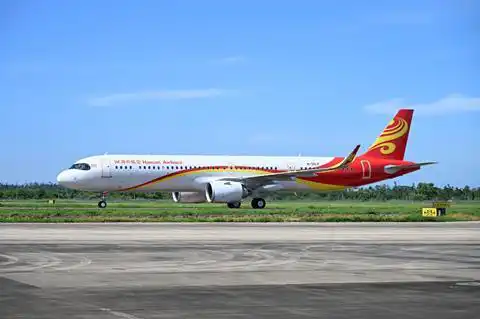
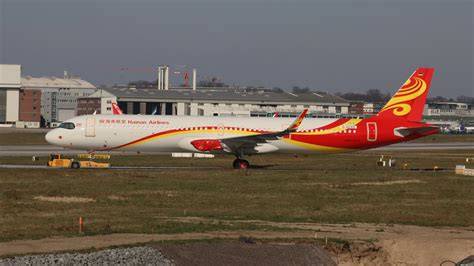
Hainan Airlines has taken a bold step toward the future of commercial aviation by officially incorporating the Airbus A321neo into its expanding fleet. With the arrival of its first A321neo at Haikou Meilan International Airport on June 19, 2025, Hainan Airlines joins a growing list of global and Chinese carriers prioritizing fuel efficiency, sustainability, and fleet modernization. The aircraft, registered as B-32LY, arrived directly from Airbus’ Hamburg facility, signifying a strategic milestone in the airline’s long-term operational transformation.
The addition of the A321neo comes at a time when Hainan Airlines is rapidly scaling up capacity to match surging post-pandemic travel demand. As air travel rebounds across Asia and beyond, this move is not just about acquiring new aircraft — it’s about setting the tone for a sustainable, agile, and globally competitive future.
A Strategic Leap Toward Fleet Modernization
The Airbus A321neo isn’t merely a new aircraft model in Hainan Airlines’ lineup. It represents a strategic transformation. This latest fleet addition joins an established ensemble of 27 Airbus A330s and eight A320neos, allowing the airline to diversify and optimize its route network with greater flexibility.
The A321neo is a member of the globally celebrated A320 family but brings several advanced improvements:
- 15–20% greater fuel efficiency than the A321ceo, achieved through its next-generation CFM LEAP-1A engines and aerodynamic enhancements.
- Significantly reduced CO₂ and NOx emissions, aligning with ICAO’s CORSIA environmental targets.
- Up to 500 nautical miles more range, making it suitable for both high-density domestic routes and medium-haul international flights.
- Lower noise footprint, ensuring compliance with the latest international noise abatement regulations.
These capabilities are central to Hainan Airlines’ commitment to environmental responsibility and long-term profitability.
Meeting Surging Demand During the Travel Boom
The timing of the A321neo’s induction couldn’t be more strategic. As the summer of 2025 approaches, air travel demand is expected to skyrocket — especially in the Asia-Pacific region where China’s domestic tourism and outbound travel are showing exponential recovery. Hainan Airlines is preparing to operate over 500 domestic flights and 67 international services, and the A321neo will serve as a cornerstone aircraft in meeting this seasonal peak.
While the specific route allocations for the A321neo remain undisclosed, insiders note that its enhanced range and efficiency make it an ideal candidate for dense coastal city pairs like Haikou–Shanghai, Beijing–Shenzhen, and emerging Southeast Asian routes such as Bangkok, Manila, and Kuala Lumpur.
Enhancing Passenger Experience and Operational Flexibility
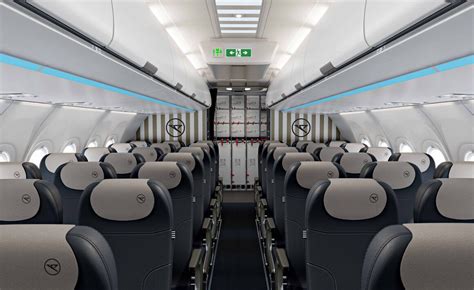
Beyond environmental and economic advantages, the A321neo also delivers a significantly upgraded cabin experience. Passengers flying aboard the A321neo can expect:
- Quieter cabins, thanks to engine and cabin insulation improvements.
- Wider seats and aisle space, depending on the airline’s interior configuration.
- Advanced HEPA filtration systems, offering superior air quality during flight.
- Enhanced in-flight entertainment and connectivity systems, part of Airbus’ Airspace cabin concept.
Hainan Airlines’ dedication to customer experience is well known, and the introduction of the A321neo reinforces this focus by offering passengers a smoother, quieter, and more eco-conscious journey.
Sustainability at the Core of Fleet Strategy
One of the most significant outcomes of this fleet upgrade is the alignment with global sustainability goals. The aviation sector is under increasing pressure to reduce its carbon footprint, and Chinese carriers are being encouraged by both national and international agencies to adopt greener technologies. The A321neo fits squarely into this narrative.
The aircraft reduces CO₂ emissions by up to 5,000 tons per aircraft annually compared to older models. In combination with optimized flight planning, lightweight cabin materials, and ongoing investments in sustainable aviation fuel (SAF) development, Hainan Airlines is building an environmentally progressive profile in a competitive aviation landscape.
Furthermore, Airbus’ commitment to eventual zero-emission commercial flight programs gives operators like Hainan Airlines a technological partner with long-term environmental alignment. In this sense, choosing the A321neo is not just a present-day decision — it’s a forward-looking alliance.
Competitive Edge in an Evolving Market
China’s airline industry is currently undergoing a complex transformation as it navigates increased demand, fluctuating fuel prices, and rising competition from low-cost and regional carriers. Hainan Airlines’ adoption of the A321neo comes at a moment when strategic fleet choices could define market leadership for the next decade.
While state-owned giants like China Southern and Air China continue to invest heavily in wide-body expansion, Hainan’s focus on modern narrow-body jets like the A321neo offers a distinct tactical advantage. The aircraft’s lower trip cost, higher seating capacity, and extended range make it ideal for the ‘thick and thin’ route model — serving both trunk routes and thinner, underserved destinations with economic efficiency.
Additionally, the use of newer aircraft enables Hainan Airlines to potentially avoid regulatory challenges and penalties related to older aircraft emissions, particularly in airports that are adopting stricter sustainability guidelines.
Integration Within a Hybrid Fleet Model
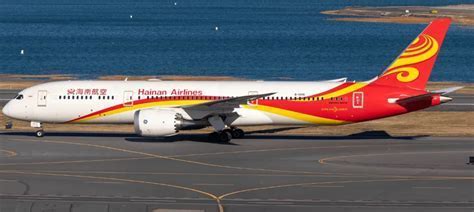
Hainan Airlines’ existing fleet comprises a balanced mix of wide- and narrow-body aircraft. With A330-200 and A330-300s serving long-haul and high-density regional routes, and A320neos operating short-haul flights, the A321neo slots in perfectly as the bridge aircraft.
This hybrid fleet model offers the flexibility to adjust capacity according to demand, route profitability, and fuel efficiency. By integrating the A321neo, Hainan Airlines can:
- Replace older A321ceo aircraft to reduce maintenance and fuel costs.
- Launch new regional routes that were previously cost-prohibitive.
- Increase frequency on lucrative mid-range routes.
In effect, the A321neo allows for a modular approach to network expansion, ensuring that each route gets the right aircraft with the right cost structure.
Industry Implications and Market Outlook
The induction of the A321neo by Hainan Airlines underscores a broader shift within Chinese civil aviation. As the nation accelerates toward carbon neutrality by 2060, and with the Civil Aviation Administration of China (CAAC) pushing for green aviation standards, fleet modernization is no longer optional — it’s essential.
Moreover, as bilateral agreements between China and ASEAN nations expand and international slots become available again, carriers with modern fleets will hold a clear advantage in securing prime routes and partnerships. The A321neo’s compatibility with various international standards gives Hainan Airlines added leverage in code-share discussions and alliance alignments.
Conclusion: A Defining Moment in Hainan Airlines’ Evolution
The arrival of the Airbus A321neo at Haikou is more than a routine fleet update — it is a defining chapter in Hainan Airlines’ evolution. By embracing one of the most advanced and sustainable narrow-body aircraft in the world, the airline is solidifying its role as a forward-thinking, passenger-centric, and environmentally responsible operator.
As passenger expectations rise and environmental standards tighten, airlines that adapt through technological investment and strategic foresight will shape the future of air travel. Hainan Airlines’ A321neo integration is a testament to that mindset — a high-efficiency, high-impact move that sets a benchmark for others in the region to follow.