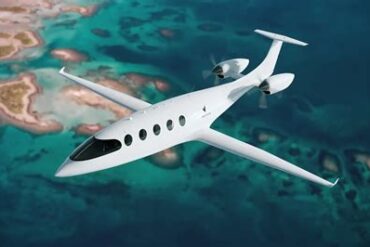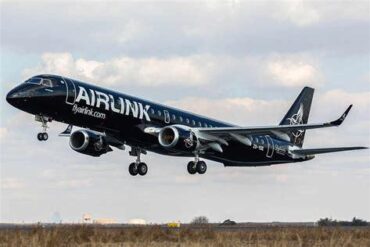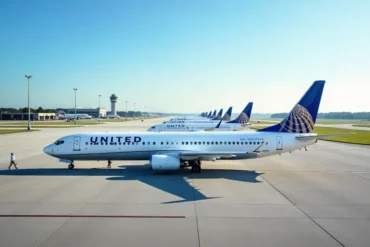
Commercial aviation has long favored function over form, producing aircraft that are highly optimized yet visually predictable. For decades, passenger jets have followed a familiar tube-and-wing blueprint: a cylindrical fuselage, swept wings, tail stabilizers, and engines mounted beneath or beside the wings. This architecture has delivered remarkable safety, efficiency, and reliability, but it has also created a fleet of aircraft that look strikingly similar across manufacturers and generations.
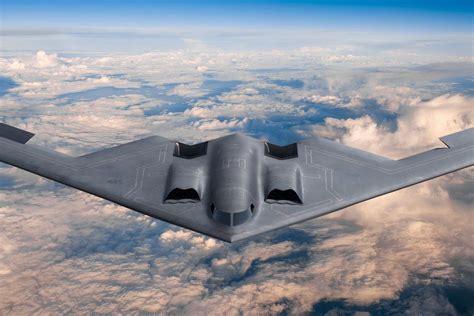
That visual uniformity may soon give way to a radical transformation. According to Airbus CEO Guillaume Faury, commercial jets could one day abandon the traditional fuselage-and-wings layout in favor of a blended wing body (BWB) design — a configuration that merges the passenger cabin directly into a wide, lifting wing. This concept echoes the iconic silhouette of the B-2 Spirit stealth bomber, a flying wing aircraft optimized for aerodynamics, fuel efficiency, and low radar visibility. While the military embraced this form decades ago, commercial aviation is only now approaching the technological maturity needed to consider it viable.
The idea may sound futuristic, even improbable, yet the engineering logic behind blended wing aircraft is compelling. At its core, flight efficiency depends on maximizing lift while minimizing weight and drag. In traditional airplanes, the fuselage adds mass and aerodynamic resistance without contributing lift. The wings must therefore generate extra force to compensate, increasing fuel burn and structural stress. A blended wing body changes this equation by allowing nearly the entire aircraft surface to produce lift, distributing aerodynamic loads more evenly and reducing wasted energy.
Historically, the B-2 bomber adopted its flying wing design for both stealth and performance. Its smooth, continuous surface minimizes radar reflections, making detection more difficult. For military applications, this characteristic provides a tactical advantage. For commercial aviation, stealth is not a priority, but the aerodynamic benefits remain highly relevant. A smoother, integrated structure reduces drag, improves airflow stability, and allows for lower fuel consumption per passenger mile, a critical metric as airlines face rising fuel costs and mounting environmental pressures.
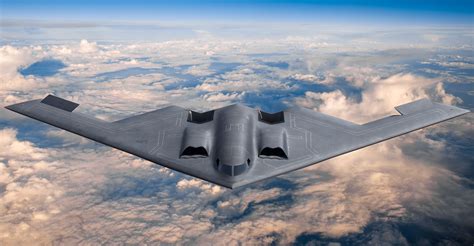
Research from aerospace firms such as Northrop Grumman and JetZero suggests that blended wing aircraft could reduce drag by up to 30% and achieve fuel savings between 30% and 50% compared to conventional tube-and-wing models of similar size. Those savings translate directly into lower operating costs, reduced carbon emissions, and improved profitability — outcomes that appeal strongly to both airlines and regulators.
Beyond efficiency, the blended wing concept offers substantial capacity advantages. Because the cabin can extend across a wide internal volume rather than being constrained to a narrow tube, designers gain flexibility in seating layouts, cargo storage, and passenger amenities. Wider cabins could enable more spacious seating, expanded overhead storage, lounge-style areas, or modular cabin zones tailored for long-haul comfort. Airlines may also be able to transport more freight without sacrificing passenger capacity, creating new revenue opportunities.
Yet, despite its promise, the transition to blended wing commercial aircraft faces significant technical, economic, and psychological barriers. One of the most immediate concerns is passenger comfort and perception. Traditional windows — a cherished feature for many travelers — become harder to integrate into a wide, continuous wing. Airbus leadership has acknowledged that early blended wing designs may limit or eliminate conventional windows, potentially replacing them with digital displays or strategically placed panoramic sections. While some travelers may embrace immersive screen technology, others may find the absence of a physical window unsettling.
Another challenge lies in cabin pressurization. Conventional aircraft rely on a cylindrical fuselage, a shape that naturally withstands internal pressure. A blended wing structure lacks this simple geometry, requiring advanced materials, reinforcement techniques, and structural engineering to maintain safety standards. Björn Nagel of the German Aerospace Center has noted that creating a pressurized environment inside a wide, flattened structure introduces complex stress distribution issues that engineers must solve before large-scale commercial deployment becomes feasible.
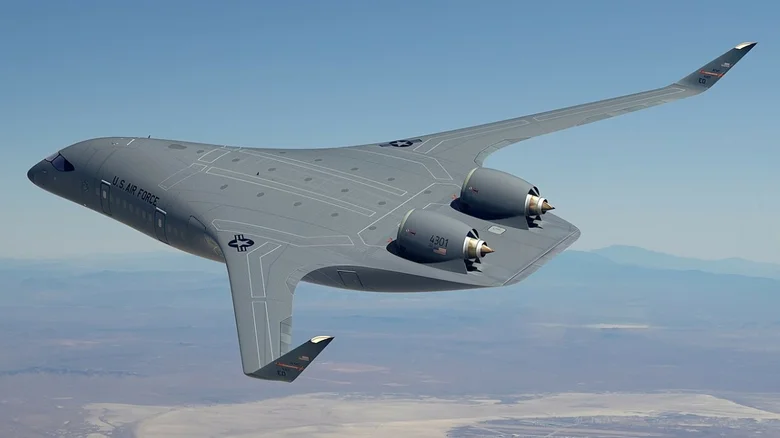
Flight control and stability also demand innovation. Flying wing aircraft historically struggled with high-speed maneuverability and supersonic performance due to the absence of a traditional tail. While commercial jets do not require supersonic speed, they must maintain exceptional stability across diverse flight conditions, including turbulence, crosswinds, and high-altitude cruising. Modern fly-by-wire systems, AI-assisted flight controls, and adaptive aerodynamics may provide the technological foundation needed to overcome these limitations.
The economic calculus further complicates adoption. Airlines invest billions in aircraft fleets, pilot training, maintenance infrastructure, and airport compatibility. A radically different aircraft design would require new certification standards, specialized maintenance protocols, modified airport gates, and updated emergency evacuation procedures. The transition would not happen overnight — it would likely unfold over decades through incremental fleet introductions and limited early-adopter routes.
Still, the market incentives driving innovation are stronger than ever. Environmental regulations are tightening worldwide, and aviation remains under pressure to reduce its carbon footprint. Blended wing aircraft offer a path toward lower emissions without sacrificing range or capacity, complementing advancements in sustainable aviation fuel, hydrogen propulsion, and electric hybrid systems. Together, these technologies could redefine what “eco-friendly flying” means in the coming decades.
There is also a broader cultural dimension to consider. For much of the jet age, airplane design has symbolized technological progress, from the sleek lines of the Concorde to the imposing presence of the Boeing 747. A shift toward B-2-inspired silhouettes would not merely change aerodynamics — it would reshape the visual identity of commercial aviation. Airports could one day host fleets of futuristic flying wings, transforming the skyline into something closer to science fiction than twentieth-century engineering.
Importantly, Airbus is not alone in exploring this future. NASA’s X-48 experimental program, JetZero’s military-civil hybrid concepts, and multiple university research initiatives are actively testing blended wing prototypes. These efforts aim to validate real-world performance metrics, refine manufacturing methods, and establish safety benchmarks that regulators can trust.
If these programs succeed, the next generation of passenger jets may deliver quieter cabins, smoother rides, and unprecedented efficiency. Reduced drag and optimized lift distribution can lead to lower noise footprints, benefiting communities near airports. Improved structural integration may also enhance safety by distributing impact forces more evenly during extreme scenarios.
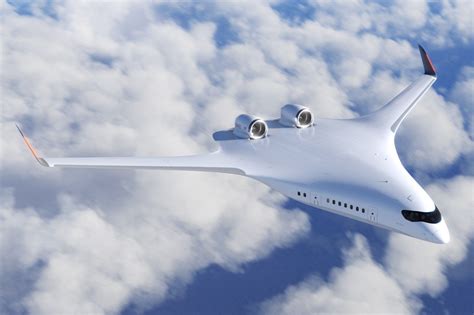
The transformation will not be instant, nor guaranteed. Aviation history is filled with bold concepts that never reached mass adoption. However, the convergence of environmental urgency, economic incentives, and technological maturity makes this moment different. For the first time, a flying-wing-inspired commercial jet appears not only possible but strategically attractive.
In the long arc of aviation evolution, today’s tube-and-wing jets may come to resemble transitional artifacts — efficient for their time, yet ultimately surpassed by more integrated, aerodynamic, and sustainable designs. If Airbus’s vision unfolds as predicted, the skies of the mid-twenty-first century could be filled with aircraft that look less like flying pencils and more like elegant, sweeping wings, quietly redefining how humanity travels through the air.