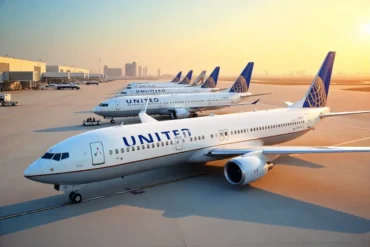
United Airlines has taken a bold step in its fleet renewal strategy by securing 10 brand-new Boeing 737 MAX 9 aircraft through a strategic purchase-leaseback agreement with Dubai Aerospace Enterprise (DAE). This landmark deal underscores United’s determination to lead the U.S. aviation sector in both technological advancement and environmental responsibility, while solidifying DAE’s influence in the North American market.
Strategic Partnership to Reinforce Financial and Operational Agility
The collaboration with Dubai Aerospace Enterprise marks a pivotal milestone for United Airlines as it continues to realign its fleet with modern, fuel-efficient aircraft. By engaging in a purchase-leaseback arrangement, United is able to free up capital tied to asset ownership while still retaining full operational use of the aircraft. This financial strategy grants the airline significant liquidity and agility, enabling faster response to evolving market dynamics and passenger demand.
DAE’s involvement is far from incidental. As one of the world’s largest aircraft lessors, DAE is reinforcing its global presence—particularly in the North American region—by expanding its footprint through partnerships with top-tier carriers like United. This agreement not only strengthens DAE’s portfolio but positions it as a critical enabler of next-generation fleet expansion for major international airlines.
Boeing 737 MAX 9: A Technological and Economic Powerhouse
At the heart of this partnership lies the Boeing 737 MAX 9, a narrow-body aircraft that delivers long-range performance, lower fuel consumption, and increased passenger capacity. With delivery of the 10 aircraft scheduled between August 2025 and February 2026, United is poised to bolster its domestic and international route network with enhanced efficiency and reduced emissions.
The MAX 9 is powered by CFM International LEAP-1B engines, which are designed to deliver a 14% reduction in fuel burn compared to previous models. The aircraft can seat approximately 178 to 193 passengers and has a range of over 3,500 nautical miles, making it versatile enough for both transcontinental U.S. flights and high-density regional services.
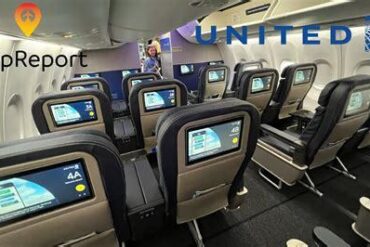
Passenger comfort is another cornerstone of the MAX 9’s value proposition. With features like larger overhead bins, quieter cabins, and advanced Boeing Sky Interior lighting, the aircraft enhances customer satisfaction while aligning with United’s push for superior inflight experiences.
Reinforcing United’s Long-Term Sustainability Commitment
This new acquisition plays directly into United Airlines’ broader mission to transform into the world’s most environmentally conscious airline. By integrating more fuel-efficient aircraft like the Boeing 737 MAX 9 into its fleet, United is making measurable progress toward its goal of net-zero greenhouse gas emissions by 2050.
The efficiency gains are not merely theoretical. Real-world data already shows that the MAX family delivers significant reductions in carbon emissions, noise pollution, and maintenance costs. For United, each new MAX 9 introduced into service translates into meaningful environmental and economic benefits, ensuring competitive edge in an era of increasing regulatory scrutiny and ecological awareness.
DAE’s Aggressive Expansion: A Power Move in the Leasing Market
Dubai Aerospace Enterprise is equally poised to benefit from this deal, reinforcing its status as a dominant force in the global leasing market. Earlier this year, DAE finalized the acquisition of Nordic Aviation Capital (NAC) in a $2 billion strategic transaction, pushing its managed fleet to nearly 750 aircraft. This move significantly enhances DAE’s ability to meet growing demand from commercial airlines seeking state-of-the-art aircraft without upfront capital expenditures.
DAE’s diversified portfolio includes next-generation aircraft from Boeing, Airbus, and ATR, allowing it to serve the varying operational profiles and regional focuses of its airline clients. With its expanding leasing inventory and proven financial strength, DAE has positioned itself as the go-to partner for airlines undergoing digital and sustainability-driven transformation.
Enhancing United’s Global Competitiveness
The strategic acquisition of 10 Boeing 737 MAX 9 aircraft is far more than a routine fleet update—it represents a strategic recalibration of United’s operational framework and long-term market outlook. As global travel rebounds post-pandemic and demand intensifies for modern, flexible, and eco-friendly air travel, United’s investment in the MAX 9 provides it with the tools needed to scale intelligently and responsibly.
The aircraft’s flexibility makes it ideal for high-demand domestic routes and burgeoning international destinations. This versatility allows United to reconfigure its route map more dynamically, increase frequencies on profitable legs, and introduce new service options tailored to changing market conditions.
Moreover, the partnership with DAE offers more than just hardware. It opens pathways to future collaborations, including access to DAE’s growing inventory of widebody jets such as the Boeing 787-10, which may become increasingly vital as United scales up premium international service.
Financial Strategy Meets Operational Efficiency
One of the more nuanced advantages of the purchase-leaseback deal lies in its financial architecture. By avoiding direct capital outlay while gaining immediate operational capacity, United can redirect financial resources toward other growth-oriented priorities—such as digital innovation, loyalty program expansion, or workforce development.
These strategic maneuvers make United more agile and resilient in an industry often plagued by cyclical demand and razor-thin margins. It is an approach that harmonizes fiscal discipline with visionary planning, ensuring that the airline remains a dominant player in the increasingly competitive commercial aviation space.
The Broader Implications for Global Aviation
This deal between United and DAE exemplifies an accelerating trend in the aviation industry: the deepening of ties between airlines and lessors to facilitate rapid adaptation to post-pandemic challenges and opportunities. Leasing allows carriers to scale quickly, integrate the latest technologies, and maintain fleet uniformity—all without exposing themselves to heavy capital risk.
The relationship also highlights how leasing companies are no longer passive stakeholders but active collaborators in airline strategies. Through flexible financial instruments and customized fleet solutions, companies like DAE are now critical players in shaping the future of aviation.
Looking Ahead: A Foundation for Future Success
With this new lease agreement, United Airlines not only enhances its fleet but also lays the groundwork for sustainable, data-driven growth. The Boeing 737 MAX 9 aircraft will serve as workhorses for both current demand and future expansion, offering an optimal balance of performance, passenger satisfaction, and environmental responsibility.
Meanwhile, DAE continues to position itself at the forefront of the aircraft leasing industry. By aligning with forward-thinking carriers like United, DAE strengthens its role as a global solution provider, well-equipped to navigate the complex demands of modern aviation.
In a world where agility, sustainability, and innovation define success, this partnership sets a new benchmark. United’s strategic foresight and DAE’s leasing prowess have converged in a deal that is far more than transactional—it is transformational.