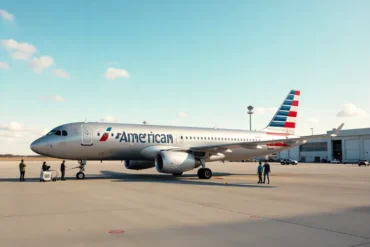
American Airlines is preparing to unveil its summer 2027 international network on Thursday, August 27, just days after United Airlines announced one of the largest international expansions in its history. While United’s reveal emphasized new destinations and aggressive global growth, American appears to be taking a more measured approach. The carrier has turned its upcoming announcement into a puzzle, posting four images styled as fictional restaurant menus and challenging travelers to decode the hidden clues.
The unusual teaser contains a carefully constructed mixture of airport codes, numbers, historical references, wordplay and deliberate “red herrings.” When the clues are examined together, they point toward five potential international routes: Philadelphia to Vienna, Reykjavík and Porto; Charlotte to Barcelona; and New York-JFK to Brussels. Although American has not yet officially confirmed the complete group, the clues are unusually specific and appear designed to reveal the destinations before the scheduled announcement.
More importantly, the puzzle may reveal something beyond American’s destination plans. Four of the five predicted routes could potentially be operated by the Airbus A321XLR, the long-range narrowbody aircraft that is reshaping how airlines evaluate thinner transatlantic markets. That connection would fit American’s growing emphasis on Philadelphia International Airport as an international gateway and could provide an important clue about how the airline intends to deploy its expanding XLR fleet.
American Airlines’ Restaurant Menu Is Actually a Route Puzzle
The strongest collection of clues appears to center on Philadelphia. One fictional menu item describes a hamburger containing 321 individual pickled red herring strips, accompanied by a “UIO bun” and an optional 1,776 sesame seeds priced at $2.15. At first glance, the clues seem to point toward Hamburg, Quito and the Airbus A321. In reality, American appears to be encouraging readers to ignore those obvious distractions.
The number 1,776 is strongly associated with Philadelphia, while 215 is one of the city’s telephone area codes. The menu also explicitly labels the ingredients as “red herrings,” effectively warning readers not to take every apparent airport-code clue literally. The mysterious 321 nevertheless remains relevant because it can point toward the Airbus A321 family, creating a second layer to the puzzle.
Once Philadelphia is identified as the origin, three destination clues become considerably easier to interpret. A Caesar Salad containing the bizarre sequence “YLHQQD” can be decoded by shifting each letter three positions backward through the alphabet. The result is VIENNA, while the $23 price corresponds to Vienna’s 23 municipal districts. Together, those clues provide remarkably strong evidence for a Philadelphia-Vienna service.
The Reykjavík clue is equally creative. A smoked fish soup costs $21.64, which can be rearranged into approximate coordinates of 64 degrees north and 21 degrees west, placing the clue around Iceland. The reference to smoked fish provides another layer of wordplay because Reykjavík’s name is associated with “smoky bay.” With Philadelphia already established as the origin, the evidence points toward Philadelphia-Reykjavík, most likely serving Keflavík International Airport.
The Porto clue is perhaps the easiest of the three. The initials of “Pristine Octopus Ravioli with Truffle Oreganata” spell PORTO. Unlike the other predictions, however, Porto is not genuinely a mystery. American has already announced Philadelphia-Porto for 2027, making the menu clue a confirmation rather than a brand-new revelation.
The numerical evidence strengthens the entire Philadelphia theory. The published distances from Philadelphia to Vienna, Reykjavík and Porto total 10,427 miles. That number exactly matches the otherwise unexplained $104.27 price attached to a wine flight. A coincidence is possible, but the accumulation of matching clues makes it increasingly difficult to dismiss the menu as simple promotional wordplay.
Charlotte-Barcelona and JFK-Brussels Complete the Picture
The two remaining predictions are less certain but still have compelling evidence behind them. One menu item appears to hide CLT, the airport code for Charlotte Douglas International Airport, through the words Citrus Lime Thyme. The accompanying prawns cost $18.82 and are described as following a “sacred family recipe” passed down for 144 years.
Those numbers point toward Barcelona’s Sagrada Família, whose construction began in 1882. In 2026, that places the famous basilica 144 years into its construction history. The combination of CLT, 1882, “sacred family” and 144 years therefore creates a strong case for a Charlotte-Barcelona route.
Such a service would also represent a restoration rather than a completely new market. American previously operated Charlotte-Barcelona before eliminating the route during its international network reset in 2020. Restoring the service would therefore allow American to rebuild an established market rather than assume the risk of developing an entirely unfamiliar destination.
The final predicted route is New York-JFK to Brussels. A New York Strip served with fries and mayonnaise is a particularly Belgian combination, while the menu price of $165 appears to reference Brussels’ famous Atomium. The landmark represents an iron crystal magnified 165 billion times, providing an unusually precise numerical clue.
American has also operated JFK-Brussels in the past, making this another possible restoration. Brussels Airlines currently provides competition on the route, operating daily during the summer and up to five times weekly in winter. If American restores the service, it would therefore be returning to a market where another established carrier already has a strong presence.
Not Every American Airlines Menu Clue Means a New Route
One reason the five-route theory makes sense is that American’s teaser contains clues that appear to describe existing services rather than future announcements. Some menu items reference markets such as Miami-Milan, Nice and London, all of which are already connected to American’s network.
Another item, “Magnificent Miso,” appears to reference Chicago and Japan. That likely relates to American’s previously announced return of Chicago O’Hare-Tokyo Narita service in 2027. Treating every dish as a separate new route would quickly produce an unrealistic number of destinations.
The distinction is important because American already operates an extensive European network. The carrier is scheduled to have its largest-ever European summer schedule in 2026, including new Philadelphia services to Budapest and Prague. Against that backdrop, the puzzle seems less like a blueprint for a massive expansion and more like a carefully selected collection of additions and restorations.
That makes Vienna particularly significant. If the decoding proves correct, Philadelphia-Vienna would be the clearest genuinely new international route among the five predictions. Porto has already been announced, Reykjavík would restore a previous market, Barcelona would revive a discontinued Charlotte service, and Brussels would resurrect an older JFK link.
The Airbus A321XLR May Be the Bigger Story
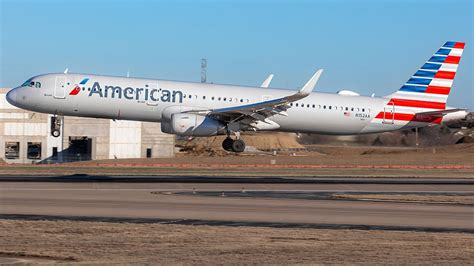
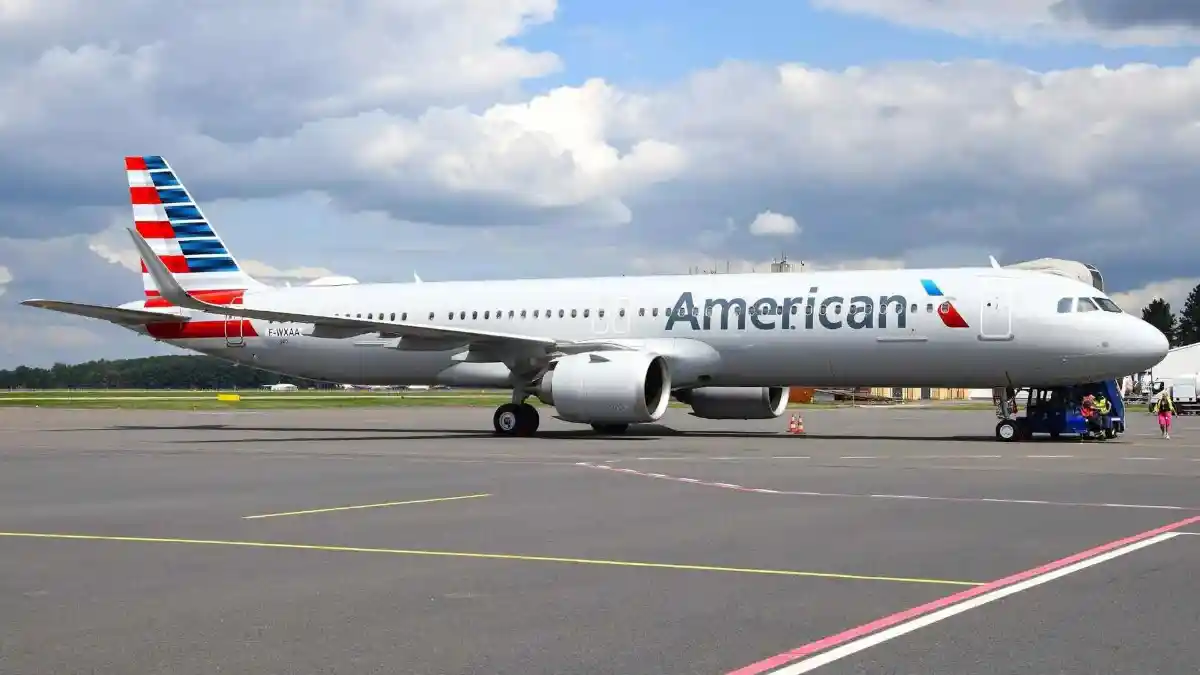
The destinations are interesting, but the aircraft strategy could ultimately be more important. American’s growing Airbus A321XLR fleet gives the airline an opportunity to serve international markets that may not generate enough demand for a widebody aircraft but can still support a long-range narrowbody.
Philadelphia-Porto is already expected to use the 155-seat Airbus A321XLR, making it a clear demonstration of that strategy. Vienna and Brussels look like similarly logical candidates. Reykjavík could be operated by either an A321XLR or American’s larger 196-seat A321neo, while Charlotte-Barcelona appears much more likely to receive a Boeing 777-200ER.
The A321XLR changes the economics of international network planning because airlines no longer have to make the same all-or-nothing decision between a narrowbody with insufficient range and a widebody with too much capacity. American can instead consider thinner transatlantic routes on an aircraft specifically designed to make those markets viable.
American has already demonstrated this approach with New York-JFK to Edinburgh, its first international A321XLR service. The aircraft is particularly useful when demand is strong enough for nonstop service but not necessarily strong enough to justify a large widebody throughout the season.
Porto is an especially clear example. American Airlines Senior Vice President of Network Planning Brian Znotins has described Porto as exactly the kind of market the A321XLR enables the carrier to serve because a larger aircraft could make the route considerably harder to justify.
Reykjavík deserves more caution, however. The mysterious “321” clue naturally points toward an A321-family aircraft, but the standard A321neo remains a credible option. The Philadelphia-Iceland sector is only around 2,677 miles, far below the XLR’s maximum range. Iceland also has substantial leisure demand, potentially making the additional capacity of the 196-seat A321neo attractive.
American had previously planned Philadelphia-Keflavík before the pandemic and at one point loaded the route with the standard A321neo. That history makes the conventional A321neo prediction more than theoretical.
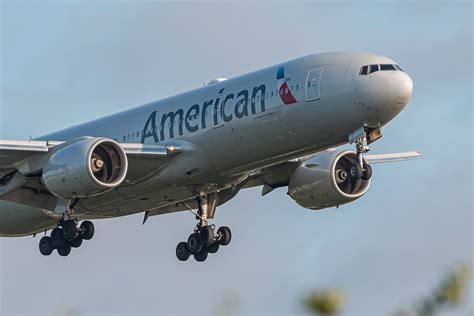
Charlotte-Barcelona is the clearest aircraft outlier. American relies heavily on Boeing 777-200ER aircraft for Charlotte’s transatlantic network, and the airline also used the 777-200ER for the newer Charlotte-Athens service. Unless American decides to establish a much larger XLR presence at Charlotte, the widebody remains the more likely aircraft for a restored Barcelona route.
American’s Strategy Looks More Conservative Than United’s
The timing of American’s announcement makes the comparison with United Airlines unavoidable. United revealed its international expansion only two days earlier, announcing 10 new international cities, three additional new routes and the resumption of San Francisco-Tel Aviv service.
United’s strategy is notably aggressive. Eight of its ten new international cities will not have nonstop service from another U.S. airline, while Luxembourg, Toulouse, Ibiza, Valencia and Marseille are expected to benefit from the airline’s incoming A321XLR fleet. It represents the largest international expansion in United’s history and demonstrates how the XLR can be used to pursue destinations that previously looked difficult to serve profitably.
American’s apparent strategy is almost the reverse. Rather than using the XLR primarily to discover unfamiliar markets, American appears poised to use it to reduce the risk of markets it already understands. Porto is an established announcement, Reykjavík and Brussels have historical precedent, and Barcelona would restore a previously operated route.
That is not necessarily a weakness. Philadelphia offers substantial domestic connecting traffic, while Charlotte provides one of the strongest connecting networks in the United States. Those hubs give American a foundation from which it can rebuild international markets that disappeared after the pandemic and the retirement of older aircraft such as the Boeing 757 and Airbus A330.
The contrast with United is nevertheless revealing. Both airlines are receiving access to essentially the same technological solution, yet they are using it to solve different network problems. United is using the A321XLR to expand the map; American appears ready to use it to rebuild and optimize the map it already knows.
What American’s 2027 Reveal Could Mean
If the restaurant puzzle accurately predicts Thursday’s announcement, American’s summer 2027 international expansion will be meaningful without being revolutionary. Philadelphia would emerge as the central beneficiary, potentially gaining Vienna, Reykjavík and Porto, while Charlotte and New York-JFK would regain important European connections.
The larger message may be about network discipline rather than expansion for expansion’s sake. After years of pandemic-driven restructuring, American can use the A321XLR to test or restore international markets without committing the capacity and operating costs associated with a widebody. That provides a more flexible path toward rebuilding its transatlantic footprint.
The puzzle itself is also a clever reflection of that strategy. Beneath the playful food references and deliberately misleading airport codes is a network plan built around carefully selected opportunities. If the five predictions prove correct, the biggest surprise may not be where American flies next, but how deliberately the airline is choosing to get there.
For travelers, the potential additions would create more nonstop options between the United States and Europe. For American, they would offer another test of whether the A321XLR can turn previously marginal international markets into sustainable parts of the network. And for the broader industry, the announcement will provide another useful data point in the emerging contest between American and United over how aggressively the new-generation long-range narrowbody should reshape the transatlantic map.