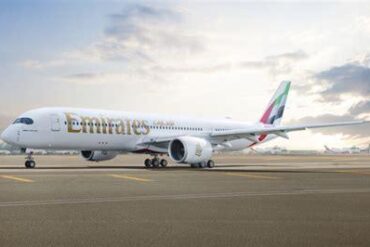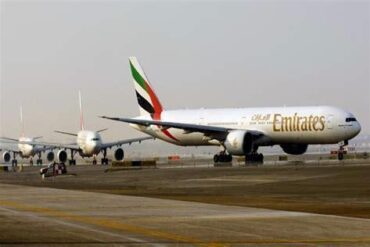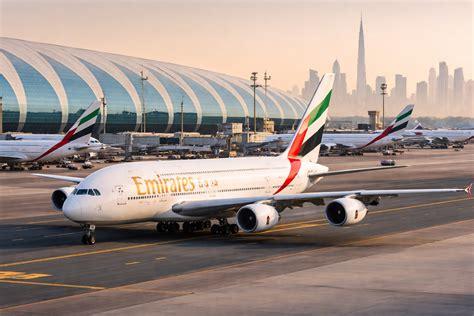
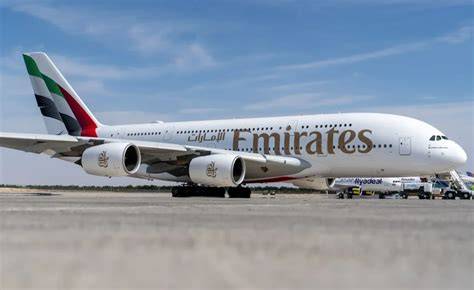
Emirates is temporarily restoring a second daily Airbus A380 between Dubai and Singapore, a move that reveals far more about the airline’s fleet strategy than a simple seasonal capacity increase. From October 1 through October 24, 2026, Emirates will deploy an A380 on EK354/EK355, replacing the Boeing 777-300ER normally assigned to the service. The flight frequency itself is not increasing. Instead, Emirates is putting a much larger aircraft onto one of its existing daily rotations, creating a significant increase in available seats and premium-cabin capacity.
The timing is particularly revealing. Just months earlier, Emirates removed the A380 from 10 destinations, including Copenhagen, Düsseldorf, Frankfurt, Glasgow, London Gatwick, Manchester, Munich, Osaka Kansai, Perth and Washington Dulles. In most cases, the routes did not disappear; the A380 was simply replaced by smaller widebody aircraft. That distinction matters because it shows Emirates is not abandoning those cities. It is reallocating scarce superjumbo capacity toward markets where the economics are currently more compelling.
Singapore now stands out as one of the markets receiving that capacity. The second daily A380 will operate for only 24 days, ending on October 24, immediately before Singapore Airlines is scheduled to resume its Dubai service on October 25. That unusually precise window suggests Emirates is responding to a temporary opportunity rather than making a permanent change to its Singapore schedule. The result is a fascinating snapshot of how the world’s largest A380 operator is managing an aging fleet while waiting for its next generation of aircraft to arrive.
Why Emirates Is Sending a Second A380 to Singapore
The simplest explanation is demand. Singapore is a major international business center, a significant aviation hub and an important connecting market for Emirates. Dubai, meanwhile, gives passengers from Singapore access to a huge network spanning Europe, the Middle East, Africa and beyond. A route with strong local demand and substantial connecting traffic is exactly where a high-capacity aircraft can make sense.
The important point is that Emirates is not adding a second daily A380 frequency. It is upgrading one existing service from a Boeing 777-300ER to an Airbus A380. AeroRoutes’ August schedule update shows EK354 from Dubai to Singapore and EK355 in the opposite direction operating with the A380 from October 1 through October 24, while the other daily flights continue using a mixture of A380 and 777 aircraft.
That gives Emirates a relatively straightforward way to add seats without adding another takeoff and landing at either airport. In a busy hub environment, that can be strategically valuable. An airline does not always need another flight to increase capacity. Sometimes, the smarter move is simply to put its biggest aircraft on a flight that is already operating.
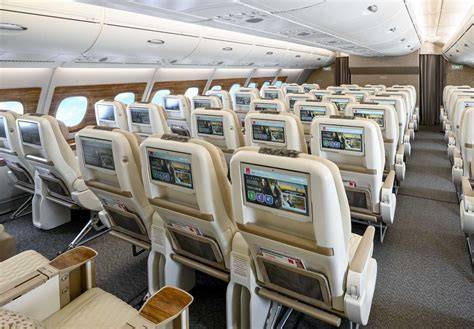
The A380 also brings another advantage: premium capacity. Emirates has configured different A380s in different ways, but its flagship aircraft can offer First Class, Business Class, Premium Economy and Economy depending on the individual configuration. The aircraft therefore does more than add seats at the back. It can provide additional premium inventory for a market where corporate travelers and long-haul connecting passengers are important.
Singapore’s Unusual October Opportunity
The timing of the deployment makes the move even more interesting. Singapore Airlines has temporarily suspended its Dubai operation amid the wider disruption affecting Middle Eastern airspace and is scheduled to return on October 25 using an Airbus A350-900. That creates a temporary period in which Emirates can capture a larger share of nonstop Dubai-Singapore demand.
This does not mean Emirates suddenly has a permanent monopoly on the route. It means the airline has a temporary competitive window. The second A380 allows Emirates to exploit that window without committing another daily flight to the market.
That is an important distinction. Adding a new flight creates a long-term scheduling commitment involving aircraft, crews, airport slots and operating costs. Substituting an A380 for a 777-300ER is much more flexible. Emirates can capture additional demand during a particularly attractive period and then revert to its previous aircraft allocation when market conditions change.
The October 24 end date is especially telling. Singapore Airlines is scheduled to return the following day, meaning Emirates’ temporary A380 deployment almost perfectly overlaps the period of reduced nonstop competition. That kind of precise capacity planning is unlikely to be accidental.
The 10 Cities That Lost Emirates A380 Service
Singapore’s gain becomes more significant when viewed against Emirates’ June network changes. On June 5, schedule data showed the airline removing A380 service from 10 destinations: Copenhagen, Düsseldorf, Frankfurt, Glasgow, London Gatwick, Manchester, Munich, Osaka Kansai, Perth and Washington Dulles.
The aircraft replacements varied by market. Copenhagen, Düsseldorf, Glasgow, Munich, Osaka Kansai, Perth and Washington Dulles generally saw Boeing 777-300ER equipment replace the A380. Frankfurt, London Gatwick and Manchester saw combinations involving the Airbus A350-900 and Boeing 777-300ER.
That pattern demonstrates what Emirates is really doing. It is not necessarily cutting capacity dramatically from those markets. Instead, it is right-sizing aircraft.
An Airbus A380 can carry substantially more passengers than a typical Emirates 777-300ER. Depending on configuration, Emirates A380s can carry roughly 484 to 615 passengers, while its 777-300ER configurations range from approximately 354 to 442 seats. The difference can therefore be enormous when multiplied across daily operations.
Replacing an A380 with a 777 can free a valuable superjumbo for another destination without necessarily destroying the underlying route network. Emirates can continue serving a major European or North American city while using its scarce A380 capacity somewhere with stronger demand or better premium-cabin economics.
This is particularly important because Emirates does not have an unlimited supply of A380s available for deployment.
Why the A380 Has Become More Important to Emirates
The Airbus A380 was supposed to be a declining part of Emirates’ long-term fleet strategy. Airbus ended production of the aircraft in 2021, and airlines around the world have steadily moved toward smaller, more efficient twin-engine widebodies.
Emirates, however, is different.
The airline built its global strategy around the A380 to an extent unmatched by almost any other carrier. It operates the world’s largest A380 fleet, and its Dubai hub was designed in part around moving enormous numbers of passengers through a concentrated network. For Emirates, the superjumbo remains useful because it can carry huge numbers of passengers between slot-constrained airports without requiring additional flight frequencies.
The problem is that many of the aircraft are now aging, while their intended replacements have been delayed.
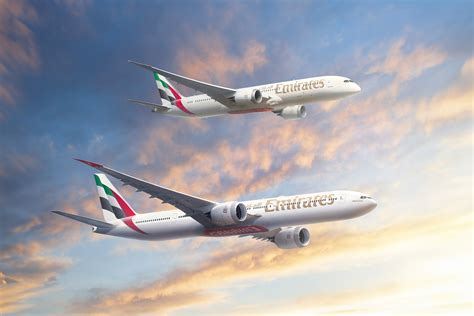
The Boeing 777X was supposed to become a major part of Emirates’ future fleet. Instead, years of development and certification delays have pushed the aircraft far beyond its original delivery schedule. Emirates had expected to receive its first 777X in 2020. By June 2026, President Sir Tim Clark said the airline expected its first aircraft around May or June 2027. Reuters reported that Clark remained confident in that timeline while acknowledging the long delay.
That is a massive change from the original plan.
The longer Emirates waits for the 777X, the longer it must depend on the aircraft already in its fleet. That includes the A380.
Boeing 777X Delays Are Changing Emirates’ Fleet Strategy
The 777X delays have effectively forced Emirates to become more creative with its existing aircraft. Rather than simply waiting for the next-generation aircraft to arrive, the airline has had to extend the usefulness of its current fleet.
That helps explain why A380 deployment decisions have become so fluid.
An A380 may disappear from one destination in June, return in July, and then appear on another route later in the year. Another market may receive an A350 instead, while a 777-300ER takes over a different A380 rotation. The network is increasingly being managed as a large pool of aircraft capacity rather than as a fixed collection of aircraft assignments.
Sir Tim Clark has previously described the airline’s approach as having to “take control of our own destiny.” That philosophy is particularly relevant to the A380. Emirates cannot depend entirely on a future aircraft program arriving exactly when planned, so it has to extract as much commercial value as possible from the fleet it already owns and operates.
The second Singapore A380 is therefore not just about Singapore. It is a consequence of the broader fleet equation.
Emirates Is Spending $5 Billion to Keep Its Widebodies Competitive
There is another major piece of the puzzle: Emirates is not simply keeping older aircraft in service. It is spending heavily to make them feel considerably newer.
The airline’s enormous retrofit program covers 219 aircraft, including 110 Airbus A380s and 109 Boeing 777s, with an investment of approximately $5 billion. By July 2026, Emirates had completed 100 aircraft: 47 A380s and 53 Boeing 777s.
The scale of the project is extraordinary. Emirates says the work has required more than 4.4 million man-hours, with more than 400 engineers and technicians involved. Each aircraft receives a comprehensive cabin refresh rather than a superficial cosmetic update. Premium Economy is being installed, while cabin materials, colors, finishes and passenger-facing features are being modernized.
That investment changes the economics of keeping the A380 around.
A refurbished A380 is not the same proposition as an untouched aircraft approaching the end of its planned life. Emirates can offer passengers a more modern cabin while retaining the fundamental capacity advantage of the superjumbo.
The airline has already completed almost half of the A380 retrofits included in the program. By the end of December 2026, Emirates expects to complete roughly 20 additional aircraft, taking the project well beyond the halfway point of the 219-aircraft program.
That means Emirates is actively preparing a substantial portion of its A380 fleet for continued commercial service.
The Retrofit Program Creates Its Own Capacity Problem
There is an ironic complication. The more Emirates invests in its existing fleet, the more aircraft it must temporarily remove from service.
An A380 retrofit takes significant time and labor. Emirates has described the aircraft as undergoing a complete nose-to-tail transformation, and the project has required highly intensive engineering work at its Dubai facilities. Every aircraft sitting inside a retrofit hangar is an aircraft that cannot fly a scheduled passenger service.
This creates a balancing act.
Emirates needs enough A380s flying to support its network. At the same time, it needs to remove aircraft from service to upgrade them. It also needs to keep enough 777s and A350s available for routes where they make more sense. And, above all, it must ensure that the limited number of available A380s are deployed where their enormous capacity can actually generate revenue.
That is why a second A380 to Singapore should not be viewed in isolation.
It is effectively one move in a much larger aircraft-allocation puzzle.
Why the A380 Makes Sense on Singapore-Dubai
Singapore is particularly well suited to the A380 because the route combines several demand characteristics that favor a high-capacity aircraft.
First, Singapore is a major origin-and-destination market. It generates substantial business and leisure traffic in its own right. Second, Singapore Changi is one of Asia’s most important connecting airports, giving Emirates access to travelers moving beyond Singapore. Third, Dubai functions as Emirates’ enormous connecting hub, allowing passengers to continue toward Europe, Africa, the Middle East and other long-haul markets.
The A380 can therefore fill seats from several sources at once.
A passenger flying from Singapore to Dubai may be traveling for business. Another may be connecting onward to London. Another could be traveling to Africa, while another uses Dubai as a gateway to Europe. The strength of Emirates’ hub model is that the airline does not need every seat to be supported by local Singapore-Dubai demand alone.
The temporary reduction in competition makes the calculation even more attractive.
If Emirates can sell additional seats during a period when Singapore Airlines is absent from the nonstop market, an A380 provides more capacity without requiring an additional daily slot. Once Singapore Airlines returns, Emirates can return the aircraft to another market where its capacity is more valuable.
That flexibility is one of the A380’s remaining strengths.
Emirates’ A380 Network Is Becoming More Dynamic
The most important lesson from the 2026 schedule changes may be that Emirates no longer appears to treat its A380 network as a static collection of routes.
Instead, the aircraft is becoming a strategic capacity tool.
In June, the airline pulled the A380 from 10 cities. Yet the same period saw A380 capacity increases or restorations elsewhere. AeroRoutes reported increases including Auckland and Houston, while other markets saw A380 service return after temporary changes.
This suggests that Emirates is continually evaluating where the aircraft can produce the greatest commercial return.
The A380’s size is simultaneously its biggest advantage and its biggest limitation. When demand is strong, its enormous capacity can allow Emirates to move more passengers with a single flight. When demand is weaker, however, filling hundreds of additional seats becomes a challenge.
That is why a 777-300ER can be a better choice even on an important international route. Emirates can preserve connectivity while reducing the amount of capacity it has to sell.
Singapore’s temporary second A380 is essentially the opposite calculation. Emirates appears to believe the market can absorb the extra seats during a very specific period.
What Happens to Emirates’ A380 Fleet Next?
The future of Emirates’ A380 fleet is therefore unlikely to be defined by one dramatic retirement announcement.
Instead, the aircraft’s future will probably unfold route by route and season by season.
As the 777X finally begins arriving, Emirates should gain a new source of long-haul capacity. But the first delivery will not immediately transform the fleet. What matters is how quickly Boeing can deliver aircraft in meaningful numbers and how rapidly Emirates can introduce them into commercial service.
Until then, the refurbished A380 remains an extremely valuable bridge.
The airline has already demonstrated that it is willing to invest billions in keeping its existing aircraft competitive. It has also shown that it will move A380s around its network when market conditions change. That combination suggests the superjumbo still has an important role to play.
There is also a broader strategic logic. Emirates has spent decades building a business model around high-capacity aircraft and a concentrated Dubai hub. Replacing every A380 quickly with smaller aircraft could require more frequencies, more airport capacity and potentially more aircraft. Keeping a refurbished A380 productive can sometimes be the more practical option.
Singapore’s Second A380 Is a Sign of Something Bigger
The temporary second daily A380 between Dubai and Singapore may look like a minor schedule adjustment, but it illustrates the pressures shaping Emirates in 2026.
The airline is dealing with an aging but still highly valuable A380 fleet, delayed next-generation aircraft, a multibillion-dollar refurbishment program and an operating environment that has been affected by geopolitical disruption. At the same time, demand varies sharply between markets and across individual periods.
The answer has been to become more flexible.
Emirates can downgrade one city from an A380 to a 777-300ER, upgrade another market, return the superjumbo to a destination for a limited period and place refurbished aircraft into markets where premium demand is strongest. Singapore is simply the latest example of that strategy.
The October deployment is especially logical because it coincides with a temporary reduction in nonstop competition and ends immediately before Singapore Airlines is expected to resume its Dubai service. Rather than adding a new flight, Emirates is using a larger aircraft to capture the opportunity.
That is the central point: Singapore is not necessarily replacing the 10 cities that lost their A380s. It is benefiting from the same fleet reshuffle that caused those changes in the first place.
The Superjumbo Still Has a Job to Do
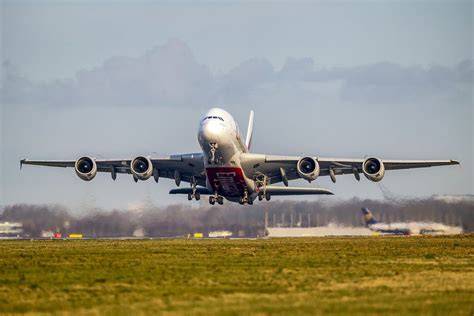
For an aircraft type that Airbus stopped producing five years ago, the A380 remains surprisingly important to Emirates.
The airline’s $5 billion retrofit investment is perhaps the clearest evidence. Emirates would not be spending that kind of money on 110 A380s if it expected the aircraft to disappear from its network immediately. Instead, it is giving a large part of the fleet a substantially refreshed interior while waiting for the next generation of widebody aircraft to arrive.
The Boeing 777X should eventually change the equation. Emirates expects its first example around May or June 2027, according to Tim Clark’s June 2026 comments. But the arrival of the first aircraft will be only the beginning of the transition.
Until deliveries accelerate, Emirates still needs the capacity sitting in its fleet today.
That is why the A380 continues to move around the network. Copenhagen can lose it while Singapore gains it. Washington Dulles can switch to a 777 while another market receives a refurbished superjumbo. These are not necessarily signs that Emirates has abandoned the A380. They are signs that the airline is becoming increasingly selective about where the aircraft can do the most work.
For Singapore, that means another daily A380 this October. For Emirates, it represents something much larger: a carefully timed use of limited superjumbo capacity during a period when the airline has an unusually attractive opportunity.
And as long as the 777X transition remains gradual, Emirates’ iconic double-decker aircraft is likely to keep appearing wherever the numbers make the biggest aircraft in the fleet worth deploying.