All Nippon Airways (ANA) has built a reputation for redefining premium air travel, and its latest innovation pushes the boundaries of what passengers can expect from business class. While many airlines are competing with increasingly advanced seats, privacy doors, and luxury amenities, ANA has chosen a different path: creating more personal space. The airline’s upcoming The Room FX business suite for the Boeing 787-9 aims to become the most spacious business class product in the sky, focusing on width, comfort, and a first-class feeling without placing it in the first-class category.
ANA’s original The Room product, introduced in 2019 on selected Boeing 777-300ER aircraft, already changed expectations for long-haul business class. Instead of maximizing the number of premium seats, ANA sacrificed cabin density to create one of the widest business suites ever installed on a commercial aircraft. The new The Room FX takes that philosophy further, adapting the concept for the smaller Boeing 787-9 while actually becoming wider than the original design.
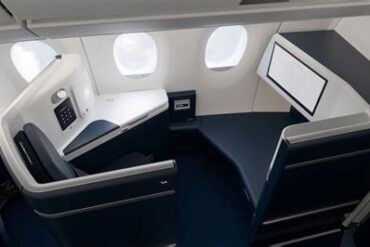
ANA The Room Redefined Business Class Space With A Sofa-Style Design
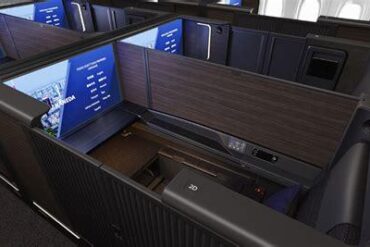
When ANA launched The Room on its Boeing 777-300ER fleet, the airline introduced a business class seat unlike most competitors. Traditional business class products are designed around efficiency, with airlines attempting to fit as many lie-flat seats as possible into a limited cabin area. ANA rejected that approach and created a suite that prioritizes personal space over seat numbers.
The original ANA The Room business class suite measures up to 38 inches (97 cm) wide at its widest point, making it nearly twice as wide as many competing business class seats. The suite includes a 27-inch (69 cm) waist-area width and converts into a bed approximately 72 inches (183 cm) long.
The impressive dimensions are not achieved through futuristic technology alone. Instead, ANA made a strategic decision to reduce seating density. On the Boeing 777-300ER, the airline installs 64 business class suites in a 1-2-1 configuration, ensuring every passenger receives direct aisle access and a fully enclosed personal space.
Many competing airlines use the same cabin area to install significantly more seats. However, ANA gives each passenger a larger share of the aircraft’s width. The result is a business class environment that feels closer to a first-class suite rather than a premium version of a standard airline seat.
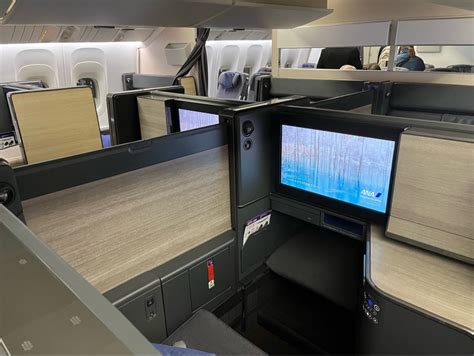
The philosophy behind The Room is simple: passengers spend many hours inside a long-haul aircraft, especially on routes connecting Japan with North America and Europe. Instead of adding unnecessary features, ANA focused on the one element travelers notice immediately — space.
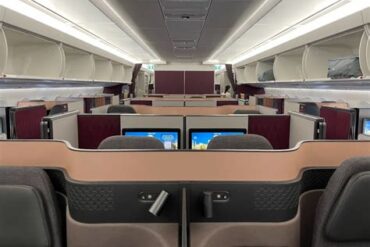
The product has become one of the most highly regarded business class experiences worldwide, frequently competing with other leading premium products such as Qatar Airways’ Qsuite. While technology and service remain important, ANA’s strongest advantage has always been the feeling of openness created by the unusually large suite design.
Why ANA Chose Space Over More Business Class Seats
Airlines typically face a difficult balance between passenger comfort and revenue generation. Every additional premium seat can represent significant income, especially on popular international routes where business class demand remains strong. ANA’s decision to install fewer seats represents a major commercial trade-off.
A typical business class seat transforms from a reclining chair into a flat bed using electric motors, tracks, and mechanical components. Because the sleeping surface usually matches the width of the original seat, increasing width requires more cabin space.
ANA solved this problem by changing the basic approach. Rather than making the seat mechanism dramatically more advanced, the airline simply allocated more aircraft floor area to each passenger.
On many aircraft, the space used by The Room would normally accommodate additional business class seats. ANA instead created larger suites with wider seating surfaces, more storage areas, and greater privacy.
This strategy demonstrates a broader shift in premium aviation. Airlines are increasingly recognizing that luxury is not only about adding technology. For many travelers, luxury means having enough room to move, sleep comfortably, and enjoy personal space without feeling restricted.
The Room became successful because ANA identified an area where business class passengers still wanted improvement. While modern seats offered lie-flat beds and privacy partitions, many remained relatively narrow. ANA addressed that limitation directly.
The Room FX Takes The Concept Further On The Boeing 787-9
In August 2026, ANA plans to introduce The Room FX on its Boeing 787-9 aircraft. The new product maintains the original concept but has been redesigned specifically for the narrower 787 fuselage.
The Boeing 787-9 has a cabin width of approximately 18 feet (5.5 meters), compared with about 19 feet 3 inches (5.9 meters) on the Boeing 777-300ER. Designing a wider suite inside a smaller aircraft required significant engineering changes.
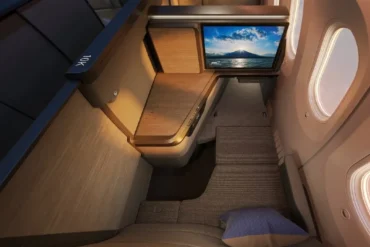
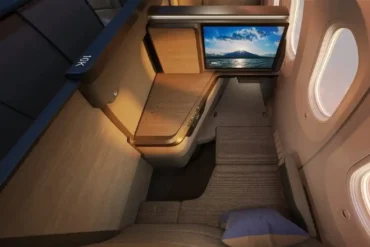
Despite the narrower fuselage, ANA has managed to create a suite measuring up to 41.5 inches (105 cm) at its widest point. That makes The Room FX approximately four inches wider than the original version.
The bed length has also improved. The new suite provides a sleeping surface of approximately 76.5 inches (194 cm), addressing one of the main criticisms of the original design. Taller passengers will benefit from the additional length, making overnight flights more comfortable.
ANA achieved these improvements through a combination of design innovations. The airline worked with Safran Seats and British design company Acumen, the same partners involved in developing the original Room product.
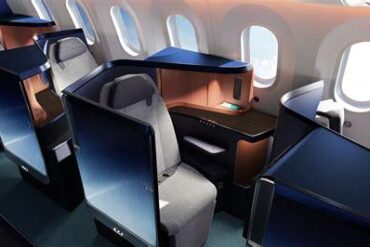
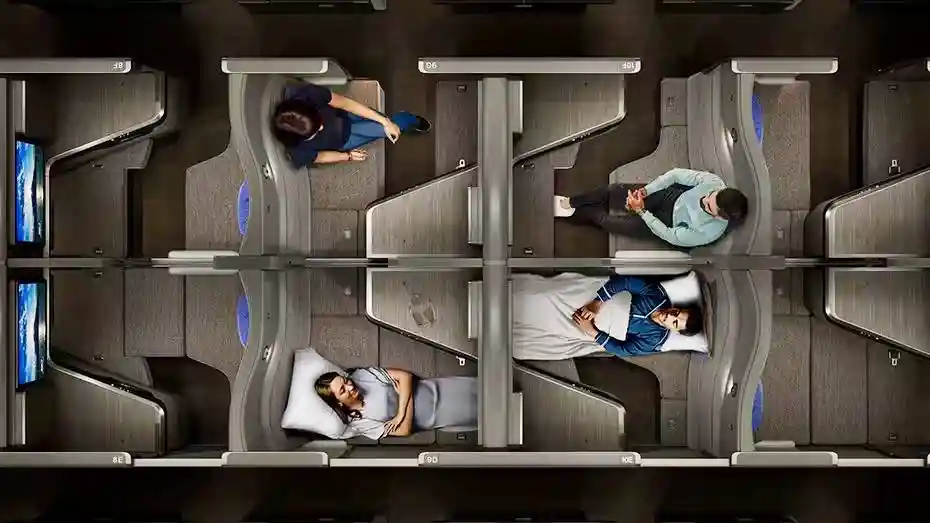
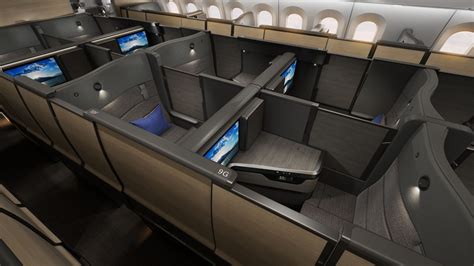
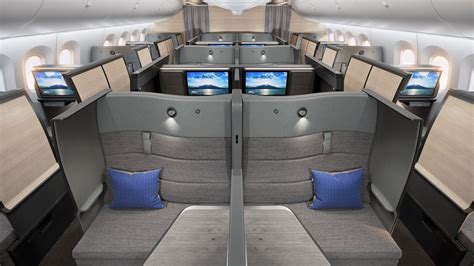
The redesigned suite uses thinner privacy structures, curved seat elements, and an alternating forward and rear-facing layout. These changes allow ANA to maximize available cabin space without increasing aircraft dimensions.
A Different Approach To The Lie-Flat Business Class Seat
One of the biggest changes with The Room FX is the move away from a traditional electric reclining mechanism. Instead of using a conventional seat that transforms into a bed, ANA adopts a sofa-style concept with a fixed reclining position.
When passengers want to sleep, the leg rest moves upward manually to create a flat sleeping surface. Removing complex motors and mechanical tracks reduces weight and frees additional structural space.
This approach is similar to the concept introduced by other innovative premium cabins, including Finnair’s AirLounge seat. However, ANA has adapted the idea specifically for long-haul business class passengers who prioritize space.
The design does create some debate. Some travelers prefer traditional electric recline systems because they allow passengers to adjust their seating position at any moment. Others appreciate the simplicity and larger usable area created by the sofa-style layout.
ANA believes the advantages outweigh the compromises. The airline’s goal is not to create the most technologically complicated seat but to create the most comfortable environment possible within the available aircraft space.
Each Room FX suite will include modern features expected from a premium product, including a 24-inch entertainment screen, Bluetooth audio connectivity, wireless charging, USB-C and USB-A ports, and a full-height privacy door.
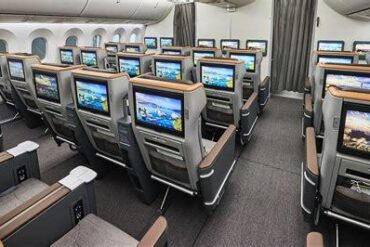
ANA will install 48 business class suites per Boeing 787-9 aircraft in a 1-2-1 configuration. The aircraft will have a total capacity of 206 seats, slightly lower than current configurations because of the redesigned cabin layout.
How ANA The Room FX Stands Against Other Boeing 787 Business Class Products
The Boeing 787 has become one of the most popular aircraft platforms for long-haul international airlines, and several carriers have developed new premium cabins for the aircraft.
United Airlines’ updated Boeing 787-9 Polaris configuration includes 72 premium suites, while American Airlines’ Boeing 787-9 Flagship Suite layout includes 51 business class seats. Riyadh Air’s upcoming 787-9 configuration focuses on a smaller premium cabin with larger suites.
However, ANA’s Room FX separates itself through one key measurement: width.
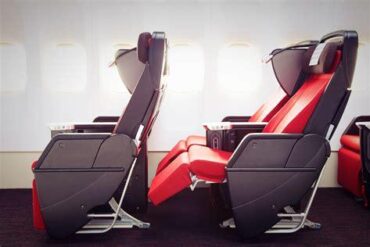
Most modern business class seats offer similar bed lengths, generally between 76 and 78 inches. The difference comes from the amount of personal space available around the passenger.
ANA’s 41.5-inch maximum width gives travelers significantly more room than conventional business class products. The airline uses cabin space that competitors often dedicate to additional seats and transforms it into a larger private environment.
This reflects two different airline strategies. Some carriers prioritize premium seat volume because business class passengers generate significant revenue. ANA instead focuses on creating a unique product that can justify premium pricing through comfort and exclusivity.
When Passengers Can Experience ANA The Room FX
The first Boeing 787-9 aircraft equipped with The Room FX is expected to enter service in August 2026. ANA plans to introduce three aircraft with the new product by the end of that year.
The airline has not announced the first routes, but long-haul flights from Tokyo Haneda to major destinations in North America and Europe are expected to be likely candidates. ANA already operates extensive international 787-9 services, making these aircraft suitable for premium route expansion.
Beginning in 2027, ANA plans to retrofit 16 existing international Boeing 787-9 aircraft with The Room FX. The airline currently operates dozens of international 787-9 aircraft, meaning the new business class suite could eventually become a major part of ANA’s global network.
Future Boeing 787-9 deliveries configured for international operations will also feature The Room FX, allowing more passengers to experience ANA’s next-generation premium cabin.
ANA’s Vision For The Future Of Business Class Travel
ANA’s approach challenges the traditional idea that premium cabins must compete through more features, more screens, or more complex technology. Instead, the airline has focused on the most basic expectation of luxury travel: having enough space.
With The Room FX, ANA is creating a business class suite that pushes closer to first-class territory while remaining available to business class passengers. The wider design, longer bed, improved privacy, and thoughtful engineering show how airlines can innovate even within existing aircraft platforms.
As airlines continue searching for ways to differentiate their premium products, ANA’s strategy demonstrates that sometimes the biggest luxury is simply giving passengers more room. The Room FX could become a benchmark for the next generation of long-haul business class, proving that space remains one of the most valuable features in the sky.