The invention of the modern helicopter represents one of the most remarkable milestones in aviation history. While fixed-wing aircraft had already transformed global transportation and warfare by the early 20th century, the vision of vertical flight had long remained an elusive goal. Though many inventors attempted to harness the idea of a rotary-wing aircraft, it wasn’t until 1939 that the dream was fully realized — thanks to the revolutionary work of Igor Sikorsky. His VS-300 helicopter not only flew but introduced a stable and scalable design that would define the modern helicopter as we know it.
The Early Pursuit of Vertical Flight
Long before Sikorsky’s triumph, the concept of vertical flight fascinated engineers and dreamers alike. Leonardo da Vinci, during the Renaissance, famously sketched the “aerial screw,” a theoretical machine that operated using rotating blades — a concept that hinted at the principles of helicopter design. However, the technology of the time was insufficient to turn these visions into practical aircraft. Over the centuries, inventors continued to experiment with rudimentary rotorcraft, but these efforts were largely unsuccessful, plagued by issues of stability, lift, and control.
By the early 20th century, fixed-wing aircraft had soared into the mainstream. The Wright brothers‘ 1903 powered flight was followed by a rapid escalation in aircraft design and engineering, driven by military and commercial interest. Helicopters, however, remained a theoretical challenge — one that demanded new engineering insights.
Igor Sikorsky: From Kyiv to the Skies
Born in Kyiv, Ukraine in 1889, Igor Sikorsky was deeply inspired by stories of flight, particularly the works of Jules Verne. He studied mechanical engineering at the Kyiv Polytechnic Institute before continuing his education across Europe. His early passion translated into the S-series airplanes, among which the S-6 won acclaim at the 1912 Moscow Aviation Exhibition, launching his aviation career. He would later move to the United States, where he founded the Sikorsky Aero Engineering Corporation in Long Island, New York.
Sikorsky had long been fascinated by helicopters. His early attempts, however, were hindered by the lack of lightweight, powerful engines and a proper control system. It wasn’t until the late 1930s that advancements in materials and engine design allowed him to revisit his childhood dream — and finally bring it to life.
The Birth of the VS-300: The Blueprint for Modern Helicopters
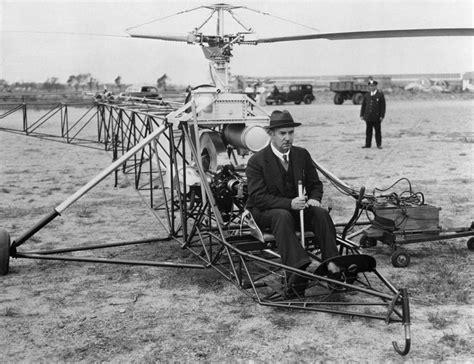
The pivotal breakthrough came in September 1939, when Sikorsky piloted his experimental VS-300. Though the flight lasted just a few moments, it marked a decisive turning point in aviation history. What distinguished the VS-300 was not just its ability to hover and maneuver — something earlier prototypes had flirted with — but its tail rotor, a critical innovation that enabled full control over yaw and solved the problem of torque.
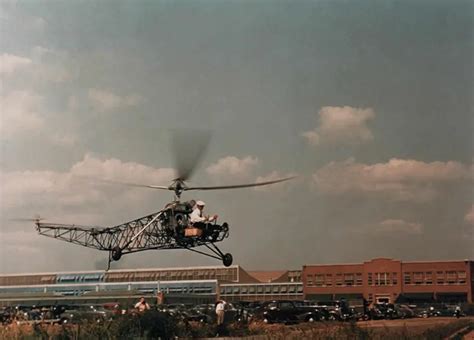
Previous models, like the Fw-61 created by Henrich Focke and Georg Wulf in 1936, had managed controlled flight using dual counter-rotating rotors. Though the Fw-61 holds the distinction of being the first successful helicopter in history, it was Sikorsky’s single main rotor plus tail rotor configuration that ultimately became the standard helicopter architecture worldwide.
The VS-300’s frame was skeletal, its engine exposed, and the cockpit barebones — but it worked. Built with a tubular metal frame, the helicopter was powered by a 75-horsepower Lycoming engine, and its design made it light enough to hover effectively. For Sikorsky, the VS-300 was not an end, but a beginning — a prototype that would evolve into a true workhorse.
From Prototype to Military Use: The Sikorsky R-4
The success of the VS-300 caught the attention of the U.S. Army Air Forces, which recognized the potential of helicopters for reconnaissance, rescue, and logistics. In response, Sikorsky developed the R-4, the world’s first mass-produced helicopter. Entering service in 1942, the R-4 demonstrated its value in the Pacific Theater of World War II, where traditional aircraft couldn’t reach wounded soldiers stranded in jungles or mountainous regions.
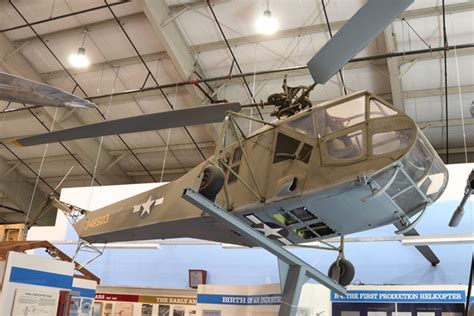
Nicknamed the Hoverfly by the British and the Eggbeater by American pilots, the R-4 was equipped with a 200-horsepower Warner R-550 engine. It could reach speeds of 75 mph and had an operational range of approximately 130 miles. Modest by today’s standards, it was revolutionary in the 1940s — especially for rescue missions where speed and accessibility mattered most.
Establishing the Sikorsky Legacy: Icons of the Sky
Sikorsky’s name soon became synonymous with helicopter innovation, and over the decades, his company introduced some of the most iconic rotary-wing aircraft in history. Among them was the S-61, a multi-purpose workhorse used for search and rescue operations, oil rig transport, and even by the U.S. Coast Guard. Then came the CH-53 Sea Stallion, designed for heavy-lift military missions, followed by the UH-60 Black Hawk, which entered service in the late 1970s.
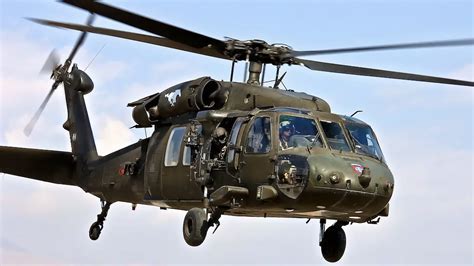
The Black Hawk remains one of the most recognized helicopters in the world, known for its use in combat, medical evacuation, and tactical operations. Its twin engines and high-speed capabilities continue to make it a staple of the U.S. military, NATO forces, and allied air fleets.
The CH-54 Tarhe, also known as the Skycrane, was another standout innovation, developed to carry extremely heavy payloads. With its skeletal frame and exposed cockpit, it looked unconventional — but its performance was unmatched. Sikorsky helicopters also played critical roles in humanitarian missions, firefighting, offshore drilling, and presidential transport.
A Legacy Cemented: Sikorsky and Lockheed Martin
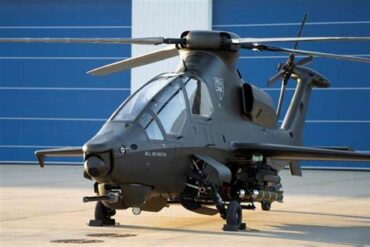
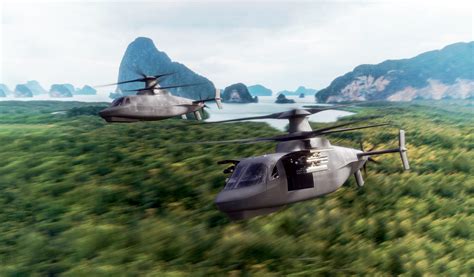
In 2015, Sikorsky was acquired by Lockheed Martin, forming a formidable partnership between two aerospace giants. This merger enabled the continued advancement of helicopter technology with robust support for military and civilian applications. The Sikorsky-Lockheed alliance is currently developing cutting-edge aircraft like the RAIDER X and the SB>1 Defiant, designed to serve as next-generation replacements for legacy military helicopters.
One of the latest milestones for Sikorsky was the integration of its aircraft into Marine One, the call sign for any helicopter carrying the President of the United States. In August 2024, President Joe Biden took his first flight aboard a VH-92A Patriot, the modern successor to the VH-3D Sea King. The VH-92A, a modified version of the Sikorsky S-92, boasts state-of-the-art communications, security, and avionics — a far cry from the skeletal VS-300 but bearing the unmistakable DNA of Sikorsky’s vision.
The Enduring Genius of Igor Sikorsky
Though Igor Sikorsky passed away in 1972, his legacy is not simply etched into the pages of aviation history — it soars above us every day. He was more than just an inventor; he was a visionary who believed that vertical flight could unlock new possibilities for exploration, rescue, and warfare. His insistence on practical design over theoretical perfection turned the helicopter from an idea into a transformative global asset.
Today, every helicopter that takes to the skies — from emergency air ambulances and oil platform transports to cutting-edge stealth choppers and presidential aircraft — owes its fundamental design to the genius of Igor Sikorsky. The VS-300 was not just a machine. It was the birth of a new dimension in flight.
Conclusion: From Humble Beginnings to the Skies
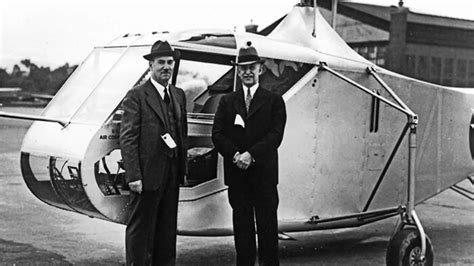
The story of the first modern helicopter is not one of a single triumph, but of relentless perseverance, innovation, and vision. While earlier pioneers like Focke and Wulf laid crucial groundwork, it was Igor Sikorsky who cracked the code of practical, controllable, and scalable helicopter flight. His contributions set the stage for a century of rotary-wing advancement that continues to redefine how we move, rescue, fight, and connect.
From Kyiv to Long Island, from jungle rescues to the White House lawn, Sikorsky’s rotor blades continue to turn — and his legacy continues to lift the world higher.