In an era where non-stop intercontinental travel has become a reality thanks to advanced aircraft design and route optimization, a select few long-haul routes still defy direct operation. Whether due to aircraft range limitations, regulatory complexities, or strategic airline choices, these ultra-long journeys are operated with just one stop—and often under the unique banner of fifth freedom rights. These flights, although not non-stop, still offer efficient connectivity across distant global cities, with some stretching nearly 20,000 kilometers.
By 2025, using data from Cirium and insights from airline configurations, we analyze the six longest one-stop routes worldwide. These flights stand out for their remarkable distances, strategic significance, and the sheer endurance demanded from both passengers and aircraft.
Shanghai to Buenos Aires via Auckland – 10,627 NM / 19,680 KM
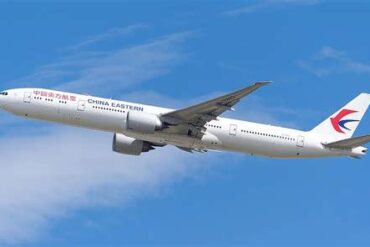
Topping the list in 2025 is China Eastern Airlines’ route between Shanghai Pudong (PVG) and Buenos Aires Ezeiza (EZE), with a strategic stopover in Auckland, New Zealand. This extraordinary service spans over 19,680 kilometers, traversing East Asia, Oceania, and South America.
The route is operated by a Boeing 777-300ER, the most premium widebody in China Eastern’s fleet. The aircraft features:
- 6 First Class suites
- 52 Business Class seats
- 258 Economy seats
Totalling 316 passengers, this route represents the largest capacity and highest premium configuration among all on this list.
But beyond comfort, this service is a tool of diplomacy. As part of China’s ongoing push to deepen ties with Latin American nations, particularly Argentina, this route is emblematic of geopolitical intent translated into aviation reality. The New Zealand stop serves dual purposes: tapping into the growing tourism and business demand between China and Oceania, and facilitating technical refueling while leveraging China Eastern’s existing stronghold in Auckland.
Beijing to São Paulo via Madrid – 9,494 NM / 17,582 KM
Second on the list is Air China’s mammoth journey from Beijing Capital (PEK) to São Paulo Guarulhos (GRU) with a stop in Madrid-Barajas (MAD). Clocking in at 17,582 kilometers, this route is notable not just for its length, but for its strategic intent and unique passenger profile.
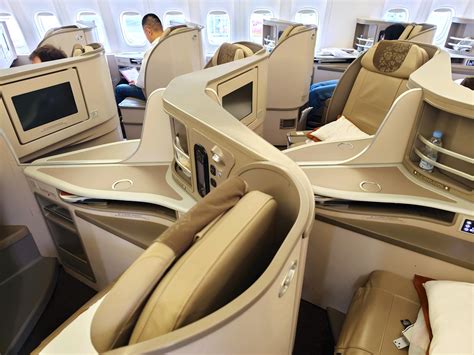
Air China deploys the Boeing 787-9 Dreamliner, configured with:
- 30 Business Class seats
- 34 Premium Economy seats
- 229 Economy seats
This route serves as a bridge between China and Brazil, underpinned by government-backed diplomacy and commercial expansion. Though economic demand supports it, the route’s success is driven as much by the Chinese government’s strategic aviation policy as by pure commercial viability. Notably, Air China leverages Madrid as a European gateway, facilitating traffic flow between three continents in a single flight number.
Sydney to Paris via Perth – 9,475 NM / 17,548 KM
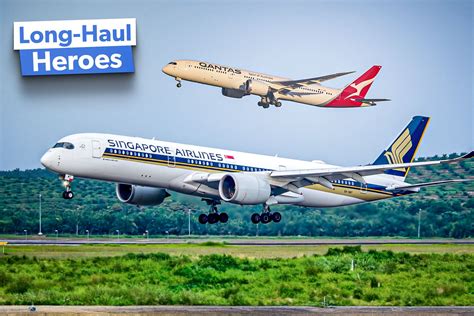
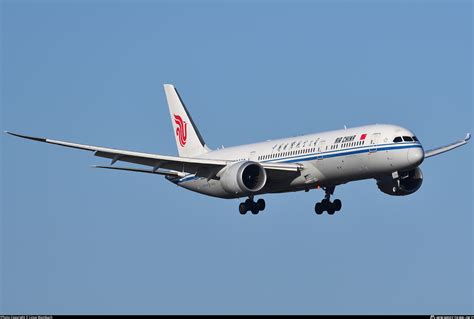
Qantas enters the ultra-long haul domain with this year-round route between Sydney (SYD) and Paris-Charles de Gaulle (CDG), stopping in Perth (PER). At nearly 17,548 kilometers, this route highlights Australia’s shifting aviation strategy, where Perth emerges as a western hub for Europe-bound travel.
The Boeing 787-9 Dreamliner, Qantas’ long-range workhorse, serves this route in dual segments under a single flight number, though not always the same aircraft. This strategic use of equipment rotation helps optimize operational efficiency.
While Rome remains a seasonal tourist route, Paris is a core business travel market, justifying its year-round presence. The aircraft features a premium-heavy layout suited for long-haul comfort.
This route also reinforces Qantas’ efforts to reduce reliance on Southeast Asian hubs, offering direct access to Europe without transiting through the Middle East or Asia. It’s a bold geographical repositioning of Australian long-haul connectivity.
Sydney to London Heathrow via Singapore – 9,274 NM / 17,176 KM
One of the most iconic aviation corridors in history, the Kangaroo Route connecting Australia and the UK remains a long-standing staple in international travel. In 2025, with Project Sunrise still two years away from enabling non-stop services, passengers traveling between Sydney (SYD) and London Heathrow (LHR) must continue to fly via Singapore (SIN).
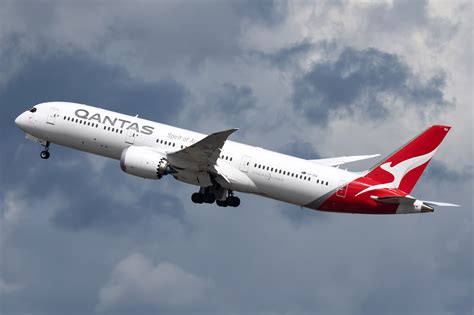
This route is served by Qantas’ Airbus A380-800, offering:
- 14 First Class suites
- 70 Business Class seats
- 60 Premium Economy seats
- 341 Economy seats
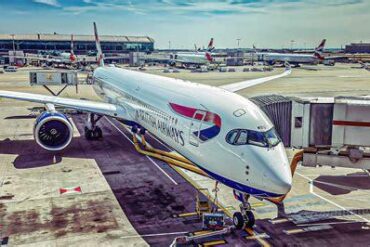
The service also benefits from fifth freedom rights, allowing Qantas to sell tickets on individual segments such as Singapore to London. This creates a highly competitive triangle involving Qantas, British Airways, Singapore Airlines, and several Asian and Middle Eastern carriers.
What sets this route apart is its historical legacy and the sheer scale of competition. Despite high frequencies from connecting hubs such as Doha, Abu Dhabi, and Dubai, Qantas and British Airways remain the only two carriers offering direct one-stop options under their own flight numbers, preserving a legacy that dates back to the early days of global air travel.
Sydney to Rome via Perth – 8,984 NM / 16,639 KM
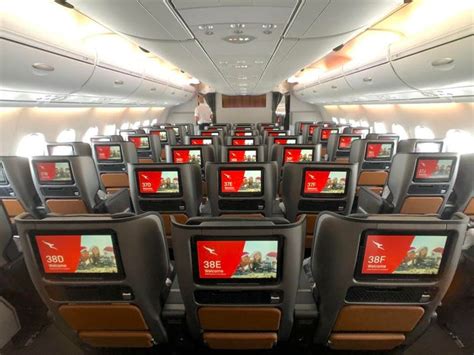
Just slightly shorter than the Paris route, Sydney to Rome via Perth is a seasonal gem tailored more towards leisure travelers and the VFR (Visiting Friends and Relatives) market. Operating mainly during the northern summer, this Qantas flight represents the second European route to be launched from Perth using the 787-9, marking a strategic expansion of the airline’s long-haul network from Western Australia.
Much like the Paris service, both segments—Sydney to Perth and Perth to Rome—use the Boeing 787-9 and operate under a shared flight number, ensuring seamless baggage transfer and a single booking experience.
Italy’s importance lies not only in its appeal as a tourist destination but also in its diaspora population in Australia, particularly in Sydney and Melbourne. The route thus taps into cultural, emotional, and economic ties, creating a steady demand during the European summer peak.
Singapore to New York-JFK via Frankfurt – 8,903 NM / 16,489 KM
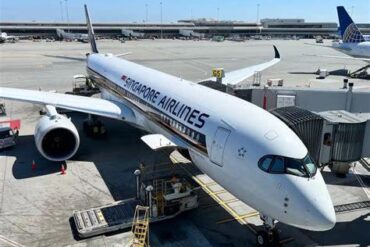
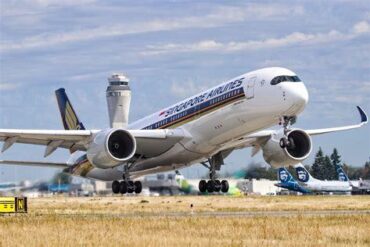
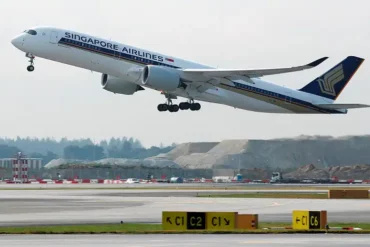
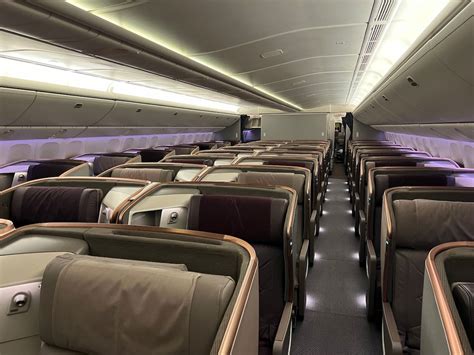
Rounding off the list is Singapore Airlines’ fifth freedom service connecting Singapore Changi (SIN) and New York-JFK, with a pivotal stopover in Frankfurt (FRA). Unlike the nonstop flights already operated by the carrier using Airbus A350-900ULR, this route offers a broader product suite, including First Class—not available on the ultra-long-haul nonstop service.
The flight utilizes the Boeing 777-300ER, which is equipped with:
- 4 First Class seats
- 48 Business Class seats
- 28 Premium Economy seats
- 184 Economy seats
This configuration totals 264 passengers, offering a more balanced mix of premium and economy options than the 161-seat ULR configuration. The Frankfurt stop also makes this route a viable option for those seeking flexibility, additional seat availability, and broader cabin choices.
The route is highly competitive, intersecting with offerings from Lufthansa, Delta, and United, all of which operate between Frankfurt and New York. Nevertheless, Singapore Airlines maintains a formidable reputation for service excellence, making it a top choice for discerning travelers on this epic intercontinental trek.
Conclusion: One-Stop, Double the Strategy
These six longest one-stop routes in 2025 highlight more than just aviation endurance. They showcase how airlines blend operational strategy, diplomatic goals, and passenger experience to create viable, even profitable, connections over vast distances. While non-stop flights will continue to evolve with the development of aircraft like the Airbus A350-1000ULR and the anticipated rollout of Qantas’ Project Sunrise, one-stop routes will still play an essential role.
From Shanghai’s commercial corridors to Buenos Aires’ tango-lined avenues, and from Sydney’s coastal sprawl to the heart of Europe, these routes continue to bind continents through the quiet power of long-haul aviation. Whether driven by economic need, tourism potential, or geopolitical intent, they remain testaments to what modern aviation can achieve—even when a stopover is still necessary.