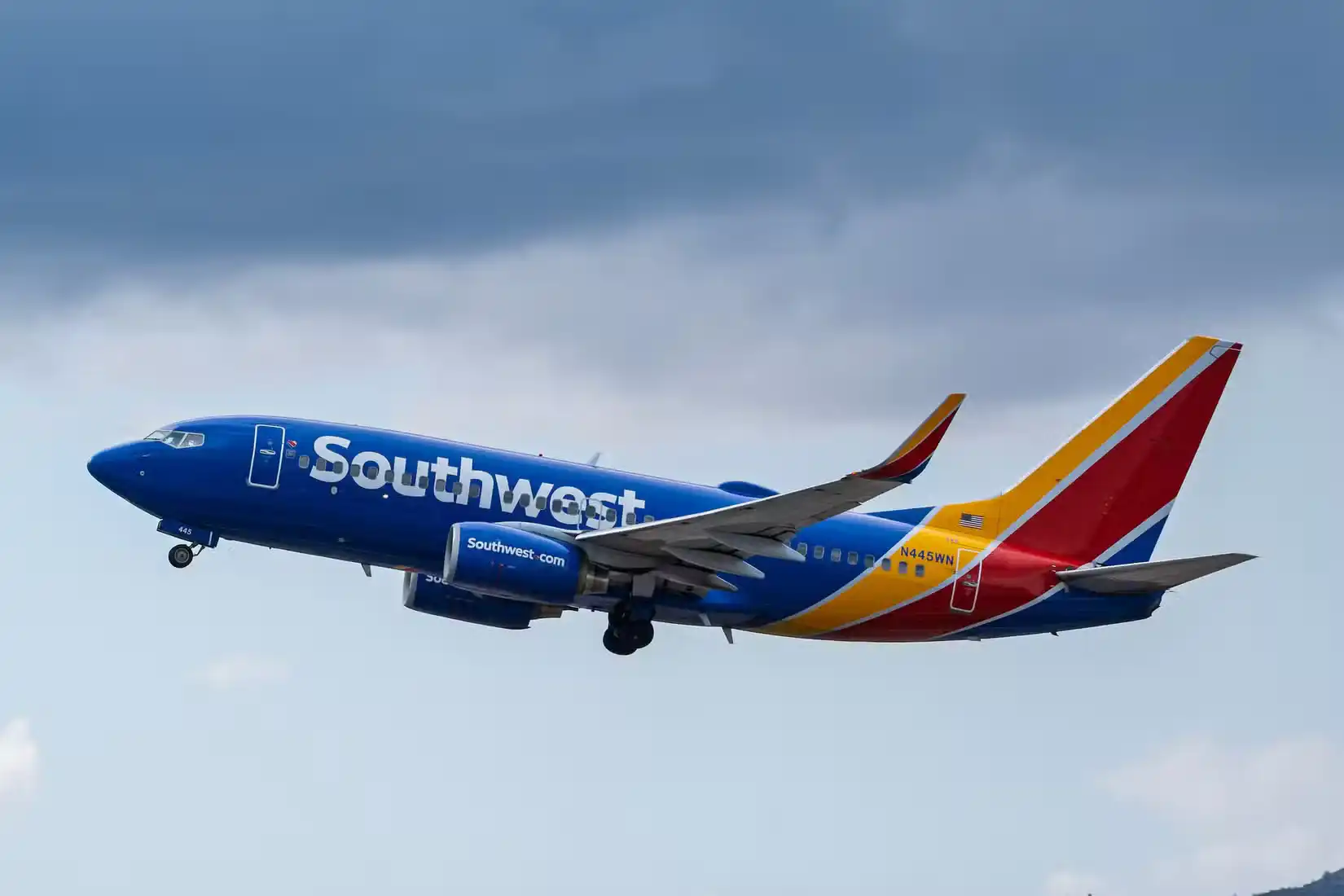
Every day, Southwest Airlines dispatches thousands of flights across the United States, connecting major metropolitan hubs with smaller regional destinations through one of the country’s largest domestic networks. While most travelers associate the carrier with short point-to-point services, a fascinating corner of its operation remains largely unknown outside aviation enthusiasts: same-plane, same-flight-number multi-leg routes that keep a single aircraft flying from dawn until late evening. These marathon schedules demonstrate how efficiently Southwest maximizes aircraft utilization while maintaining extensive nationwide coverage.
Unlike traditional hub-and-spoke airlines, Southwest has long favored a flexible point-to-point network. This operating philosophy allows aircraft to move continuously throughout the day, often serving multiple cities before finally ending their schedule hundreds or even thousands of miles from where they began. During July, the airline operates dozens of these extended itineraries, but one flight stands above all others for its extraordinary duration.
The airline’s extensive operation reflects its impressive fleet strength. With 798 Boeing 737 aircraft in service, including newly introduced aircraft equipped with Starlink internet connectivity, Southwest continues evolving into what it now describes as a hybrid carrier while maintaining thousands of daily departures across the United States. This operational flexibility makes lengthy same-plane rotations not only possible but highly effective for balancing fleet movements across multiple time zones.
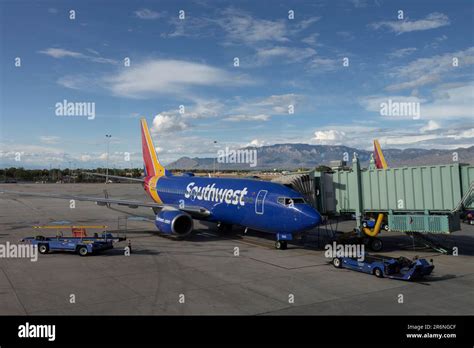
Inside Southwest Flight WN270: The Airline’s Longest Multi-Stop Schedule
The most demanding same-flight-number journey during July is Flight WN270, operating exclusively on Saturdays. Beginning at 6:15 AM in Albuquerque International Sunport (ABQ) and concluding at 9:35 PM in San Francisco International Airport (SFO), the complete operation lasts an impressive 16 hours and 20 minutes from first departure to final arrival.
Throughout the day, the aircraft completes six individual flight segments while remaining under the same flight number. Between each sector, ground time is scheduled at only 35 minutes, leaving minimal margin for operational disruptions. Even a small delay during the morning could potentially affect every subsequent departure, illustrating the precision required to execute such an ambitious daily schedule.
The complete routing follows an extraordinary path across the United States:
- Albuquerque (ABQ) → Austin (AUS)
- Austin (AUS) → Columbus (CMH)
- Columbus (CMH) → Washington National (DCA)
- Washington National (DCA) → Dallas Love Field (DAL)
- Dallas Love Field (DAL) → Los Angeles (LAX)
- Los Angeles (LAX) → San Francisco (SFO)
By the end of the operating day, the aircraft covers approximately 4,115 nautical miles, equivalent to roughly 4,776 statute miles or 7,695 kilometers. That distance rivals many long-haul international flights, comparable to flying nonstop between New York JFK and Rio de Janeiro.
Why Passengers Cannot Book the Entire 16-Hour Journey
One of the most surprising aspects of these marathon services is that passengers cannot purchase a single ticket covering the complete itinerary from the first airport to the last destination. Southwest instead limits reservations to selected portions of the overall routing.
Some one-stop and two-stop combinations remain available for booking. For example, travelers may fly from Albuquerque to Columbus through Austin, or from Washington National to San Francisco via Dallas Love Field and Los Angeles. However, booking the aircraft’s entire day from Albuquerque all the way to San Francisco as one continuous itinerary is not permitted.
Technically, determined aviation enthusiasts could recreate the entire experience by purchasing multiple separate tickets and reboarding at each stop. While possible, doing so requires careful planning, additional expense, and acceptance of significant travel time. Unsurprisingly, only a handful of aviation content creators and dedicated enthusiasts have attempted such marathon itineraries.
Tight Turnarounds Keep the Aircraft Moving
A defining feature of Southwest’s operational model is rapid aircraft turnaround. Flight WN270 exemplifies this philosophy perfectly.
Every scheduled stop lasts only 35 minutes, providing just enough time for passengers to deplane, new travelers to board, baggage to be transferred, catering to be refreshed, and the aircraft to prepare for departure again. Maintaining these tight schedules enables Southwest to maximize daily aircraft utilization, allowing each Boeing 737 to generate more flying hours than would otherwise be possible.
The challenge becomes increasingly demanding as the day progresses. If weather, air traffic congestion, or ground handling issues delay an early segment, those delays may continue accumulating throughout the remaining five legs. Nevertheless, Southwest’s experience operating quick-turn flights has become one of the airline’s defining operational strengths.
The Second-Longest Multi-Leg Flight Is Nearly as Remarkable
Although WN270 claims the top spot, another remarkable itinerary follows closely behind. Flight WN585 operates a 15-hour and 25-minute schedule on Saturdays, beginning at Dallas Love Field (DAL) and ending at Sacramento International Airport (SMF).
The aircraft follows an equally fascinating cross-country route:
- Dallas (DAL)
- Miami (MIA)
- Baltimore/Washington (BWI)
- Las Vegas (LAS)
- Long Beach (LGB)
- Sacramento (SMF)
Despite finishing nearly an hour earlier than WN270, this itinerary actually covers 4,153 nautical miles, marginally farther overall than Southwest’s longest-duration service. The evening arrival into Northern California also suggests the aircraft will continue operating additional flights afterward, albeit under a different flight number.
Why Southwest Continues Operating Marathon Multi-Stop Flights
These extended same-plane services illustrate how Southwest efficiently positions aircraft across its nationwide network while maximizing daily productivity. Rather than allowing aircraft to remain idle between flights, carefully designed schedules keep them moving continuously through multiple regions and time zones.
For passengers, these operations provide additional nonstop and one-stop travel opportunities that might otherwise require connections. For the airline, they improve fleet efficiency, spread aircraft across strategic bases, and support one of the busiest domestic networks in North America.
While very few travelers will ever experience an entire 16-hour same-plane journey, Flight WN270 offers a fascinating glimpse into the logistical precision behind Southwest Airlines’ daily operation. From an early-morning departure in New Mexico to a late-evening arrival in California after six separate flight legs, it represents one of the most demanding scheduled aircraft rotations in the airline’s network and highlights the remarkable coordination required to keep thousands of daily flights moving smoothly across the United States.