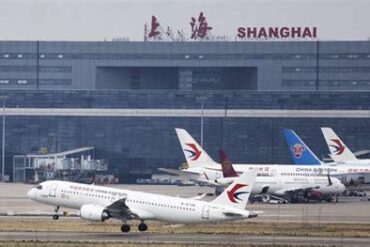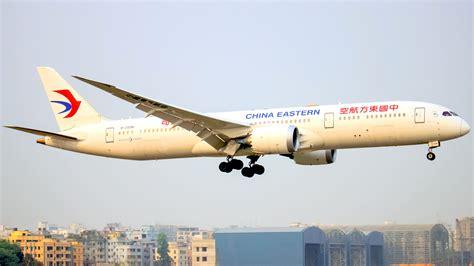
The global aviation stage has a new endurance champion. China Eastern Airlines has inaugurated the world’s longest one-stop scheduled passenger route, connecting Shanghai Pudong (PVG) to Buenos Aires (EZE) with a single layover in Auckland (AKL). This vast trans-hemispheric arc stretches 10,627 nautical miles (19,681 km) each way, with passengers spending up to 29 hours on a journey that redefines the boundaries of commercial long-distance travel.
The debut flight on December 4th signals not only a technical achievement but a strategic play into untapped traffic demand between East Asia and South America — two continents historically difficult to bridge by air. What Aircalin once held as the previous record from Nouméa–Paris (via Bangkok) has now been surpassed, and China Eastern seems confident in making this a flagship presence heading into peak Southern Hemisphere holiday demand.
These marathon segments operate twice weekly, designed to move passengers, cargo, and national ties across three oceans and two hemispheres. This is not merely a long flight — it’s a geopolitical airbridge.
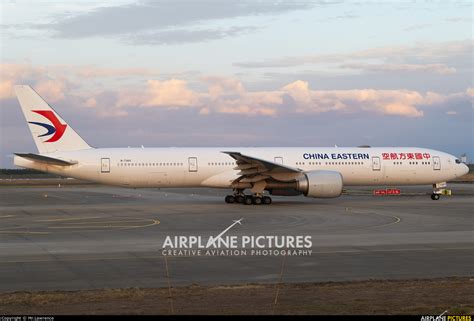
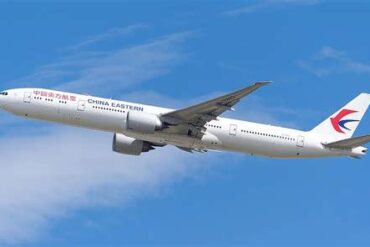
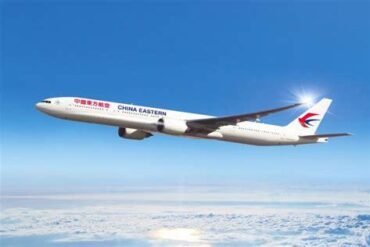
Aircraft & On-Board Anatomy — The Boeing 777-300ER Takes Center Stage
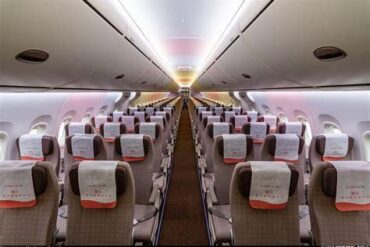
The mission falls to China Eastern’s Boeing 777-300ER, configured with 316 seats across First, Business and Economy, leveraging a reputation for payload strength and freight-carrying efficiency. The aircraft selection hints strongly at dual objectives: not just tourism and VFR traffic (visiting friends and relatives), but cargo profitability, likely including perishables, electronics, pharmaceuticals, and high-value goods flowing between China, Oceania, and Latin America.
This 777 variant is notably less dense than certain European flagship configurations — think Air France’s high-density layouts — meaning comfort, though not luxurious by global premium standards, remains competitive for flights that span nearly an entire solar day.
Route Timings & Operational Reality — The Schedule is Not for the Faint-Hearted
While Auckland’s midpoint positioning allows for operational refueling, rotation and crew rest windows, the schedule presents one stark highlight: the westbound return begins in Buenos Aires at 02:00 AM. Boarding a journey of nearly 30 hours at that hour demands stamina, mood, caffeine, and patience — especially for Economy passengers.
Outbound and return itineraries operate as follows:
- PVG → AKL: Mondays & Thursdays | 02:00 → 18:30
- AKL → EZE: Mondays 20:30 → 16:30 same-day | Thursdays 20:55 → 16:55 same-day
- EZE → AKL: Tuesdays & Fridays | 02:00 → 08:40 +1
- AKL → PVG: Wednesdays & Saturdays | 10:40 → 18:00
This alignment prioritizes network connectivity in China and freight movement timing over passenger convenience — a trade-off common in intercontinental aviation economics.
The Market Behind the Mileage — Demand That Justifies the Distance
Argentina hosts over 50,000 Chinese-born residents and more than 350,000 ethnic Chinese, one of the fastest-growing diaspora communities in South America. Visa-free access for Argentine visitors to China has further amplified two-way mobility — a policy change that aligns almost suspiciously well with this network expansion.
Booking data from the year ending September 2025 paints a compelling picture: 96,000 annual round-trip passengers between China and Buenos Aires, with Shanghai–Buenos Aires alone accounting for 26,000 travelers. Even with twice-weekly frequency, the available seats remain modest, suggesting pricing power and yield strength.
This is a premium-leaning niche, and long-haul air economics reward scarcity.
Auckland–Buenos Aires — A Sleeping Giant Reawakened
The AKL–EZE sector has been starved of direct service since early 2020, when Air New Zealand withdrew amid pandemic turbulence, following Aerolíneas Argentinas, which once carried the torch before them. Back then, the route was solid, drawing 31,000 passengers annually in 2019, but traffic collapsed to barely 9,000 in the 12 months to September 2025 — with almost all travelers forced through Santiago via LATAM.
Average fares hit USD $1,661 one-way, an astonishing figure driven by lack of alternatives and healthy premium traffic. Now, China Eastern steps into a vacuum with cargo hold space, widebody muscle, and Fifth Freedom rights that permit full passenger sales between Auckland and Buenos Aires.
Why This Flight Matters — More Than a Mileage Record
This route does more than break distance charts. It stitches trade, families, tourism, and cultural exchange into a singular aviation artery connecting China’s economic powerhouse with South America’s cultural titan. It fosters freight channels. It reduces multi-stop journeys into a single layover. It marks a bold expansion of Chinese long-haul reach into a region historically dominated by North American and European carriers.
If loads remain healthy — and pricing disciplined — this could become one of the most symbolically and economically significant long-haul connections of the decade.
Conclusion — A 29-Hour Testament to Distance, Demand & Determination
From Shanghai skyscrapers to Buenos Aires tangos, ocean to ocean, hemisphere to hemisphere — this flight is more than transport. It is ambition expressed in nautical miles. The world’s longest one-stop passenger service is a reminder that despite fuel costs, crew complexity and human fatigue, continents crave connection.
Sky paths stretch where demand and determination align. The Shanghai–Auckland–Buenos Aires airway is proof — 29 hours long, and thousands of stories wide.