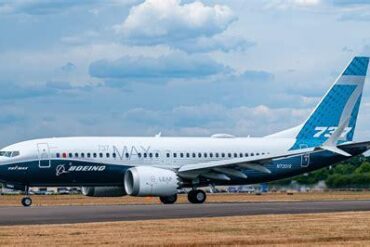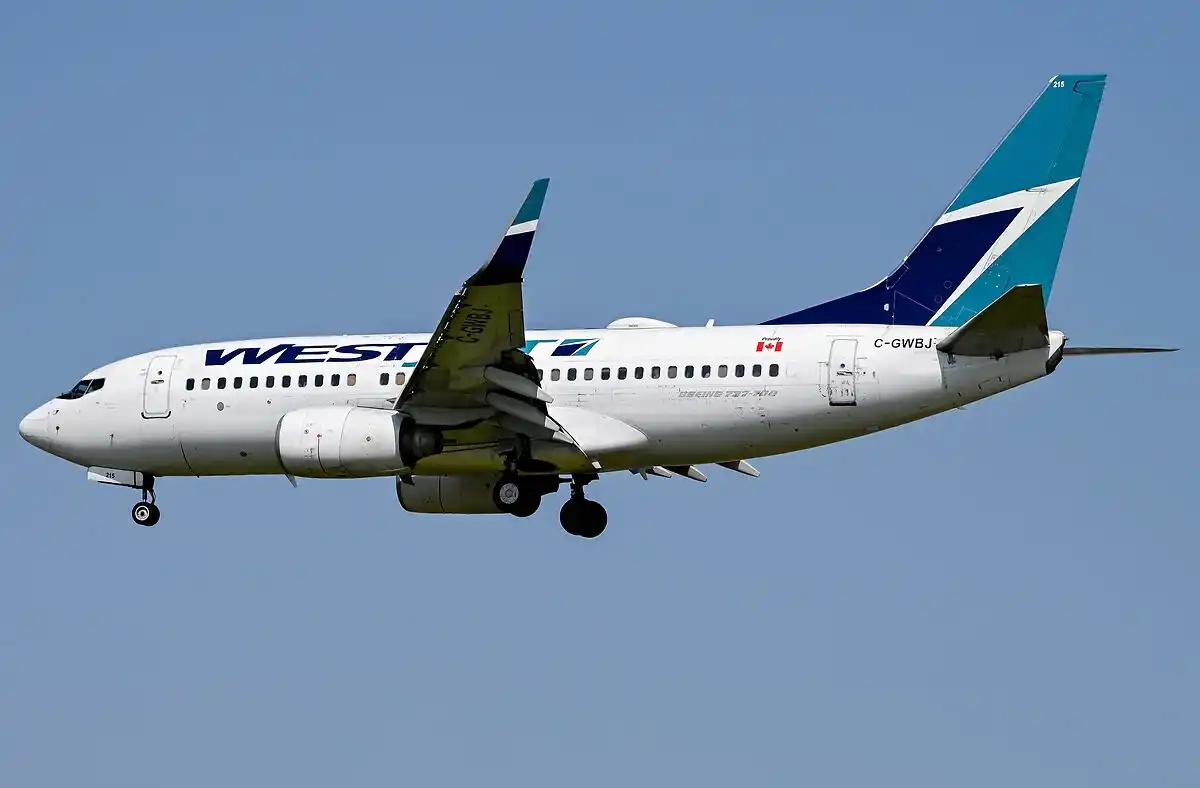
WestJet has crossed a line it spent years approaching. Canada’s second-largest carrier has begun dismantling its Boeing 737-700 Next Generation fleet, selling all 27 of the veteran narrowbodies to New York-based FTAI Aviation in a split sale-and-leaseback deal that converts decades of accumulated ownership into immediate liquidity. Ten of the aircraft are already gone from passenger service and will be cut apart for spare parts. The other 17 will remain in WestJet colours under fresh leases, a deliberate hedge built around the fact that their intended successor, the Boeing 737 MAX 10, still has no firm date for certification or entry into service.
The transaction lands at a moment when WestJet’s balance sheet is absorbing simultaneous shocks: a roughly 25% drop in transborder traffic to the United States, jet fuel prices that have more than doubled in waves, and a fleet renewal plan that keeps sliding to the right with each new delay from Boeing. Selling 27 airframes does not solve any of those problems individually, but it addresses all three at once — raising cash, cutting ownership costs on its least efficient jets, and locking in flying capacity without triggering a capital outlay it can no longer justify.
Inside The 27-Aircraft Deal With FTAI Aviation
The fleet is being handled in two distinct buckets, and the distinction matters more than the headline number suggests. The ten aircraft already returned from lease will not return to revenue service at all. They are being transferred to FTAI’s Aerospace Products division, which will disassemble the airframes and harvest their engines, modules and serviceable components for resale and exchange into the global maintenance market. One of those airframes has already been ferried to the United States and re-registered as N757FT, formerly C-GWBF, a quiet sign that the teardown cycle is underway rather than merely planned.
The remaining 17 jets are wrapped into a formal sale-and-leaseback managed through FTAI’s Strategic Capital arm. WestJet sells the title and leases back the flying rights, so the aircraft keep operating the carrier’s schedule while ownership risk, residual value exposure and depreciation move to the lessor. WestJet Group Executive Vice President and Chief Financial Officer Mike Scott framed the move as a threshold event, describing the 27-aircraft transaction as the official start of the retirement of the 737-700 fleet and a foundation for a longer partnership with FTAI.
The buyer’s rationale is equally deliberate. David Moreno, President of FTAI, described the structure as a demonstration of how the company’s Strategic Capital and Aerospace Products divisions operate as a single machine — one supplying sale-leaseback capital for in-service aircraft, the other offering a flexible exit for airframes on their way out. For FTAI, the retiring jets are not a nostalgia purchase; they are a source of CFM56-7B engines and modules feeding an exchange pool that is chronically short of supply.
Why Parting Out Ten 737-700s Is The Most Profitable Strand Of The Deal
An older narrowbody’s value in 2026 sits almost entirely inside its engine nacelles. Each retired 737-700 carries two CFM International CFM56-7B powerplants, and the demand for those engines, their quick-change modules and their overhauled core components vastly exceeds supply. FTAI has positioned itself to service that demand entirely in-house, from module manufacture through engine leasing and exchange, which means the ten teardowns deliver a captive revenue stream rather than a one-off scrap transaction.
The numbers behind that thesis are difficult to ignore. FTAI’s Aerospace Products revenue has surged roughly 78%, driven by a 61% jump in engine module output, yet module orders still outpace the company’s manufacturing capacity — a shortfall that only acquisition of donor aircraft, its $2 billion strategic financing facility, and disciplined teardown economics can close.
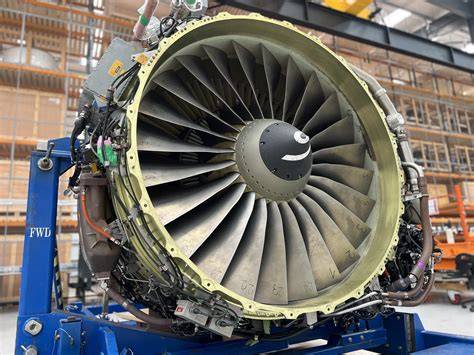
This purchasing model is why the parted-out airframes may prove more valuable to FTAI than the 17 leased jets ever will. FTAI earns predictable rental income on the sale-leaseback aircraft and a second, heavier stream from mandatory engine upkeep over their remaining service life. WestJet, meanwhile, removes ten depreciating assets from its books without reducing its schedule, because those ten were already sitting idle off lease.
The MAX 10 Slip That Forced WestJet’s Hand
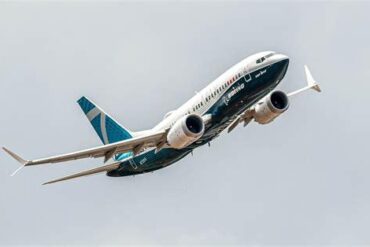
Were the 737 MAX 10 arriving on schedule, this transaction would read as routine end-of-life housekeeping. It does not, because the MAX 10 remains in certification limbo, and the latest obstacle is a software defect discovered late in the documentation phase. The so-called U14 flight management issue can prompt an unexpected go-around if the crew modifies a pre-programmed flight plan during the landing phase, causing the automated vertical navigation system to disengage and drop the autopilot into a basic pitch mode.
The Federal Aviation Administration reviewed the flaw through its risk assessment process and, on October 2, 2026, ruled that it does not present an imminent flight safety risk, since cockpit warnings are transparent and pilots retain direct manual control. That ruling is reassuring for safety and corrosive for scheduling. Every additional review cycle pushes final documentation, type inspection authorisation and full-rate manufacturing further out, and WestJet cannot retire 149-seat aircraft on a promise with no delivery date attached.
How The 737-700 And 737 MAX 10 Compare
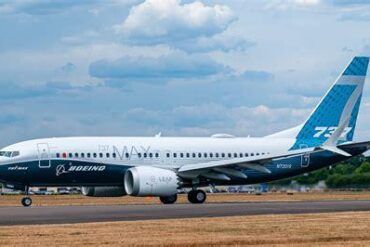
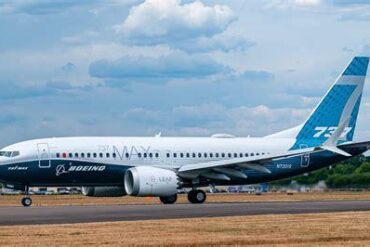
The gap between the two types explains why WestJet is willing to pay rent rather than simply wait. The 737-700 measures 110 feet 3 inches (33.6 metres) and seats around 149 passengers, powered by CFM56-7B engines and carrying a maximum takeoff weight of 154,544 lb (70,100 kg). The 737 MAX 10 stretches to 143 feet 9 inches (43.8 metres), seats roughly 230, uses LEAP-1B engines and lifts a maximum takeoff weight of 202,825 lb (92,000 kg).
Those figures translate directly into seat-mile economics. The 737-700 burns markedly more fuel per seat than any MAX variant, which is tolerable when fuel is cheap and punishing when it is not. The MAX 10 also offers the growth and range WestJet needs for denser transborder and leisure routes, but its 230-seat capacity is not a one-for-one substitute for a 149-seat airframe; the MAX 8, not the MAX 10, is the closer direct replacement, which is precisely why the leaseback functions as insurance against disruption across the entire MAX family rather than one variant.
Fuel Prices And Transborder Weakness Reshaping Fleet Strategy
Jet fuel moved from roughly $2.50 per gallon to $3.99 per gallon as overlapping geopolitical crises compressed global supply. Russia’s invasion of Ukraine established an elevated energy baseline in 2022, and the confrontation with Iran escalated it dramatically when disruption to maritime transit through the Strait of Hormuz choked oil flows and pushed crude past $100 to $120 a barrel. Because fuel accounts for 20% to 25% of an airline’s operating cost base, a near doubling of price inflates absolute costs at a scale no schedule adjustment alone can offset.
Layered on top is the collapse in transborder demand, with traffic to the United States down about 25% amid a trade and security dispute between Washington and Ottawa. Transborder flying has historically been WestJet’s richest traffic source. When its most lucrative market contracts while its most expensive input doubles, fully owned, fuel-hungry aircraft shift from buffer capacity to balance-sheet liability, and the case for monetising them becomes arithmetic rather than strategy.
The Operational Math Of A Leaseback Hedge
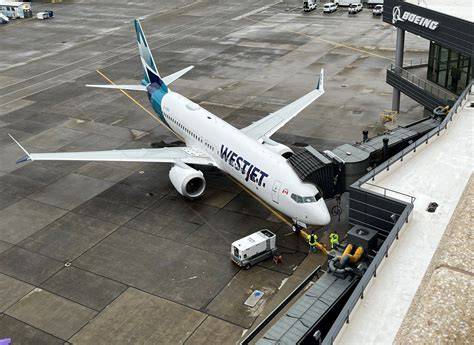
A sale-and-leaseback is the aviation equivalent of refinancing rather than repurchasing. WestJet converts 17 owned airframes into cash today and pays monthly rent to keep them flying, which is typically far cheaper than carrying depreciation, residual value risk and maintenance exposure on ageing jets. If MAX 10 and MAX 8 deliveries continue to slip, the leases preserve capacity with no capital commitment. If Boeing recovers its pace, WestJet simply lets the leases lapse as new aircraft arrive.
The hedge is not free. WestJet pays rent on aircraft that burn more fuel per seat than the fleet it is trying to build, so monthly lease costs stack on top of inflated fuel bills precisely when margins are thinnest. The leases also fix capacity in a 149-seat configuration at a time when WestJet might prefer to upgauge. The deal buys time, and time is the only commodity Boeing currently cannot deliver.
What The Deal Signals For Boeing, Lessors And Canadian Aviation
For Boeing, the transaction is an unwelcome mirror. Airlines do not normally pay to keep flying 25-year-old 737s; they do so when the replacement pipeline fails. The MAX 7 and MAX 10 remain outside active service, overall 737 MAX output stays constrained, and the programme’s reputation has never recovered from the Lion Air Flight 610 and Ethiopian Airlines Flight 302 crashes of 2018 and 2019, which killed 346 people and exposed the decision to fit MCAS to the legacy airframe while omitting it from pilot manuals in pursuit of a shared type rating.
For lessors and maintenance providers, WestJet’s move confirms a structural truth: mature airframes are increasingly valued as engine donors rather than passenger aircraft. FTAI is not alone in chasing CFM56 feedstock, and every teardown tightens the supply of whole airframes while loosening the bottleneck on engines. For WestJet, the transaction is a bridge — cash now, capacity maintained, ownership costs shed — until Boeing delivers the aircraft that will genuinely replace the 737-700. The 17 jets still wearing WestJet colours are a bet that the MAX 10 will eventually arrive. The ten already being reduced to components are a bet that it will not arrive soon.