The South Asian subcontinent faces its most perilous military standoff in decades as India and Pakistan intensify air and missile strikes, each accusing the other of provoking an escalation. As both nuclear-armed rivals trade salvos, international actors, particularly the United States, have stepped in urgently to curb further confrontation.
Tensions flared to dangerous heights on Saturday following a new wave of missile exchanges and aerial bombardments that left dozens dead and cities on high alert. This spiral of violence has reignited fears among diplomats and analysts that the region’s historic volatility could inch closer to a nuclear flashpoint, especially given Pakistan’s ambiguous first-use policy.
Cross-Border Escalation: The Return of High-Intensity Engagements
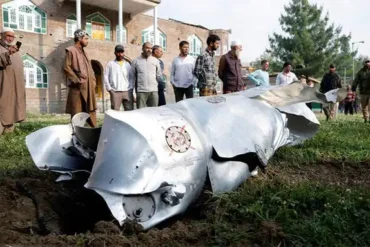
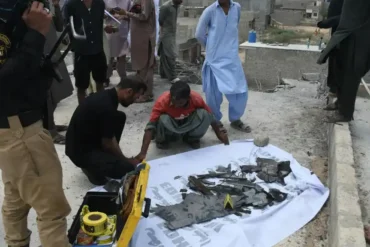
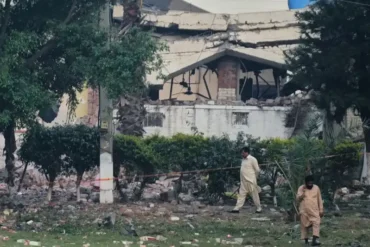
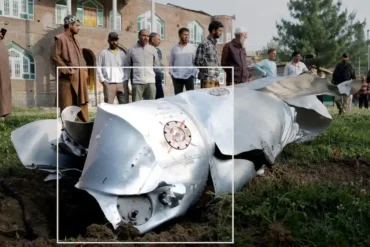
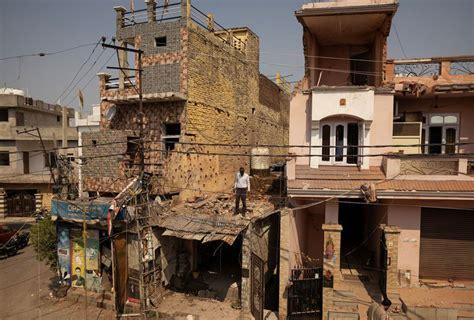
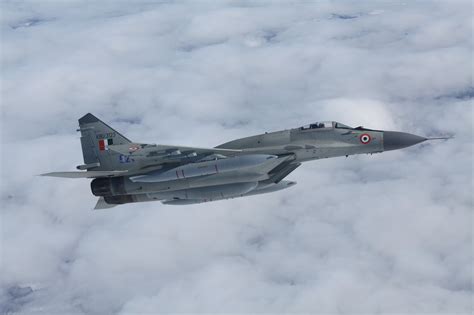
On Saturday, Pakistan’s armed forces launched what they described as retaliatory strikes against multiple Indian military installations, including a missile depot in northern India. Indian officials confirmed the attack but downplayed the extent of the damage, stating that four air force bases had sustained only limited destruction and casualties. However, five civilians were reported killed in the Jammu region, a stark reminder of the conflict’s immediate toll on border communities.
Explosions reverberated throughout Indian-administered Kashmir and Amritsar, and residents reported shelling and missile strikes continuing into the early hours of Sunday. Eyewitnesses in Jammu described scenes of terror: sirens wailing, families seeking shelter underground, and injured civilians being rushed to overcrowded hospitals. “We’ve never experienced anything like this,” said 60-year-old Rajeev Gupta. “Our city has never been hit before.”
Pakistan’s Operation Bunyanun Marsoos: A Symbolic Show of Unity
Pakistan’s Information Ministry announced that the country’s response was part of “Operation Bunyanun Marsoos,” a term drawn from Islamic scripture meaning a united and resolute structure. Officials said India’s attacks on three Pakistani air bases, including one near Islamabad, prompted the retaliatory campaign. According to Pakistan’s military, their air defense systems intercepted several Indian missiles, although some inflicted minor structural damage.
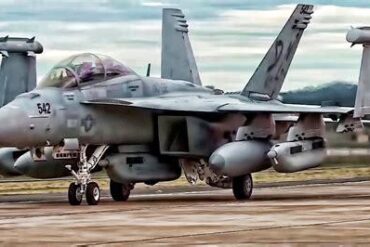
The operation appears calibrated to signal strength without crossing the threshold of full-scale war. Yet, the deployment of drones and missile systems on both sides shows that conventional deterrence is being tested like never before.
U.S. Calls for Restraint: High-Level Diplomacy in Motion
With the situation deteriorating rapidly, U.S. Secretary of State Marco Rubio personally reached out to both sides, speaking to Pakistan’s Army Chief General Asim Munir and India’s Foreign Minister Subrahmanyam Jaishankar. His message was clear: step back, talk directly, and avoid miscalculation.
“India’s approach has always been measured and responsible and remains so,” Jaishankar posted on social media following the call. His counterpart in Pakistan, Foreign Minister Mohammad Ishaq Dar, echoed a cautiously reciprocal tone: “If India stops here, we will consider stopping here.”
Such statements signal that both nations are evaluating off-ramps to avoid escalation, but the underlying hostility remains unresolved. U.S. officials reportedly pushed for immediate restoration of military-to-military communications, especially hotlines designed to prevent unintended war.
Nuclear Concerns Linger Despite Political Reassurances
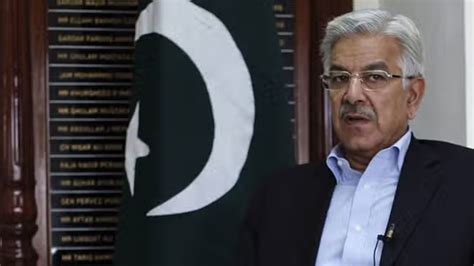
Perhaps the most alarming development came when reports surfaced suggesting that Pakistan’s National Command Authority, which oversees its nuclear weapons, might convene in light of the conflict. However, Defence Minister Khawaja Asif moved quickly to dispel the speculation, stating that no such meeting had taken place nor was one scheduled.
“We shouldn’t even discuss it in the immediate context,” Asif said in a television interview. “Before we get to that point, I think temperatures will come down.”
Despite these reassurances, global analysts remain wary. Unlike India, Pakistan does not adhere to a no-first-use doctrine, leaving open the unsettling possibility of a rapid transition from conventional warfare to a nuclear scenario. As tensions soar, even vague references to strategic deterrents are cause for alarm.
The Spark: Kashmir Attack and the Domino Effect
This latest confrontation was triggered on Wednesday when India launched strikes inside Pakistan, targeting what it described as terrorist camps linked to a deadly assault on Hindu pilgrims in Indian-administered Kashmir last month. Pakistan rejected the claims and vowed to retaliate. Since then, the exchange of missile strikes, drone incursions, and artillery shelling has intensified.
The disputed region of Kashmir remains the flashpoint, as it has been since 1947. Both India and Pakistan claim it in full but administer it in parts. What distinguishes this latest round of violence is the speed and scale of escalation, which has left over 50 people dead within four days.
Militaries Poised for Further Conflict
Indian authorities have responded by putting troops on high alert, deploying air defense systems to sensitive zones, and installing missile alert sirens in major cities like New Delhi — situated nearly 650 kilometers from the conflict zone. Meanwhile, Pakistan’s military has been observed shifting combat units closer to the Line of Control, indicating preparedness for continued confrontation.
At a press briefing, Indian Wing Commander Vyomika Singh stated, “The Pakistan military has been observed moving troops into forward areas, indicating offensive intent.” She added that Indian forces were in a high state of operational readiness but reiterated India’s willingness to restrain itself — provided the sentiment is reciprocated.
Civilian Anxiety: Flight, Fear, and Stockpiling
Caught in the crossfire, ordinary citizens are bearing the brunt of the geopolitical fallout. Families in border towns have fled en masse, seeking safety in nearby cities or makeshift shelters. In both India and Pakistan, grocery stores have seen panic buying, with essentials like rice, oil, and medicine flying off shelves.
Hospitals near conflict zones are overwhelmed, while schools and public offices have been shuttered indefinitely. The psychological toll is rising, especially among children and elderly residents. Emergency response units are on standby, though access remains limited in shell-hit areas.
Strategic Analysts Warn of Dangerous Precedents
According to Pravin Sawhney, a respected defense analyst and former Indian Army officer, the shift toward missile and drone warfare marks a new threshold in South Asian conflict dynamics. “Operations have moved to the next level. The free use of missiles and drones on both sides, coupled with troop movements, are not good indications of what lies ahead.”
This marks the most intense conflict since the Kargil War of 1999, a limited but bloody confrontation that similarly spiraled out of control over Kashmir. Unlike previous confrontations, the present scenario includes real-time social media coverage, cyber warfare capabilities, and enhanced strike precision — elements that increase the potential for misjudgment.
A Critical Moment for the Region
As the world watches closely, the need for de-escalation becomes paramount. While official statements from both capitals suggest openness to dialogue, actions on the ground indicate continued aggression. The stakes have never been higher. In a region where two nuclear powers operate in close proximity, the margin for error is dangerously thin.
Global powers, including the United Nations, China, and the European Union, are reportedly working behind the scenes to mediate, though no formal peace talks have been announced. Without meaningful diplomacy, what began as a retaliatory act could quickly evolve into a catastrophe with consequences well beyond South Asia.
Until both nations commit to concrete confidence-building measures, including military communication channels and third-party mediation, the subcontinent remains on the edge of conflict — and the world holds its breath.