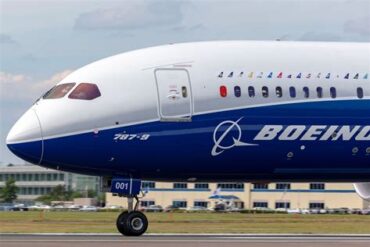
The Boeing 787 Dreamliner has firmly established itself as the backbone of modern long-haul aviation. More than a decade after entering commercial service, the aircraft has evolved into the world’s most widely used widebody airliner, serving everything from ultra-long-haul intercontinental routes to high-density domestic sectors. With over 1,100 aircraft already delivered and another massive backlog awaiting production, the Dreamliner continues to shape global airline networks.
Available in three variants—the smaller 787-8, the versatile 787-9, and the stretched 787-10—the family offers airlines remarkable flexibility. Some carriers deploy the aircraft on 18-hour missions crossing oceans, while others use them on short sectors carrying enormous passenger volumes. Based on full-year 2026 scheduling data from Cirium, several airlines stand out for their exceptionally intensive Dreamliner operations.
Rather than simply measuring fleet size, the ranking highlights which carriers are actually flying the aircraft the most. In many cases, route structures, aircraft utilization, and network strategies matter even more than the number of jets in service.
By the end of 2026, these six airlines will account for hundreds of thousands of Boeing 787 flights, transporting tens of millions of passengers across virtually every corner of the world.
American Airlines Uses Its Dreamliners Across Major International Markets
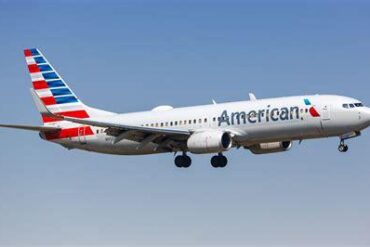
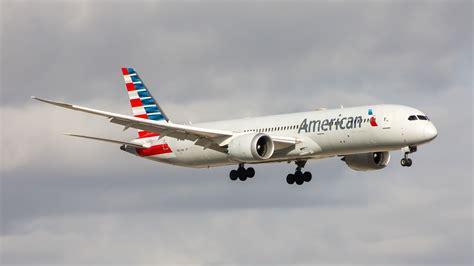
American Airlines ranks sixth among the largest Dreamliner operators by annual flight count, despite maintaining one of the largest fleets in North America. The carrier operates 70 Boeing 787s, split between 37 Boeing 787-8s and 33 Boeing 787-9s. Alongside its Boeing 777 fleet, the Dreamliner serves as the backbone of American’s intercontinental operations.
Throughout 2026, American Airlines is expected to conduct 66,384 Dreamliner flights, equivalent to more than 33,000 round trips. Its 787-8 fleet alone will perform over 36,000 flights and transport approximately 4.2 million passengers. Meanwhile, the larger and longer-range 787-9 fleet will contribute nearly 30,000 flights while covering almost identical mileage despite fewer sectors, demonstrating its preference for longer routes.
Unlike many international competitors, American’s extensive domestic network means that its overall flight volume is enormous. However, the Dreamliner remains dedicated primarily to premium international markets connecting North America with Europe, Asia, South America, and the Pacific.
Etihad Airways Achieves High Utilization With A Smaller Fleet
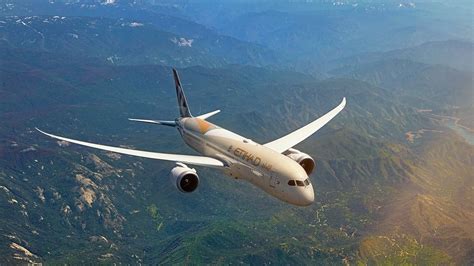
Despite operating fewer aircraft, Etihad Airways surpasses American in total Dreamliner activity. The Abu Dhabi-based airline maintains a fleet of just 46 Dreamliners, consisting of 36 Boeing 787-9s and 10 Boeing 787-10s.
Remarkably, those aircraft are scheduled to perform 69,240 flights during 2026, reflecting exceptional utilization rates. Unlike many operators, Etihad has chosen not to operate the smaller 787-8 variant. Instead, the airline focuses on larger aircraft optimized for medium- and long-haul routes throughout Asia, Europe, Africa, and the Middle East.
Its fleet of 787-9s accounts for the majority of operations, carrying approximately 7.6 million seats while covering over 96 million miles. The airline’s stretched 787-10 fleet contributes another 15,700 flights.
One of the busiest destinations served by Etihad’s Dreamliners is Phuket International Airport, while flights to the Maldives generate particularly high seat capacity. These routes underline the growing importance of leisure travel in Etihad’s network strategy.
Japan Airlines Relies On Domestic Demand To Drive Dreamliner Operations
Japan Airlines occupies fourth position with an impressive 74,362 scheduled Dreamliner flights during 2026. The carrier operates a balanced fleet comprising 23 Boeing 787-8s and 22 Boeing 787-9s.
Unlike many airlines that focus primarily on international routes, Japan Airlines deploys its Dreamliners extensively on domestic services. Japan’s dense population and strong demand between major cities create ideal conditions for widebody operations on relatively short sectors.
The airline’s busiest Dreamliner route links Tokyo Haneda Airport and Osaka Itami Airport, connecting Japan’s two largest metropolitan areas. Nearly 3,000 round trips are scheduled on this route alone, carrying hundreds of thousands of passengers.
Additional high-frequency sectors include flights from Haneda to Fukuoka and numerous routes throughout the Japanese archipelago. This strategy allows Japan Airlines to maximize aircraft productivity while maintaining premium passenger comfort.
Its 787-8 fleet contributes more than 46,000 annual flights, while the larger 787-9 aircraft focus increasingly on international missions and longer domestic sectors.
United Airlines Has Built America’s Largest Dreamliner Network
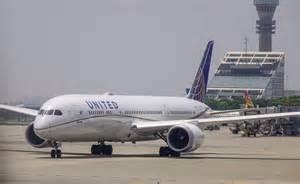
United Airlines has transformed itself into one of the world’s most committed Boeing customers. In 2026, the Chicago-based carrier operates 87 Dreamliners, including every variant available.
Its fleet includes 12 Boeing 787-8s, 54 Boeing 787-9s, and 21 Boeing 787-10s. Together, they are scheduled to conduct 85,316 flights, making United the largest Dreamliner operator in North America.
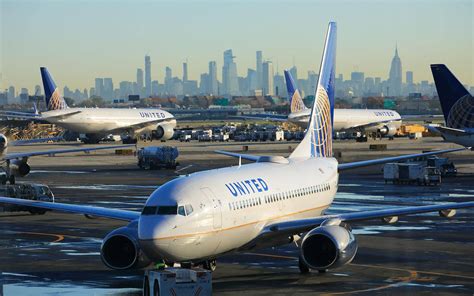
The airline continues to expand aggressively, taking delivery of multiple new Dreamliners during 2026. This expansion supports United’s ambitious strategy of connecting the United States with destinations across Asia, Europe, Africa, and Oceania.
Interestingly, the busiest Dreamliner route is not international. Flights between Newark Liberty International Airport and Los Angeles generate the highest volume, with almost 400,000 seats offered each way annually.
Internationally, some of the most important services include San Francisco to Singapore and Los Angeles to Hong Kong. These long-haul routes showcase the efficiency and range that made the Dreamliner such a success.
United’s 787-9 fleet represents the workhorse of operations, accounting for more than 50,000 annual flights and over 140 million miles flown.
Qatar Airways Operates One Of The World’s Most Intensively Used Dreamliner Fleets
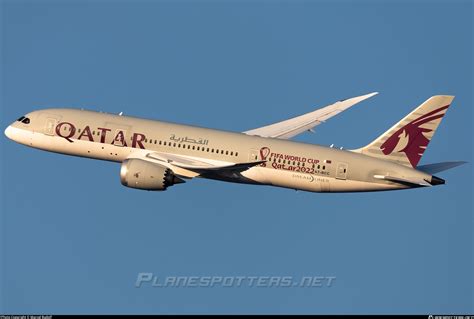
Second place belongs to Qatar Airways, which is scheduled to perform 108,916 Boeing 787 flights throughout 2026. The airline maintains 60 Dreamliners divided between 32 Boeing 787-8s and 28 Boeing 787-9s.
As one of the world’s leading long-haul carriers, Qatar Airways operates a fleet dominated by widebody aircraft. Alongside its Dreamliners, the airline flies Airbus A350s, Airbus A380s, and Boeing 777s.
Surprisingly, the busiest Dreamliner route is not one of the airline’s famous ultra-long-haul services. Instead, the short flight between Doha and Jeddah generates the highest frequency, illustrating the importance of regional connectivity.
Services to Colombo in Sri Lanka also rank among the busiest sectors. Meanwhile, the carrier continues receiving additional Dreamliners from Boeing, further strengthening its position.
Qatar’s Boeing 787-8 fleet performs over 61,000 annual flights and carries almost 7.8 million seats. The 787-9 fleet contributes another 47,800 flights and more than 7.4 million seats.
Although geopolitical tensions and periodic disruptions have affected Middle Eastern airspace during 2026, Qatar Airways remains one of the most active Dreamliner operators anywhere in the world.
All Nippon Airways Dominates Global Boeing 787 Operations
At the top of the list stands All Nippon Airways (ANA), which has built perhaps the most extensive Dreamliner operation on Earth. The Japanese carrier is scheduled to perform an astonishing 131,290 Boeing 787 flights in 2026.
ANA operates 91 Dreamliners, making it not only one of the largest fleet owners but also the airline extracting the highest operational value from the aircraft.
Its fleet consists of 36 Boeing 787-8s, 45 Boeing 787-9s, and 10 Boeing 787-10s. The airline utilizes all three variants across a combination of international and domestic services, creating extraordinary efficiency.
The busiest routes connect Tokyo Haneda with New Chitose Airport in Hokkaido, Fukuoka, and Okinawa. These high-density sectors generate thousands of annual rotations and support massive passenger demand throughout Japan.
Perhaps most remarkable is ANA’s configuration of the Boeing 787-10. The aircraft accommodates 429 seats, making it one of the highest-capacity Dreamliner layouts in the world. This allows ANA to deploy widebody comfort on domestic routes with passenger volumes that rival some international markets.
Its 787-9 fleet alone contributes nearly 59,000 flights and transports over 8 million seats annually. Meanwhile, the 787-10 fleet performs more than 22,000 flights despite flying relatively short sectors.
Why The Boeing 787 Dreamliner Has Become The World’s Widebody Workhorse
The diversity among these six airlines demonstrates the extraordinary flexibility of the Boeing 787 platform. Some carriers use the aircraft to connect continents across 18-hour journeys, while others rely on it for dense domestic markets where passenger demand is exceptionally strong.
Whether serving Tokyo and Osaka, Newark and Los Angeles, Doha and Jeddah, or Abu Dhabi and Phuket, the Dreamliner has proven equally capable. Its fuel efficiency, advanced composite construction, and passenger-friendly cabin continue to make it attractive to airlines seeking maximum operational flexibility.
As Boeing works through a backlog exceeding one thousand aircraft, the Dreamliner’s influence on global aviation is set to expand even further. With carriers continually adding new routes and taking additional deliveries, the aircraft’s status as the defining widebody of the modern era appears stronger than ever.