The Birth of the AAirpass Scheme
In the early 1980s, American Airlines found itself navigating turbulent skies. The airline industry in the United States had just been deregulated in 1978, opening the door to intense competition. High fuel costs, an aging fleet, and the constant threat of bankruptcy loomed large over the Fort Worth, Texas-based carrier. In a bid to stay afloat and avoid a Chapter 11 filing, American Airlines introduced a bold new program – the AAirpass.
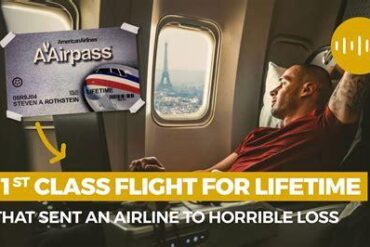
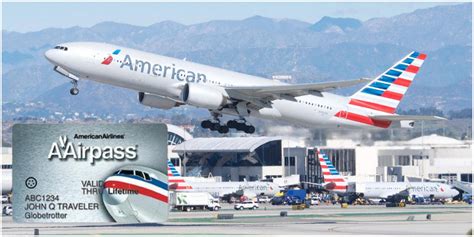
Introduced in 1981, the AAirpass was marketed as the ultimate in luxury travel. For a one-time fee of $250,000 (around $750,000 in today’s money), customers could purchase the privilege of unlimited first-class travel for life on American Airlines-operated flights. This was not just a seat upgrade; it was a golden ticket to the front of the plane, complete with lifetime membership to the Admirals Club, the airline’s network of airport VIP lounges. By 1988, 66 individuals had purchased these exclusive passes, generating $16.5 million for the struggling airline, a sum equivalent to nearly $50 million today.
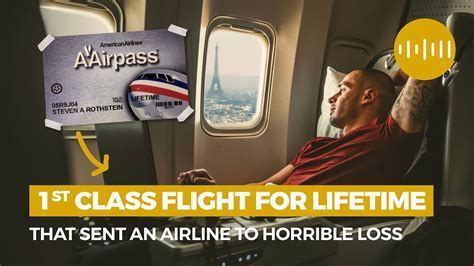
Steven Rothstein’s Bold Investment
One of these early adopters was Steven Rothstein, a Chicago-based investment banker with a penchant for travel. In 1987, Rothstein paid the steep $250,000 entry fee for his AAirpass. Two years later, in 1989, he paid an additional $150,000 (about $450,000 today) for a companion pass, allowing a second traveler to join him on his global journeys. Notably, Rothstein negotiated a unique perk – his companion pass could be used on either the same flight he was booked on or one immediately before or after, providing a level of flexibility that would later become a key element in his legal battles.
For the next two decades, Rothstein became one of the most frequent flyers in the world. Between 1987 and 2008, he took roughly 10,000 flights, averaging 476 per year – more than one flight every day. His travel patterns were staggering, including approximately:
- 1,000 flights to New York City
- 500 flights to San Francisco
- 500 flights to Los Angeles
- 500 flights to London
- 120 flights to Tokyo
- 80 flights to Paris
- 80 flights to Sydney
- 50 flights to Hong Kong
- 7,000 flights to other destinations around the world
This relentless travel schedule cost American Airlines an estimated $21 million in lost revenue – money the airline might have earned by selling those first-class seats to paying customers.
The Personal Connection
Rothstein’s bond with American Airlines went beyond mere customer loyalty. During one of his many flights, he met Bob Crandall, the then-CEO of American Airlines, who sent Rothstein a personal letter thanking him for his dedication. The letter read:
“I am delighted that you’ve enjoyed your AAirpass investment – you can count on us to keep the Company solid, and to honor the deal, far into the future.”
This correspondence would later become a critical piece of evidence in the legal battles that would follow, as Rothstein interpreted this as a promise from the airline’s leadership to respect the lifetime nature of his AAirpass.
The Abrupt End
However, on December 13, 2008, Rothstein’s flying days came to a sudden halt. Arriving at Chicago O’Hare Airport for a routine trip to Europe, he was handed a typed letter at the departure gate. The letter, on American Airlines headed paper, read:
“I write to inform you that, effective immediately, American Airlines, Inc., is hereby exercising its right to terminate your AAirpass Agreement dated October 1, 1987.”
This unexpected termination left Rothstein stunned. In an interview with The Guardian, he later reflected, “Why did they let me go to the gate? Why didn’t they tell me upfront, which would have been the nice thing to do?”
Legal Showdown
Rothstein swiftly took legal action, suing American Airlines for breach of contract and seeking $7 million in damages. He argued that the airline had failed to honor the lifetime nature of his AAirpass, as guaranteed by Crandall’s letter. In response, American Airlines countersued, alleging that Rothstein had abused the program by booking seats for fictitious travelers under names like “Bag Rothstein” and “Steven Rothstein Jr.” to keep adjacent seats empty for privacy or extra luggage space. The airline further claimed that Rothstein had made speculative bookings, often cancelling or “no-showing” for as many as 84% of his reservations between 2005 and 2008.
Personal Tragedy and Defense
Rothstein’s defense was as much about personal context as it was about contract law. His daughter, Caroline Rothstein, revealed that her father had made over 2,000 empty bookings to cope with the grief following the death of his teenage son, Josh, in 2002. In court documents, Rothstein confessed that he often called American Airlines simply to talk to familiar voices during his loneliest moments, booking flights he never intended to take.
Out-of-Court Settlement
After years of back-and-forth litigation, the case ended in a sealed out-of-court settlement in late 2012, as American Airlines emerged from its own Chapter 11 bankruptcy. The full details of the settlement remain undisclosed to this day.
Conclusion – A Cautionary Tale
In the end, the AAirpass saga stands as a stark reminder of the perils of underestimating the lengths to which loyal customers will go to capitalize on seemingly unlimited offers. While American Airlines initially sought to boost its cash flow through the AAirpass, the scheme ultimately became a costly miscalculation, with Rothstein’s relentless travels embodying both the spirit and the risk of lifetime loyalty programs.