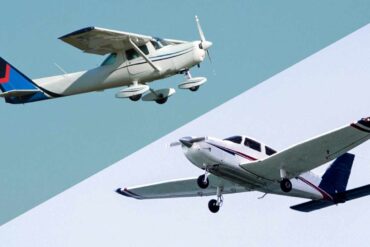
The flying wing represents one of aviation’s most radical configurations—an aircraft defined by its absence of a distinct fuselage and tail, integrating all components within a streamlined wing form. This tailless fixed-wing structure minimizes aerodynamic drag and maximizes lift efficiency, yet it also introduces profound challenges in stability, control, and design integration.
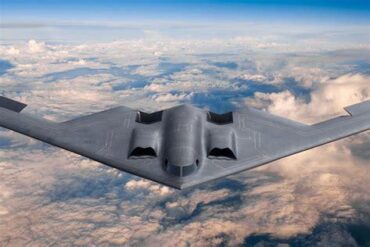
Emerging from early 20th-century experimentation, the flying wing was honed in the high-stakes laboratories of World War II, temporarily eclipsed by supersonic demands in the 1950s, then reborn through stealth imperatives in the late Cold War era. Today, it stands as a symbol of engineering boldness, with legacy and promise visible in every radar-evading contour of the B-2 Spirit and every futuristic concept studied by NASA or developed for next-generation unmanned systems.
Aerodynamic Principles and Design Challenges of the Flying Wing
At its core, the flying wing seeks maximum aerodynamic efficiency. By eliminating a separate fuselage and tail assembly, it significantly reduces the wetted area—the surface exposed to airflow—and the resulting drag. This configuration results in a lighter, fuel-efficient platform with potential for longer range and lower operational costs.
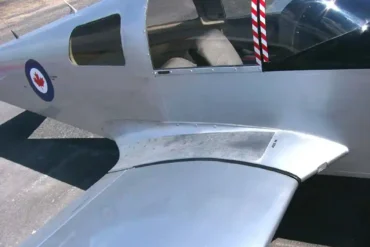
However, the trade-offs are not trivial. Housing the crew, fuel, and mission systems within the wing requires either a thicker wing chord—which can increase frontal area and drag—or clever packaging solutions like blisters, pods, or nacelles that maintain a thin aerodynamic profile while accommodating necessary components. These additions, while practical, complicate the aerodynamics and can reintroduce some of the drag that the flying wing seeks to eliminate.
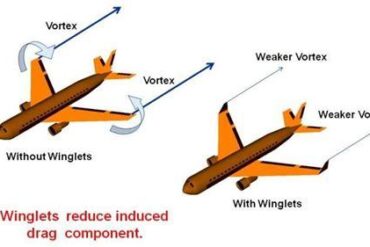
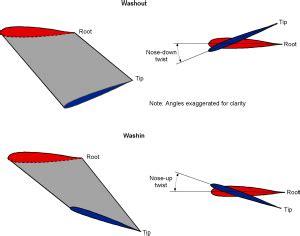
The flying wing’s lack of traditional vertical and horizontal stabilizers leads to inherent directional instability, especially in yaw control. Unlike conventional aircraft that use rudders on vertical fins for stabilization, flying wings must depend on design adaptations like swept wings, anhedral wing tips, and wash-out (twist) to achieve acceptable levels of stability. J. W. Dunne’s early work with swept wings and Prandtl’s 1933 bell-shaped lift distribution concept provided foundational insights for achieving this.
Yaw control typically relies on differential drag mechanisms, such as split ailerons, spoilers, or spoilerons. While effective, these methods increase drag during maneuvers and can reduce efficiency in combat scenarios that require high agility. The engineering balance becomes a trade-off between stealth and control, between efficiency and agility.
Variations and Borderline Concepts: Beyond the Pure Wing
Not all aircraft labeled as flying wings adhere strictly to the pure form. Related configurations like blended wing bodies (BWB) or lifting bodies often blur the lines. In a BWB design, the fuselage is smoothly integrated into the wing, distributing lift over a larger area but still retaining some fuselage-like characteristics. Hang gliders and ultralights often termed “flying wings” may carry the pilot or propulsion system beneath rather than within the wing, breaking from the traditional structural purity but adhering to the performance ethos.
Pioneering the Skies: Early History of Flying Wings
The concept of a wing-only aircraft emerged surprisingly early in aviation history. In 1876, Alphonse Pénaud and Paul Gauchot patented a propeller-driven wing-only aircraft—a visionary idea long before the Wright brothers’ first flight.
By the early 20th century, innovators like J. W. Dunne advanced the configuration further. Dunne’s swept-wing designs introduced the notion of inherent stability through geometric shaping rather than active control. His 1910s work laid the groundwork for the British Westland-Hill Pterodactyl series of tailless aircraft.
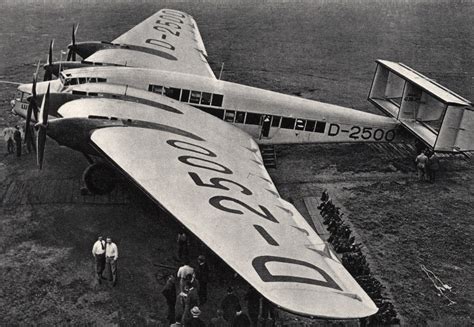
In Germany, Hugo Junkers proposed flying wing designs like the 1915 J 1 and 1919 JG 1, culminating in the G.38 airliner in 1931—a massive aircraft with a thick wing housing passengers and systems. Concurrently in the Soviet Union, Boris I. Cheranovsky built a series of tailless gliders and powered aircraft under the BICh designation, pushing the boundaries of form and stability.
Wartime Acceleration: The Flying Wing in World War II
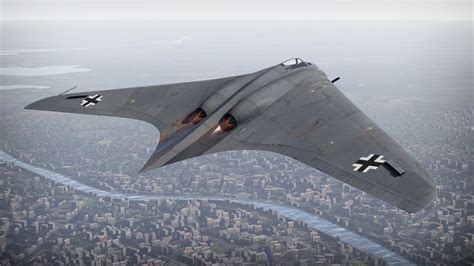
The Second World War acted as a crucible for aviation innovation. In Nazi Germany, the Horten brothers developed a lineage of advanced flying wings, culminating in the Horten Ho 229, the world’s first jet-powered flying wing. First flown in March 1944, it combined stealthy characteristics with revolutionary form—an unmistakable precursor to the B-2.
The United States responded with its own visionary: Jack Northrop. His company created the N-9M, a one-third scale demonstrator for bomber applications, which first flew in 1942. Britain’s contributions included the Baynes Bat, a glider intended for airborne tank delivery, and the Armstrong Whitworth A.W.52, both in glider and jet-powered forms, flown just after the war in 1947.
Postwar Projects and the Jet Age Decline
Following the war, Northrop advanced its designs with the YB-35, a piston-powered bomber, and its jet-powered successor, the YB-49. The YB-49 completed a record-setting transcontinental flight on February 9, 1949, showcasing the potential of the configuration. Yet, instability and political pressures led to its cancellation.
Meanwhile, the Soviet Union tested its own supersonic flying wing concept, the BICh-26, in 1948. Turkey’s THK-13 glider and Avro’s early Vulcan studies also explored the form, though most were either shelved or evolved into tailed designs to meet Cold War performance demands.
Despite early promise, the emergence of supersonic jet fighters and bombers in the 1950s and 60s, requiring slim, needle-like profiles and extreme speed, left the inherently thicker and slower flying wings behind. The thick wing sections necessary to house fuel and payload clashed with the slender profiles demanded by Mach-speed aerodynamics.
Stealth Renaissance: B-2 Spirit and Modern Applications
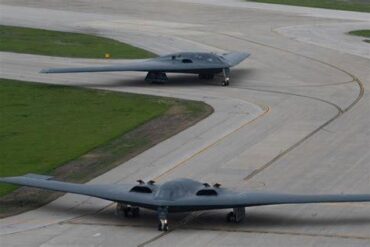
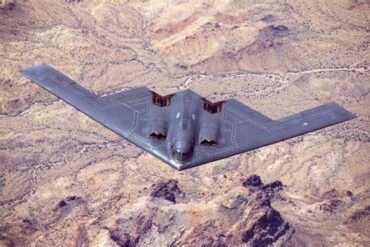
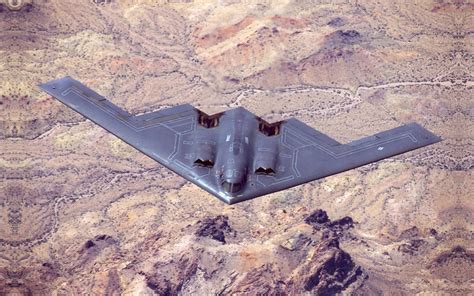
By the 1980s, interest in the flying wing surged once more—not for speed, but for stealth. The shape’s minimal surfaces and lack of protruding tails made it ideal for radar evasion. Northrop’s B-2 Spirit, first flown in 1989, epitomized this resurgence. With radar-absorbing materials and a geometry optimized to scatter radar waves, it redefined aerial invisibility.
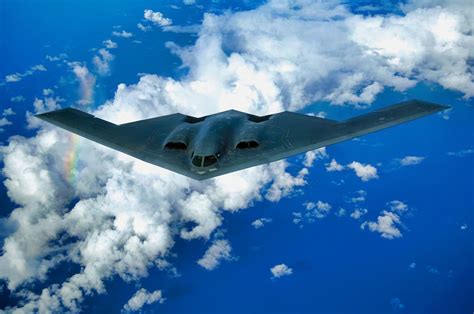
The B-2’s success catalyzed a new generation of Unmanned Aerial Vehicles (UAVs) and Unmanned Combat Aerial Vehicles (UCAVs). Aircraft such as the Lockheed Martin RQ-170 Sentinel, Dassault nEUROn, Sukhoi S-70 Okhotnik-B, BAE Systems Taranis, and India’s DRDO Ghatak and SWIFT have all leveraged flying wing configurations for stealth and endurance.
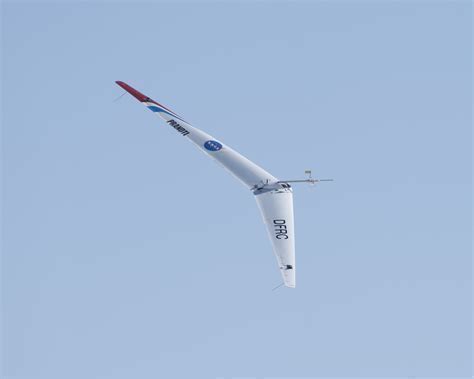
Even tech companies joined in—Facebook’s Aquila was a solar-powered flying wing built for high-altitude internet service. In 2011, a bi-directional flying wing concept was proposed to combine high-speed and efficient cruise performance by rotating its orientation mid-flight—a concept still under NASA study.
Future Outlook: From Research Labs to Commercial Horizons
The flying wing’s future lies not only in stealth and endurance but potentially in commercial aviation. Studies by Boeing, McDonnell Douglas, and others have proposed flying-wing airliners, promising better fuel economy and more efficient use of space. Yet, none have entered production, due in part to regulatory, safety, and passenger comfort challenges—like windowless cabins and unfamiliar boarding procedures.
NASA and various global aerospace agencies continue to explore blended wing bodies for cargo and passenger transport, alongside materials and control technologies that might overcome earlier limitations.
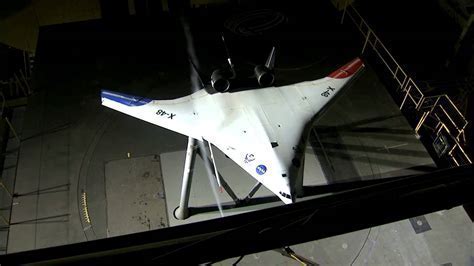
As materials improve and AI-assisted flight control becomes ubiquitous, many of the historical challenges—instability, packaging, control—can be mitigated. The flying wing may soon move from the realm of bombers and spy drones into mainstream civil aviation, completing a journey that began over a century ago.
Conclusion: A Bold Trajectory in Aviation History
The flying wing represents a confluence of aesthetic purity and functional daring, stripped of extraneous components and aimed at ultimate aerodynamic refinement. While it has faced setbacks and limitations, it has equally been a vehicle for some of aviation’s most visionary breakthroughs. From clandestine WWII experiments to modern stealth bombers and cutting-edge UAVs, the flying wing endures as a testament to aviation’s boldest aspirations.