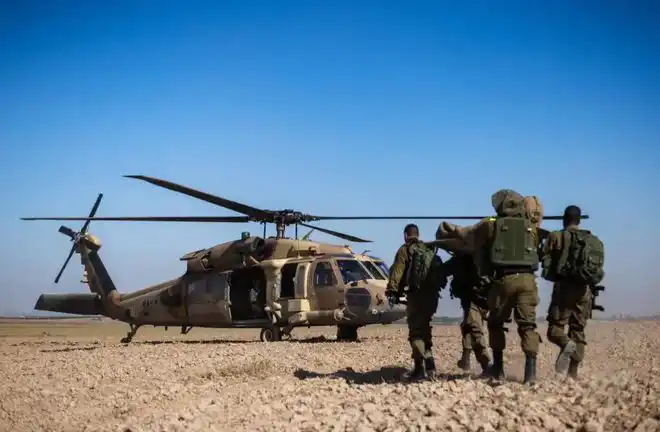
The Israeli Defense Forces (IDF) have a distinct rank structure, combining historical traditions with modern military management. With roots in Jewish nationalism and the broader defense needs of Israel, the ranking system is designed to promote rapid advancement for military personnel, especially within the officer corps. In this article, we provide an in-depth look into the ranks in the Israeli Army, focusing on both officers and enlisted soldiers, their progression, insignia, and the unique features of the Israeli military hierarchy.
Overview of the Israeli Army Rank Structure
The Israeli Army operates under a rank system that is divided into two main categories: officers and soldiers. The ranks themselves are designed to encourage swift career advancement, particularly for those who demonstrate military capability and leadership. The structure includes General Officers, Senior Officers, Junior Officers, Non-Commissioned Officers (NCOs), and Enlisted Personnel.
1. Officer Ranks in the Israeli Army
General Officers
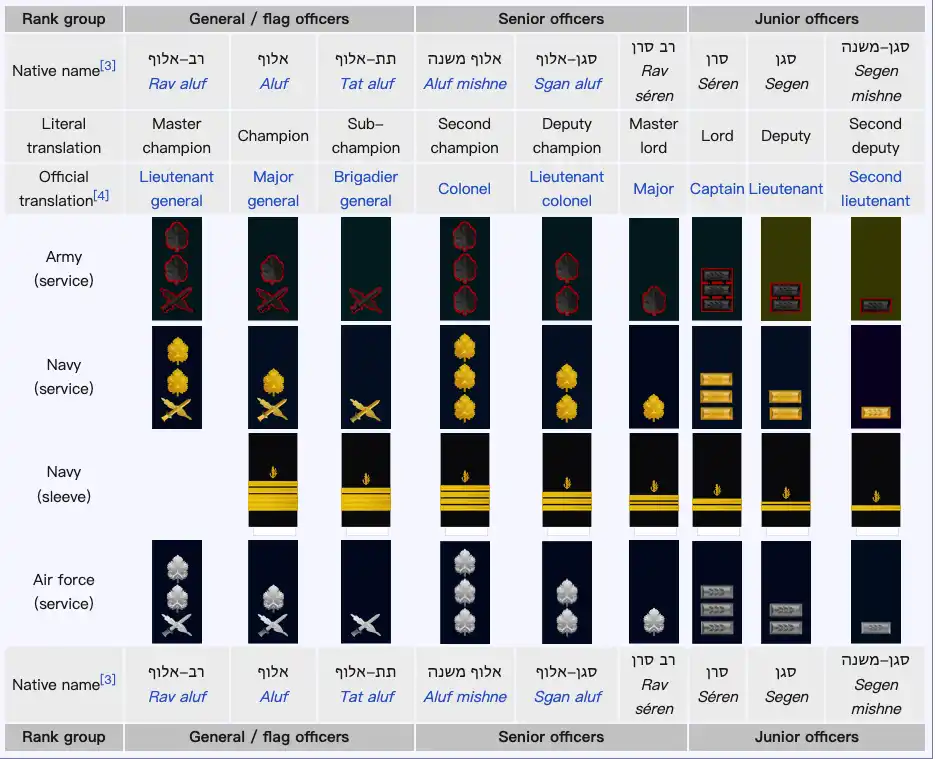
At the top of the hierarchy in the Israeli military are the General Officers, who hold the highest positions of command within the army. The rank system includes three distinct levels of general officers:
- Rav Aluf (Major General) – This is the highest rank in the IDF and is held by only one individual at a time: the Chief of Staff (Ramatkal). This position represents the top military commander of the Israeli Army and oversees all military operations and policies.
- Aluf (Brigadier General) – There are 24 officers who hold this rank, including the Deputy Chief of Staff, commanders of the various branches of the military (Army, Navy, Air Force), and leaders of regional commands and military schools.
- Tat Aluf (Brigadier General) – Approximately 100 officers hold this rank. These individuals typically serve as divisional commanders or hold senior staff positions within the IDF.
Senior Officers
The senior officer ranks in the Israeli military include high-ranking officers who are in charge of battalions, brigades, and divisions.
- Aluf Mishne (Colonel) – This is the standard rank for brigade commanders, equivalent to the NATO rank of Colonel. Officers holding this rank are responsible for large-scale military operations and may command several units or lead significant operations in the field.
- Sgan Aluf (Lieutenant Colonel) – The Lieutenant Colonel rank is often held by battalion commanders or senior staff officers. This position holds considerable responsibility and frequently involves strategic decision-making.
- Rav Seren (Major) – As a Major, this officer is typically a company commander, responsible for the performance and coordination of their respective unit. The promotion to Major is relatively swift and can occur as early as the age of 23, often due to battlefield achievements or exceptional leadership.
Junior Officers
The junior officer ranks are designed for those who have just completed officer training and have begun their leadership journey.
- Seren (Captain) – Most officers are promoted to the rank of Captain after completing their officer training, and many serve in leadership roles such as platoon commanders or in staff positions.
- Segen (Lieutenant) – Officers who graduate from military academies or officer training programs are usually appointed as Lieutenants. This is the entry-level officer rank, with Lieutenants moving to the rank of Captain fairly quickly, provided they demonstrate leadership potential.
- Segen Mishne (Second Lieutenant) – A rare and specialized rank, typically awarded to officers who are short-term conscripts or have undergone expedited training in specialized fields. They are expected to serve as Lieutenants within one year.
Special Officers
In addition to the standard officer ranks, the IDF also has a Reserve Officer program, where individuals from civilian professions (e.g., medical or legal fields) are granted honorary lieutenant or honorary second lieutenant ranks. These officers are often involved in specialized roles such as military medical services, legal affairs, or intelligence. Their rank insignia includes a scroll symbol, instead of the typical laurel wreath or sword used for other ranks.
2. Soldier Ranks in the Israeli Army
In contrast to officers, soldiers in the IDF follow a different rank structure, which is divided into career soldiers and conscripts.
Career Soldiers (Non-Commissioned Officers, NCOs)
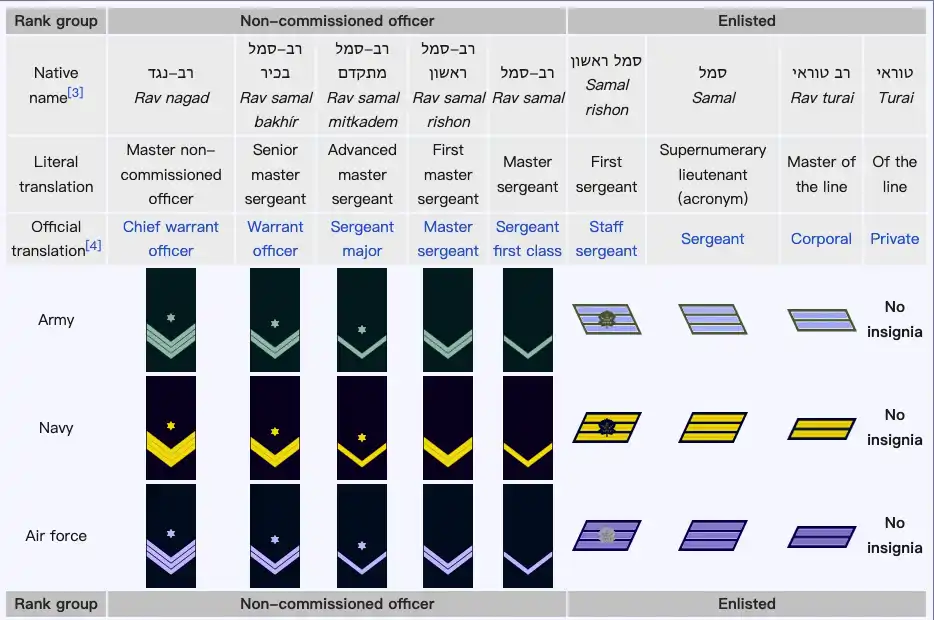
The NCO ranks are an essential component of the IDF and are typically held by professional soldiers who have made a career out of military service. These ranks include:
- Rav Samal (Master Sergeant) – The highest of the NCO ranks, this individual is responsible for leading large teams and ensuring the success of key military operations. Their role involves both leadership and technical expertise.
- Samal Rishon (First Sergeant) – This is the second-highest rank in the NCO structure. Soldiers holding this rank serve as platoon sergeants or in other leadership roles that require a high degree of responsibility and technical skill.
- Rav Samal (Senior Sergeant) – These individuals are highly experienced soldiers who have demonstrated exceptional competence. Often, they serve in key operational roles.
- Katzin (Warrant Officer) – The Warrant Officer ranks are unique in the Israeli army, with individuals holding these ranks playing key technical roles, often involving specialized skills such as mechanics or electronics.
Conscripts (Enlisted Soldiers)
Enlisted soldiers in the Israeli Army, typically conscripts, serve mandatory service terms, which are 32 months for men and 24 months for women. The enlisted ranks are typically simpler and involve less leadership responsibility:
- Hodesh (Private) – This is the entry-level rank for enlisted soldiers who have completed their basic training. They serve in general duties or lower-level operational tasks.
- Tsamal (Lance Corporal) – The Lance Corporal rank marks the first step up from the entry-level position. Soldiers at this rank may serve in a team leader position or assist with operations.
- Samal (Corporal) – The Corporal rank is the next step, with soldiers expected to take on more leadership responsibilities within their units, including supervising a small group of other soldiers.
- Rav Samal (Sergeant) – The Sergeant rank is one of the most important leadership positions for conscripts. These soldiers manage teams or sections, providing both operational guidance and tactical oversight.
- Rav Samal Rishon (Staff Sergeant) – The Staff Sergeant holds significant responsibility for the training and discipline of conscript soldiers and is often a senior enlisted leader in smaller units.
3. Military Rank Insignia and Their Design
The rank insignia used in the Israeli Army are specifically designed to differentiate between ranks, military branches, and even officer versus enlisted personnel. Below is an outline of the unique insignia:
- General Officers: The sword and laurel branch insignia are used to signify the general ranks. The insignia’s color is determined by the military branch (e.g., green for Army, blue for Air Force, and navy blue for Navy).
- Senior Officers: Insignia for senior officers include laurel leaves, with three leaves for Colonels, two for Lieutenant Colonels, and one for Majors.
- Junior Officers: Junior officers sport laurel wreaths combined with horizontal bars. The Second Lieutenant has a single bar, while the Lieutenant and Captain have additional bars indicating their rank progression.
- Non-Commissioned Officers (NCOs): NCO insignia include various combinations of sergeant stripes with added designations that vary by rank.
- Enlisted Soldiers: Soldiers wear simple insignia, including stripes for higher ranks such as Corporal, Sergeant, and Staff Sergeant.
4. Unique Aspects of the IDF’s Rank Structure
The Israeli Army’s rank structure is unique in several ways:
- Rapid Promotion: Particularly within the officer ranks, promotions can occur quickly, especially if an individual demonstrates battlefield success or exceptional leadership. It is common for individuals to reach the rank of Major before the age of 23.
- Flat Hierarchy: The Israeli military has a relatively flat structure compared to many other armed forces. The rank of Major General (Rav Aluf) is typically the highest-ranking officer, which is in contrast to many other countries where higher general officer ranks exist, such as Field Marshals.
- Reserve Officer Program: The IDF’s Reserve Officer Program allows civilians, especially those with specialized skills, to be commissioned into the army as officers. These individuals often serve in a reserve capacity, only being called up in times of national emergency.
- Gender Integration: The IDF is one of the few military forces that fully integrates women into combat roles. While women cannot achieve the rank of Major General, they are eligible for many other officer positions, including Lieutenant and Captain, with some even reaching Lieutenant Colonel.
Conclusion
The Israeli Army’s rank system is a robust and efficient structure that has been carefully designed to meet Israel’s unique defense needs. It is an intricate blend of historical Jewish military traditions and modern-day requirements, ensuring that those who serve in the IDF have clear career paths and well-defined roles, whether they are officers, NCOs, or enlisted soldiers. With its emphasis on rapid promotion, leadership, and a flat command hierarchy, the IDF ranks are a testament to the military’s focus on operational efficiency and readiness.
This in-depth examination of the Israeli Army ranks provides insight into the specific roles and responsibilities of personnel at every level, allowing for a greater understanding of how the IDF functions and its commitment to ensuring the highest standard of military readiness.