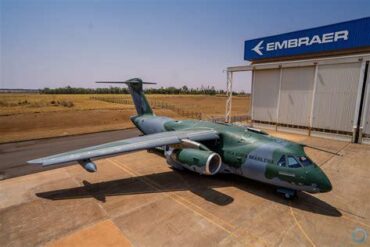
Brazil and Poland have taken a decisive step toward reshaping Europe’s military airlift landscape, with Embraer and Polska Grupa Zbrojeniowa (PGZ) signing a landmark set of five Memoranda of Understanding in Warsaw. Announced on December 2, 2025, the agreements aim to launch KC-390 Millennium production activities inside Poland while expanding industrial cooperation across aerospace sectors. The move elevates Poland from a rapidly modernizing military buyer to a co-producer within a high-tech global supply chain.
The MoUs outline a long-term collaborative framework covering maintenance, production support, engineering integration, and advanced aerospace technologies. Although specific workshare numbers remain confidential, officials emphasized that the partnership forms the foundation for extensive industrial participation in the KC-390 program. The deal emerges at a decisive moment for Warsaw, which is upgrading its airlift capability and seeking greater domestic manufacturing autonomy.
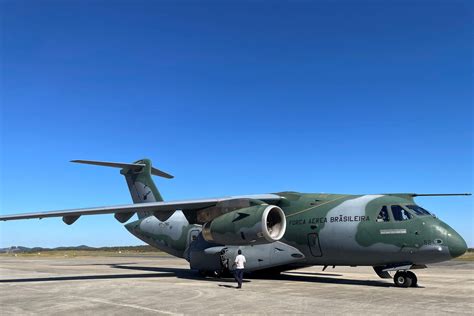
Embraer KC-390 Millennium: Poland’s Gateway to Next-Generation Airlift
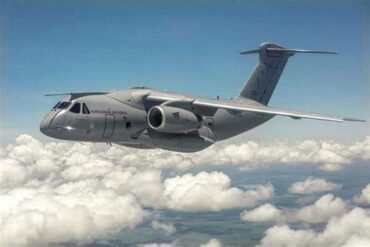
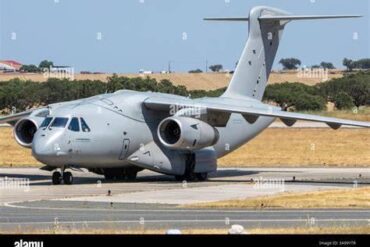
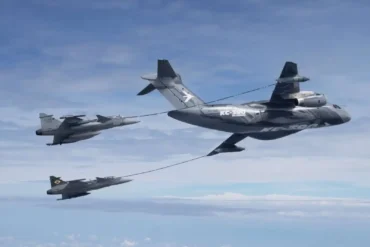
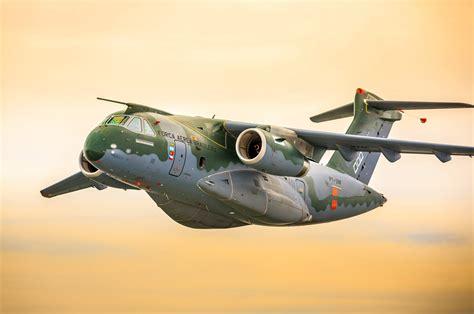
The KC-390 Millennium stands at the center of this new cooperation. Built for demanding tactical and strategic missions, the aircraft delivers a 26-ton payload capacity, high-speed cruise performance up to 470 knots, and the ability to operate from semi-prepared runways—dirt, gravel, or compacted soil. Its advanced fly-by-wire controls, NATO-standard avionics suite, and modular interior allow rapid conversion between troop transport, armored vehicle carriage, MEDEVAC, tanker missions, and humanitarian relief operations.
Designed as a modern successor to aging transport fleets such as the C-130 Hercules, the KC-390 has rapidly gained momentum across Europe. Portugal introduced the first European units in 2023, followed by Hungary in 2024. Several NATO nations—including the Netherlands, Austria, and the Czech Republic—continue to evaluate the aircraft. Poland’s new industrial partnership positions it as a potential Central European hub for KC-390 sustainment, logistics, and future production.
Strategic MoUs Strengthen Poland’s Aerospace Industry
The agreements link Embraer with several of Poland’s most capable defense manufacturers under the PGZ umbrella. Each will support different aspects of KC-390 production and lifecycle integration.
Wojskowe Zakłady Lotnicze Nr 1 (WZL-1) in Łódź is expected to play a pivotal role in composite and metallic structure production, certification work, and technology transfer. The company’s current experience with airframe manufacturing and structural repairs makes it an essential node for expanding domestic KC-390 component work.
WZL-2 in Bydgoszcz—long recognized as one of Poland’s premier aviation maintenance centers—will contribute MRO (Maintenance, Repair, and Overhaul) capabilities. It is positioned to become the aircraft’s future regional sustainment hub, supporting European operators and reducing reliance on long-distance Brazilian support cycles.
Another key participant, WSK “PZL-Kalisz”, brings precision engineering, mechanical system production, and advanced heat-treatment processes essential for high-performance aircraft components. Meanwhile, WBCKT—a technology integrator inside the WB Group—will jointly explore ground support equipment, C4ISR technologies, and command-and-control system integration aligned with Embraer’s broader defense ecosystem.
Beyond Aircraft Assembly: A Broader Aerospace Vision
The new MoUs extend far past traditional aircraft assembly or sustainment. They open channels for supply chain integration, engineering development, advanced aerospace testing, and dual-use technology projects. Both nations expect that Polish companies will gradually absorb more complex work packages, allowing local industry to contribute directly to Embraer’s global production and support chain.
This vision aligns with Poland’s long-term defense industrial strategy, which emphasizes reducing dependency on foreign suppliers, generating high-value aerospace employment, and positioning the country as a European manufacturing center for next-generation platforms.
Leadership Statements Highlight Scope of Cooperation
During the Warsaw signing ceremony, PGZ Vice President Jan Grabowski called the partnership a “strategic leap” for Poland’s defense capability, underscoring the significance of working directly with one of the world’s leading aerospace companies. The agreements, he said, demonstrate the readiness of Polish industry to participate in complex multinational programs and develop deeper technological capabilities.
Embraer Defense & Security CEO Bosco Da Costa Junior emphasized that the partnership marks a turning point for Embraer’s European expansion. He described Poland as a future core node in the company’s European industrial ecosystem, noting opportunities extending beyond the KC-390 to include C4ISR integration and advanced aerospace research.
KC-390 Operational Performance Strengthens Its European Appeal
At the event, Embraer displayed the KC-390’s operational results, which include a 93% mission readiness rate and mission completion exceeding 99%. These metrics reinforce the aircraft’s reliability under diverse operational conditions—from rapid deployment missions to high-tempo humanitarian operations. The company also showcased the A-29 Super Tucano, highlighting its counter-UAS features that have attracted interest from Eastern European militaries facing asymmetric threats.
Potential Polish Procurement Under Active Consideration
Although Poland has not officially ordered the KC-390, defense officials in Warsaw acknowledge that the platform is a leading contender in future airlift modernization plans. Should Warsaw choose the Millennium, it would benefit not only from enhanced transport capability but also from deep local industrial participation, much of it already outlined in the new MoUs.
For Poland, the move reshapes its identity from importer to co-producer of a major international military aircraft. For Embraer, it represents a substantial expansion of its footprint in Europe and a major step toward establishing a regional production and sustainment center.
A New Chapter in Transatlantic Defense Collaboration
The Brazil–Poland partnership marks more than a simple manufacturing arrangement. It signals the rise of a new strategic industrial corridor linking South America and Central Europe. The KC-390 Millennium stands at the center of this evolving collaboration, poised to influence NATO capability development, regional aerospace innovation, and the future of dual-use aviation technology.
As the agreement evolves into concrete production work, the KC-390 could become not only Poland’s next-generation transport aircraft but the foundation for a broader, long-term aerospace alliance between two rapidly advancing defense industries.